
UK GDP: Third-quarter growth confirmed at 0.1% but where now for interest rates?
“The UK growth story isn’t exactly a page turner and the latest revisions by the ONS describe an economy struggling to trudge through difficult conditions” – Danni Hewson, AJ Bell
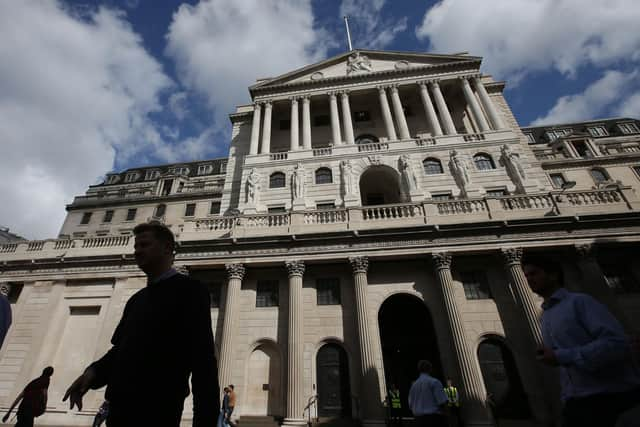
Borrowers should count on just one further cut in interest rates during 2026, analysts have predicted, despite pressure on the Bank of England to reinvigorate a flagging economy.
The central bank said last week it expected growth to flatline in the final three months of 2025, as it trimmed the bank base rate from 4 per cent to 3.75 per cent following a better-than-predicted inflation reading for November. A similar quarter-point cut next year would take interest rates to 3.5 per cent, though competition from lenders has already seen mortgage rates push down closer to 3 per cent.
Thomas Pugh, chief economist at audit, tax and consulting firm RSM UK, said the UK economy had been driven by policy changes during 2025 - “worrying about them, predicting them, being surprised and disappointed by them”.


He said: “The Bank of England had a busy year, cutting interest rates four times. This means the base rate is a full percentage point lower at the end of 2025 than at the start of the year. However, this hasn’t helped to bring down government bond yields.
“Looking ahead, policy ‘should’ play a much smaller role next year. The Bank of England will probably only cut interest rates once more, unless the economy materially weakens. Now that the Office for Budget Responsibility (OBR) has downgraded its forecasts, we’re moving to just one fiscal event a year.
“In theory, the latest Budget has also stabilised the public finances, at least for the next couple of years, by doubling the headroom. So, there should be much less speculation about another round of tax rises in 2026,” he added.
The UK economy grew by an unrevised 0.1 per cent between July and September while expansion was weaker than first thought in the second quarter, according to newly-released official figures.
The Office for National Statistics (ONS) confirmed that growth slowed in the third quarter after the major cyber attack at Jaguar Land Rover knocked activity in the UK’s manufacturing sector.
But output was also worse than first thought in the previous three months, with gross domestic product (GDP) - a measure of total economic output - expanding by 0.2 per cent in the three months to June, revised down from the previous estimate of 0.3 per cent growth. The ONS also revised growth for the final quarter of last year, to 0.3 per cent from 0.2 per cent previously recorded, although the out-turn for 2024 as a whole was left unchanged at 1.1 per cent growth.
Make sure you keep up to date with breaking news from across Scotland by signing up to our free newsletter here.
Liz McKeown, ONS director of economic statistics, said: “Today’s updated figures paint the same picture as our initial estimate, with growth continuing to slow in the third quarter. Growth in services was partially offset by falls in production, with a marked drop in car manufacturing.”

Growth has now been on a downward path since the beginning of 2025
Figures from the ONS also showed that GDP per person in the UK showed no growth in the three months to September, ending six quarters of expansion in a row.
A more detailed breakdown of the economy in the latest data revealed that the household savings ratio fell to 9.5 per cent - its lowest level since the second quarter of 2024. This came as household income fell sharply by 0.8 per cent, driven by a £6 billion increase in taxes, according to the ONS.
Danni Hewson, head of financial analysis at investment platform AJ Bell, noted: “The UK growth story isn’t exactly a page turner and the latest revisions by the ONS describe an economy struggling to trudge through difficult conditions.
“The impact of the cyber-attack on Jaguar Land Rover, which brought its vehicle production to a standstill, grabbed headlines and did have a marked impact on the production data for Q3 but set aside the impact of that exceptional situation and it’s the same old story.
“It’s not just the UK struggling to find the right fertiliser. In fact, despite the downward revision for the second quarter of the year the UK economy still came out joint top for G7 performance in the first half of the year.”
He added: “With the Bank of England expecting growth to come to a standstill in the last few months of the year, thanks in part to the impact of the Budget on overall confidence, it’s clear there are huge challenges to overcome if the UK’s growth story is going to become more compelling.
“Persuading people to spend a bit more and encouraging businesses to dust off any expansion plans they’d set aside will require more than just a period free of destabilising speculation. It will require inspirational leadership and a commitment to delivering some of the growth focused changes that are already in the mix.”
RSM’s Pugh said: “Given the UK still runs a large deficit, as do governments in almost all advanced economies, this combined with relatively high interest rates means there’s a big risk of another flare-up in bond markets or countries being forced into fiscal austerity, which would dampen growth.
“In short, 2026 looks less like a year of dramatic policy swings and more like a test of whether the economy can stand on its own two feet. With interest rates stabilising, fiscal policy temporarily parked and inflation fading as the dominant concern, the spotlight will shift to the fundamentals of the health of the labour market, the willingness of households to spend and the economy’s exposure to an increasingly fractured and volatile world.”
Comments
Want to join the conversation? Please or to comment on this article.