
True legacy of Glasgow 2026 Commonwealth Games will not be measured by medals

The Commonwealth Games shine a spotlight on Scotland. What happens next matters more
Glasgow is about to host its second Commonwealth Games and Scotland will once again be enjoying a moment on the global stage.
As a non-Executive Director on the Glasgow 2026 Organising Committee for the past two years, I’ve had the privilege of seeing first-hand the extraordinary commitment, hard work and collaboration that has gone into bringing the Games back to Scotland.
It’s something I’m incredibly proud to be associated with. Beyond the sporting spectacle itself, I’m excited about the lasting benefits the Games can deliver for Glasgow and for Scotland as a whole, showcasing our country on the international stage and demonstrating what we can achieve when we come together behind a shared ambition.
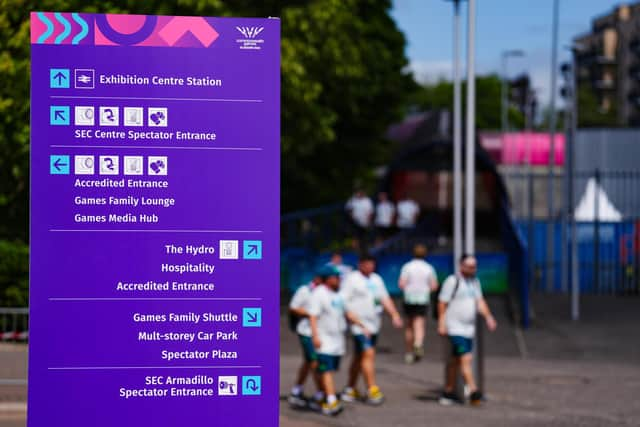

Major sporting events quite rightly bring discussion of visitor numbers, hotel occupancy, transport, tourism and economic impact. Those things matter. But the greatest value of hosting an event like this is often less tangible, and far more enduring: confidence.
Confidence is one of Scotland’s most valuable economic assets. It influences where businesses choose to invest, where talented people decide to build their careers, where entrepreneurs take risks, and where international partners look for opportunity. When confidence is present, it becomes easier for businesses to commit capital, hire people, innovate, export and grow. When it’s absent, even strong ideas and capable companies can hesitate.
Last week, I hosted a roundtable at Barclays’ Glasgow Campus with business leaders, MPs and community stakeholders to discuss business confidence, investment and the practical conditions needed to support growth. The engagement around the table was strong, constructive and rooted in real experience. While views differed on the specific challenges facing firms, there was broad agreement on one point: confidence matters most when it leads to action.
That means confidence can’t simply be a mood or a headline. For businesses it’s practical. It shows up in a decision to open a new site, invest in technology, train staff, expand into new markets or back a new product. It also depends on the wider environment: access to finance, availability of skills, certainty on policy, strong infrastructure and the ability to reach customers at home and overseas.

The latest findings from Barclays’ Business Prosperity Index suggests encouraging markers that Scottish firms have that underlying confidence. Scottish businesses are more confident in their own performance over the next five years than the UK average, with 85 per cent expressing confidence compared with 83 per cent across the UK. They’re also more likely to be investing in long-term growth drivers, including digital products and subscriptions, staff training and development, and research and development.
That matters because successful economies are not built on one-off events alone. They’re built when businesses have the confidence to invest consistently in productivity, people and innovation. The Index also shows that Scottish firms are outward-looking, with a higher proportion reporting increased export activity than the UK average. In a small, open economy, that international ambition is vital.
There are, of course, real pressures. Geopolitical uncertainty, energy costs, inflationary pressures and skills shortages are not abstract concerns; they shape decisions in boardrooms every week. Across the UK, many businesses are having to manage costs carefully and prioritise investment where it strengthens resilience and competitiveness. In Scotland, the challenge isn’t simply to celebrate confidence, but to make sure it translates into growth.
That’s where the Games provide a useful metaphor. A major sporting event focuses attention, raises ambition and reminds people what’s possible when institutions, businesses, communities and government work towards a shared objective. The same principle applies to economic growth. Scotland has many of the ingredients required to compete strongly: world-class universities, deep sector expertise, strong financial and professional services, advanced manufacturing, energy capability, tourism, food and drink, life sciences, gaming and a growing technology ecosystem.
While Glasgow hosts the Games, the benefits of international confidence in Scotland should extend far beyond one city. Edinburgh remains a major centre for financial services and technology. Aberdeen is central to the energy transition. Dundee has strengths in life sciences, gaming and digital creativity. The Highlands and Islands offer powerful opportunities in tourism, food, drink and natural capital. Scotland’s economic story is not one place or one sector; it’s a network of regional strengths that can reinforce each other.
The task now is to ensure that confidence flows through that network. That means helping businesses move from intent to action. It means supporting firms that want to invest in new technology, improve productivity, build resilience, develop talent and reach new markets. It also means creating the conditions in which businesses feel able to make long-term decisions, rather than simply managing the next short-term pressure.
At Barclays, we see first-hand the impact confidence has on business decisions. Through our work with companies across Scotland, one theme emerges consistently: when firms are confident about the future, they invest. When they invest, economies grow. That’s why our role is not only to provide finance, but also to bring together businesses, policymakers and partners to discuss what’s really needed to unlock growth.
The Commonwealth Games are rightly giving Scotland a moment in the spotlight. But the true legacy will not be measured by medals, attendance figures or hotel bookings. It will be measured by whether Scotland emerges from that spotlight with greater confidence in its ability to compete, innovate and grow. Hosting the Games is a privilege. Building on them is the opportunity. If Scotland can use this moment not simply to welcome the world, but to strengthen its own belief in what it can achieve, then the most important legacy may be one that can’t be counted in a balance sheet or medal table: a more confident economy, ready to invest in its future.
Jamie Grant is Head of Barclays Corporate Banking, Scotland
Comments
Want to join the conversation? Please or to comment on this article.