
The lost CV: How AI is upending recruitment and what job candidates must do now
“Great candidates are getting lost in a wall of near identical applications, and the best hiring teams are catching on to that” – Euan Cameron, Willo
Artificial intelligence is now firmly embedded in the hiring process but the traditional CV can still play a role, a new global study of major employers has found.
The research, undertaken by Glasgow-founded recruitment technology firm Willo, shows that while CVs remain the starting point for most hiring processes, their dominance is weakening fast.
The firm’s latest Hiring Trends Report found that 37 per cent of employers rate credentials and learning history - as typically outlined in CVs - among the most reliable indicators of talent. However, 41 per cent of respondents are actively moving away from CV-first hiring, while 10 per cent of respondents said they have largely replaced CVs with skills-based and scenario-driven assessments. Some 15 per cent of companies quizzed said they are exploring alternatives to CVs.


The annual study, now in its third edition, tracks how hiring attitudes have shifted each year. In 2024, the CV was still the unquestioned default, while by 2025, its credibility had begun to erode with employers as the AI-assisted CV became more common.
However, the latest report has shown a significant shift, with employers now increasingly favouring behavioural interviews, skills tests and assessments over polished written submissions.
Drawing on the responses from more than 100 hiring professionals worldwide, alongside insights from some 2.5 million candidate interviews on Willo’s platform, and analysis from hiring experts at major employers including Toyota (GB) and Microsoft, the study has become a closely watched barometer for hiring and talent trends.
Make sure you keep up to date with breaking news from across Scotland by signing up to our free newsletter here.
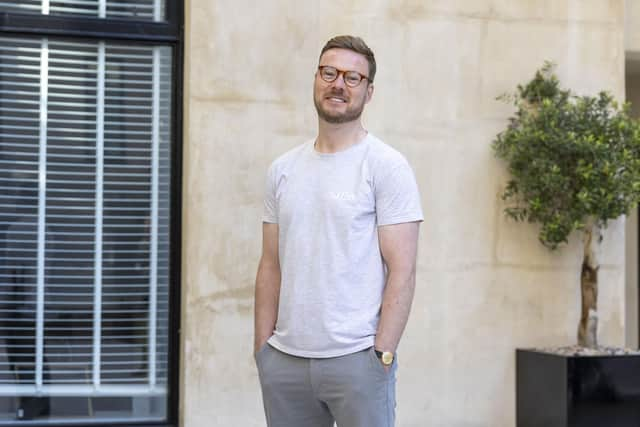
Willo’s co-founder and chief executive Euan Cameron said the shift in attitudes towards CVs reflected growing scepticism about what the documents now represent.
“The CV used to tell a story of effort, experience and aptitude, now it often tells us how well someone can prompt a large language model,” he said. “Great candidates are getting lost in a wall of near identical applications, and the best hiring teams are catching on to that.
“AI is not the end of hiring, what it does mean is the end of hiring based on summaries of experience alone. Employers are looking for real signals of capability, which means moving beyond a single document into skills, scenarios and verified credentials.”
According to the report, AI is now firmly embedded in hiring, but principally in a supporting role. Some 77 per cent of recruitment teams regularly encounter AI-generated or AI-assisted applications, with almost half of respondents (47 per cent) noting that they have updated interview techniques to focus on deeper probing in response. Almost a third (31 per cent) have added practical steps to interview processes, while 14 per cent have implemented AI detection tools or software.
While 65 per cent of respondents said they’d increased their use of AI tools - mainly for volume management, summarisation and early-stage screening - not a single respondent believes automation should handle all stages of hiring. About 79 per cent of those questioned insist final hiring decisions must remain human-led.
In response to the same question, almost three quarters of respondents (72 per cent) said salary negotiation must have human involvement, although more than a quarter (28 per cent) believe those decisions could be made by AI.
Kree Govender, Canada leader for small and medium-sized businesses at Microsoft, who contributed to the report, said: “The 2026 hiring trends signal a new era where AI is a powerful enabler, but not a replacement for human judgment, and I agree. The mission before us is to harness AI for efficiency while doubling down on fairness, authenticity and skills-based assessment. Moving beyond CVs to holistic, scenario-driven evaluation will help us identify adaptable, high-potential talent, especially from diverse backgrounds.
“By operationalising fairness and prioritising candidate experience, we can build teams that are not only technically strong but also inclusive and resilient. The future of hiring is about clarity, confidence, and combining the best of technology with the irreplaceable qualities of human insight.”
As AI-generated applications become the norm around the world, the report found that teams are redesigning their processes to surface more “authentic” human signals. Many organisations are introducing deeper behavioural questioning, one-way video interviews and role-specific tasks to draw out unscripted responses and reduce reliance on static documentation.
Live behavioural interviews with real examples are now the most trusted indicator of talent, cited by 68 per cent of respondents, followed by hands-on skills demonstrations and real-time problem solving.
Willo is a global candidate screening platform used by thousands of employers globally. Founded in the UK in 2020 by Cameron, Andrew Wood and Hamish Livingston, the platform delivers one-way video interviewing, skills assessments and structured workflows that “help teams identify talent efficiently while maintaining a human-first hiring experience”.
Cameron added: “We’re seeing a much more confident attitude towards AI. Employers are clearer about where automation adds value and where human judgment must remain central.
“The best hiring teams realise it’s not humans versus AI, it’s humans deciding how to use AI well, and when we know what ‘good’ looks like, AI becomes a support system rather than a judge.
“Faster, fairer and more insightful hiring is possible, but only when technology is used to bring human potential into clearer focus.”
Luke Smith, talent acquisition and experience specialist at Toyota (GB), who also contributed to the report, said: “Inclusive hiring and strong candidate experience now go hand-in-hand. When hiring is structured and early-stage tasks are streamlined with AI, ambiguity falls, fairness increases, and candidates face less friction, especially those changing careers or without traditional CV credentials.”
Comments
Want to join the conversation? Please or to comment on this article.