
The fall of a Scottish fashion giant - what went wrong at Ted Baker?
“Had the pandemic not intervened, there may have been a chance to reverse longer-term damage, but the company was then hit by a maelstrom of problems.”


If a week is a long time in politics, then 36 years is a very long time in the fickle world of fashion.
Ted Baker, which is putting the shutters up on its remaining stores after failed rescue talks, can trace its roots back to 1988 when founder Ray Kelvin opened a single men’s shirt store in the heart of Glasgow. The business grew to become one of the place-to-go formal outfitters of the 90s and noughties, boasting some 500 outlets and department store concessions around the globe at its peak.
A series of blows, including the pandemic, which killed demand for formalwear and smart attire, the cost-of-living crisis and intense competition has rocked the iconic fashion brand in more recent times. Adding to its woes, Kelvin - who had been very much the face of the business - resigned as boss in 2019 after allegations of a “hugging” culture and harassment at the firm, behaviour which he has denied. His successor, Lindsay Page, and chairman David Bernstein resigned the following year following a profit warning.
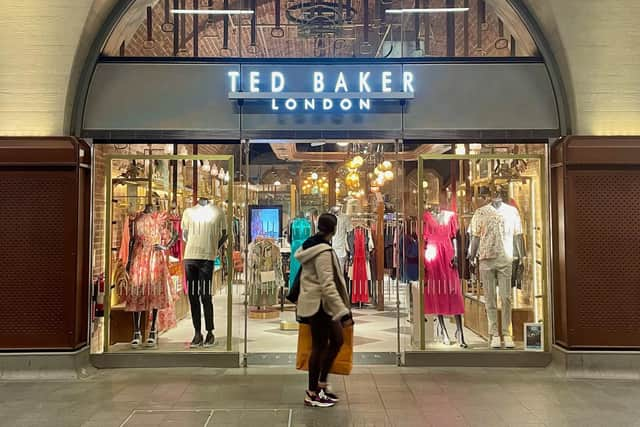
Authentic Brands Group, which also owns Reebok and the David Beckham brands, acquired Ted Baker in 2022 after several years of falling sales, paying £211 million. The new owner was unable to reverse the decline and by spring of this year, the number of UK stores had fallen from 192 in 2018 to just 86.
Talks between Authentic Brands and retail tycoon Mike Ashley’s Frasers Group are said to have stalled, with the remaining 31 stores in the UK and Ireland expected to shut this week. The business behind the crestfallen fashion brand's UK shops, No Ordinary Designer Label Limited (NODL), fell into administration in March.
The store closure move impacts more than 500 jobs and includes Scottish branches in Glasgow and Livingston. Staff working at the remaining stores were told last month that they would lose their jobs when the shops close.
Ted Baker had 46 UK stores and employed around 975 people prior to the insolvency process. US-based Authentic Brands is still the owner of Ted Baker’s intellectual property. It had been hoping to find a new partner to run the Ted Baker retail and online business in the UK and Europe.
The recent history of the company may have seen several twists and turns, yet the core reason for Ted Baker’s downfall is an all too familiar one in the volatile world of fashion retailing - a failure to change with the times. During the past four decades or so a host of players have arrived on the scene or upped their acts. Just think of Spanish giant Inditex, with its vast Zara chain, and Sweden’s H&M. The likes of Joules, White Stuff and more recently Japan’s Uniqlo have also made inroads.
While the clothing retail sector has seen some high-profile casualties in recent years - BHS and Debenhams among them - Next has continued to go from strength to strength, while high street stalwart Marks & Spencer appears to be moving with the times in terms of its product line-up and store footprint. Ted Baker has been left defeated with its shirt tail between its legs.
In April, administrators said that Authentic Brands was continuing “discussions with potential UK and European operating partners for the Ted Baker brand”. However, Sky News, which first flagged the latest store closures, reported over the weekend that talks over a potential future licensing partnership had stalled.
Susannah Streeter, head of money and markets at investment platform Hargreaves Lansdown, said the imminent closure of the remaining Ted Baker stores in the UK was the “culmination of a slow motion disaster, with roots stretching back to pre-pandemic times”.
She said: “Had the pandemic not intervened, there may have been a chance to reverse longer-term damage, but the company was then hit by a maelstrom of problems. Although lockdowns were like a bad dream for many retailers, they were a nightmare for Ted Baker, which relied heavily on formal and occasion-wear and did not have an effective online operation to rely on.
“While bigger operations like Next and M&S were able to switch focus to established digital channels and laid-back ranges, Ted Baker floundered, as management failed to switch gears and rev up a turnaround to halt an exodus of customers.
“While Ted Baker appears to be stepping into fashion obscurity in the UK, with the store closures another blow for the high street, the brand will still have life through franchise agreements and licences, particularly overseas. But the dream for standalone boutique stores up and down the country, where aspirational shoppers would be suited and booted has come to a sorry conclusion, in a very tough fashion retail environment.”
Retailing analyst and consultant Nick Bubb said: “It is five months now since the American owner of Ted Baker put the UK business into administration and it is unclear why the hyper-acquisitive Frasers has been unable to agree a deal to pick up the pieces.”
Clive Black, a retail expert with brokerage Shore Capital, described Ted Baker as a “rags to riches to rags story of the British rag-trade”, while noting that it was a “dark time” for the hundreds of workers liable to lose their jobs.
Black added: “From a modern, aspirational and distinctly British snazzy brand, Ted Baker never recovered from allegations of inappropriate behaviour, leading to a prolonged period of withering on the vine.”
Retail analyst Catherine Shuttleworth noted that a “lack of investment combined with disappointing sales” meant shoppers had gone elsewhere, making the brand’s ongoing survival challenging.
Comments
Want to join the conversation? Please or to comment on this article.