
Solving Scotland’s scaling-up conundrum: New report sets out 15 priorities for business and government
“The choices we make now will shape our economy, our communities, and our place in the world for the next 50 years” – Shane Corstorphine
It has been one of the biggest challenges facing Scotland at both a business and political level for some time. Now, a new high-level study has shed light on the scaling-up conundrum and outlined a blueprint for the country to build more “globally competitive companies”.
Scotland is estimated to have around 1,500 businesses classed as scale-ups with the majority of them turning over less than £50 million annually. Just 85 are generating revenues in excess of £50m.
The new report, entitled “Scaling Scotland: Building the Engine for the Next 50 Years of Prosperity”, argues that closing the nation’s scale-up gap could result in more than 100,000 “high-value” jobs and some £20 billion in additional annual company revenues.
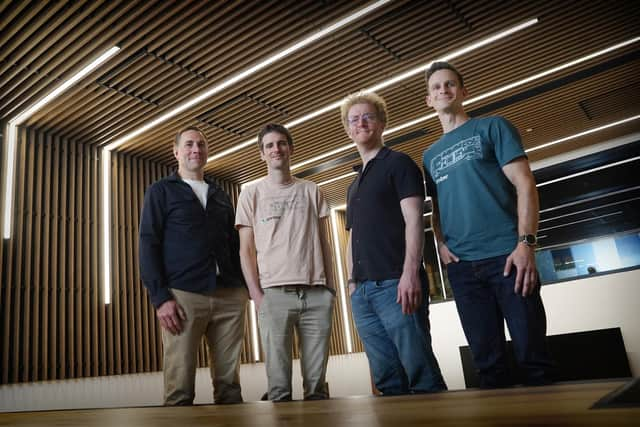

The independent study has been conducted by former Skyscanner executive Shane Corstorphine and a high-level panel of business leaders. It addresses what is increasingly recognised as a significant challenge for Scotland’s business community - how to help more of the country’s most promising, ambitious start-ups grow into large, globally competitive companies. The report has been submitted to the Scottish Government and chief entrepreneur Ana Stewart for review.
Corstorphine, who is chairman of the Scottish Scale-up Panel, said Scotland’s entrepreneurial ecosystem was at an “exciting and pivotal point”.
“The choices we make now will shape our economy, our communities, and our place in the world for the next 50 years,” he said. “We can picture a Scotland where ambition is normal, not exceptional - a place where entrepreneurs are backed with the right talent, boards, and capital to compete confidently on the world stage.
“As things stand, our entrepreneurial landscape acts like a start-up, whereas it needs to behave like a scale-up. Much as a rapidly growing business must focus on strong leadership, strategy and outcomes, so must Scotland’s entrepreneurial community. Fundamentally, this must be driven by leaders in both the private and public sectors,” he added.

Corstorphine is the former chief financial officer and senior vice-president of growth at Skyscanner, the Edinburgh-founded online travel search business that was acquired by China’s Ctrip for £1.4bn in 2016. He is also a director at Scale Up Consulting and non-executive director for a number of high growth scale-up companies.
The report, underpinned by in-depth interviews with more than 75 founders, business figures, and investors, argues that Scotland must address four mutually reinforcing pillars - around business capability, talent, funding and market expansion and internationalisation - to break through the scale-up barriers and unlock long-term growth.
The key recommendations, mapped to those four pillars, include the creation of a Scottish “scale-up enablement hub” to consolidate what is described as a “fragmented support system”, concierge-style support for founders, greater efforts to attract both returning Scots and international hires, and ensuring boards have stronger scale-up experience.
Make sure you keep up to date with breaking news from across Scotland by signing up to our free newsletter here.
The 15 recommendations also call for the creation of a pool of “entrepreneurial operators”, which would increase leadership capability by developing pools of high quality entrepreneurial specialists, as well as reforming public co-investment to reduce “drip-feed” follow-on funding, recycle talent faster, and redirect capital to the highest-potential companies.
The study calls for a review into the potential to convert the Scottish National Investment Bank (SNIB) and Scottish Enterprise funding models to a full profit and loss (P&L) account ownership model to support higher risk/return. It also talks of the need to create a “scale-up lane” in government to fast-track visas, procurement and planning for Scotland’s 25 highest-potential businesses.
Ross McNairn, the chief executive and founder of Wordsmith AI, a legal tech start-up that is scaling globally from a base in Scotland and secured a $25m (£19m) funding round led by Index Ventures in June, said: “We need to stop making ambition a dirty word. We are going to be left in the dirt if we don’t wake up to the changes that are happening to the global economy. Artificial intelligence is a high end talent game. Alienate it and watch other countries drain you dry.”
Keith Bradbury, co-chief executive and co-founder of Ember, the all-electric intercity bus service that secured an £11m series A round led by Inven Capital in 2024, said: “Scotland’s challenge isn’t starting companies; it’s scaling them.
“We were always building for a £1bn-plus business even back when we only had £5m revenue. That requires patient capital that backs the long game, not just another incremental round. But the structured finance options available are often buried in red tape and not designed for this kind of company-building.
“We aren’t losing our best companies to failure; we’re losing them to ecosystems that make scaling easier. This report identifies the right problems - now we need some urgency to spur on real action.”
A further recommendation from the study is to commission a “national growth culture report” to set out a ten-to-20-year strategy to support the creation of world-leading businesses, intellectual property and leaders.
Ana Stewart, who recently set out her priorities for Scotland’s most ambitious companies by calling for a sharper focus on rapidly scaling firms, said: “Supporting scale-ups is one of my priorities as chief entrepreneurship advisor, so the Scaling Scotland report, which is focused on the Scottish landscape, will contribute to that broader conversation.
“Scotland has world-class entrepreneurs. We need to ensure they have the support they need to break through and grow at pace,” she added. “Working collaboratively, I believe we can make Scotland Europe’s best HQ for growing a business.”
Comments
Want to join the conversation? Please or to comment on this article.