
Sir Brian Souter: I have an all-too-healthy appetite for risk
Sir Brian Souter's family investment firm marks 20 years of returns


If it were not for two striking paintings hanging on the walls – one by Glasgow artist Peter Howson, another by Scots Impressionist Robert Gemmell Hutchison – the unremarkable office on George Street would be just another Edinburgh workplace.
Yet it’s a subtle personal touch signalling there is something more going on here than just an office. This is a “family office”, a term used to describe an organisation that provides a formal structure for managing a wealthy family’s investments and charitable activities. Family offices are a global phenomenon. Consultancy Deloitte estimates there were about 8,000 of them in 2024, almost a third more than in 2019, involving $5.5 trillion in wealth.
Edinburgh is the location for one of the UK’s leading family offices: Souter Investments, belonging to Stagecoach bus and rail empire co-founder Sir Brian Souter and his Perth-based family.
Founded in 2006 through a partnership between Sir Brian and former Morgan Grenfell banker Andy Macfie, the firm is one of a handful of family offices and foundations run by some of Scotland’s best-known first generation entrepreneurs: Sir Tom Hunter, sports retailer and its first home-grown billionaire; Sir David Murray, founder of steel-to mining business Murray Group; and Sir Ian Wood, founder of Aberdeen-based Wood Group, recently sold to Sidara of the United Arab Emirates.

Souter Investments started out when Stagecoach was one of the largest public transport operators in the world. “I was making a lot of money from Stagecoach and making a terrible mess of investing it,” Sir Brian says in an interview, citing one reason for starting the family office. Another was the family’s need for an income stream once cashflow from the Stagecoach business had gone.
Sir Brian sold his remaining stake in Stagecoach in 2022 when the business, once one of the most recognisable names in the FTSE share index, was taken over by a UK infrastructure fund owned by German asset manager DWS, at a valuation of £595 million.
In the 20 years since its inception, Souter Investments has ploughed over £750m into more than 100 unquoted companies, with a typical cheque size of between £2m and £30m.
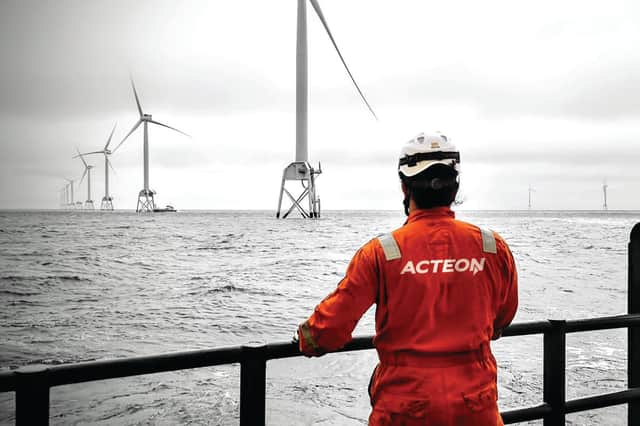
The portfolio is a mix of businesses in industrials and energy, financial services, medical diagnostics and fintech. Among them are Acteon, a UK-based offshore marine services business with a presence in Aberdeen; Amey, an engineering consulting company; and Fullers360, which runs a catamaran ferry network in New Zealand. Most investments are in the UK with fewer than 10 per cent headquartered in Scotland.
Over time the firm has added staff, improving due diligence and helping to build relationships with the so-called “independent sponsors” who specialise in bringing interesting companies to the attention of private equity investors.
“Our returns are increasing as we have refined things,” Sir Brian says. “That’s because in private equity, as you make mistakes, you should get better and better at it. We are on that fast-growing curve right now.”
A significant amount of the portfolio’s returns is channelled into the Souter Charitable Trust (SCT), an expression of Sir Brian and his wife’s Lady Elizabeth’s deeply held Christian faith. In the last 20 years, SCT has awarded more than 22,000 grants providing £150m in funding to projects in 80 countries.
Yet it’s clear that risk remains as much at the heart Sir Brian’s approach as it was when he and sister Dame Ann Gloag launched Stagecoach with two second-hand buses in 1980.
“My kids would probably tell you I have an all-too-healthy appetite for risk, as I regularly throw myself off bridges with bits of elastic tied round my ankles,” the 71-year-old writes of a bungee jumping habit in the firm’s latest investment review. “It is certainly true that the team at Souter Investments’ more measured and structured way of thinking has sometimes saved me from myself.”
Indeed, for any investor risk has been heightened in the current era of unprecedented geopolitical uncertainty, especially the rollercoaster conflict in the Middle East.
Calum Cusiter, one of two managing directors who run the firm day-to-day, explains that Souter Investments has never been tempted to buy or sell in reaction to short-term risk.
“Whilst we are always cognisant of macro conditions and we may dig further into risk factors that are heightened during particular periods of volatility, we firmly believe that it is best to invest through the cycle rather than picking and choosing when to come in and out of the market. That has been the case throughout Souter Investments’ history and it remains true as we sit here today,” he says.

Sir Brian does however believe that a certain type of risk-taking is lacking in the current political environment, bemoaning a lack of business experience among MSPs in the outgoing Scottish Parliament.
As a self-confessed “left-of-centre welfare capitalist”, he calls out “a tax system that doesn’t encourage entrepreneurship” and the “stifling of business through red tape and compliance requirements that distract from the more important task of actually building businesses”.
As for North Sea and oil and gas, which the Iran war has brought into sharp focus, long-time SNP supporter Sir Brian is characteristically candid.
“Quite why denying ourselves tax revenue, highly skilled and well-paid jobs and the possibility of fuel security in an emergency in exchange for increasing our carbon footprint by importing oil and gas sometimes from thousands of miles away - none of which reduces our domestic consumption of carbon - is seen as a good trade-off, is beyond me.
“We’ve all read the headlines that common sense is potentially breaking out in both governments. But this needs to be translated into action.”
Comments
Want to join the conversation? Please or to comment on this article.