
Shop owners make crucial plea to Scottish Government in ‘golden quarter’ Christmas countdown
“Hopefully, falling prices at shop tills will buoy consumer confidence and encourage consumer spending, not just browsing” – David Lonsdale, SRC
Retail industry leaders today pleaded with Scottish ministers not to add to store owners’ financial woes as the sector enters the crucial countdown to Christmas.
Releasing new footfall figures for Scotland’s high streets and shopping centres, David Lonsdale, director of the Scottish Retail Consortium (SRC), said retailers would be looking to make up for the “expensive additional outlays coming down the track” as a result of this week’s Budget and previous UK government policies.
“Retailers will need a positive ‘golden quarter’ to tide them over the traditionally leaner months early in the new year,” he said. “Hopefully, falling prices at shop tills will buoy consumer confidence and encourage consumer spending, not just browsing. With attention now firmly turning towards the Scottish Budget next month [December 4] ministers and MSPs must not add to the financial pressures on households and should avoid compounding the mountainous extra statutory cost burdens facing retailers.”
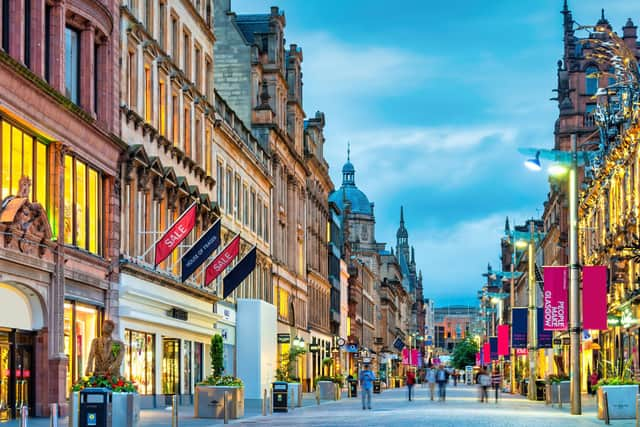

His appeal came as the latest data showed overall Scottish footfall increased by 0.8 per cent in October, compared with the same month last year, up from September’s 0.7 per cent year-on-year gain. UK-wide there was an average decrease of 1.1 per cent last month, compared with October 2023. The figures cover the period from September 29 to October 26.
They also reveal that Scottish shopping centre footfall was up by an average of 3.5 per cent, year on year, which is a big improvement on September’s 2.4 per cent fall. In October, footfall in Edinburgh increased by 1 per cent, while Glasgow rose 1.6 per cent, according to the SRC-Sensormatic data.
Lonsdale said: “Visits to Scottish stores grew for a third successive month in October, with Scotland recording the fourth best performance of all 13 UK nations and regions surveyed. Hopefully, this heralds a positive start to the traditional golden quarter of trading leading up to Christmas.
“That said, this was against an easy comparable 12 months prior when Scotland was battered by repeated and prolonged storms with severe weather alerts in large swathes of the country advising people not to travel.
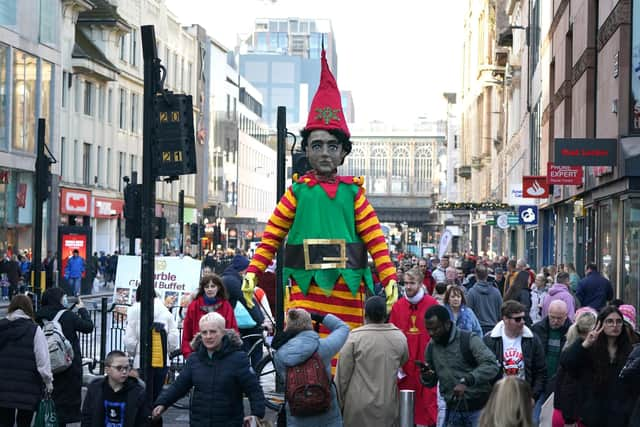
“The improvement in footfall was seen across all retail destinations,” he added. “Foot-traffic to shopping centres returned to growth after three months of decline. Glasgow was the second-best performing city centre of the ten UK cities surveyed, and outperformed Edinburgh for the first time in two years.”
Andy Sumpter, Retail Consultant EMEA for Sensormatic Solutions, which helps compile the footfall report, said: “Having hovered at the same level in August and September, October’s footfall saw a marginal increase on the previous month’s figures. Whilst shopper traffic still remained positive compared to 2023 last month, the caveat is that we still expect to see a bumpy recovery as a myriad of market conditions - from the cost of living to shaky consumer confidence around the Budget - continue to make footfall performance volatile.
“Building on October’s momentum, retailers now need to look ahead and focus their efforts on the rest of the golden quarter, delivering compelling reasons to visit in order to drive ambient footfall and sales during the key Christmas trading period.”
While high streets, shopping centres and retail parks are the main components of the total footfall figures, there are additional categories not included as separate indices. These include outlets, travel hub locations and free standing locations such as garden centres.
The report comes after the Scottish Retail Consortium warned that this week’s UK Budget increased pressure on the nation’s retailers. Lonsdale said those businesses now faced a £190 million increase in their collective tax bill following the Chancellor’s changes to national insurance contributions.
In the first Labour Budget in almost 15 years, Rachel Reeves outlined a £25 billion raid on employers’ national insurance contributions, as part of her £40bn of tax raising measures, with the rate rising by 1.2 percentage points to 15 per cent from next April, and payments starting when an employee earns £5,000, down from the current £9,100 threshold.
Lonsdale said: “Combined with increases in the statutory wage rates it’s clear retail businesses will see big rises in the cost of employment, whilst there was little sign of any significant reform to non-domestic rates.
“Such stark increases will increase the cost of operating a retail business and are unlikely to be absorbed by businesses, at a time when Scottish retail sales are flatlining, making it likely those costs will be passed along to consumers.
“Retailers will now turn their attention to the Scottish Budget, with the devolved government due to receive substantial sums in Barnett consequentials. With little fiscal headroom of their own, retailers will hope to see action to blunt any rise in non-domestic rates and an end to the mooted introduction of a business rate surtax on grocers. After being thwacked by additional employment costs in the Chancellor’s Budget, retailers deserve to be spared any further tax rises by Scotland’s finance secretary in December.”
The Federation of Small Businesses (FSB) in Scotland welcomed a rise in the employment allowance in the UK Budget, but said the pressure was on the Scottish Government to pass on business rates relief to retail, hospitality and leisure sectors north of the Border.
Andrew McRae, Scottish policy chair of the FSB, said: “Increasing the employment allowance for small businesses by a record amount is a very welcome move and we’re pleased the Chancellor has heard us loud and clear. More than doubling it, from £5,000 to £10,500, will shield the smallest employers from the jobs tax, and is therefore a pro-jobs prioritisation in a tough Budget.”
Comments
Want to join the conversation? Please or to comment on this article.