
One of Scotland’s biggest battery energy storage farms to be built two miles from busy riverside town
“The project is in a carefully chosen strategic location that will directly support the UK’s energy security strategy” – Andrew Philpott, Apatura
One of the largest battery storage facilities planned for Scotland has been given the go-ahead in the latest push for greener sources of energy.
Renewable energy storage specialist Apatura said it had received planning consent to build a new grid-scale 560-megawatt battery energy storage system (BESS) near Clydebank in West Dunbartonshire.
The site is the 11th such development that the firm has secured planning permission for in the last two years. With the latest approval, Apatura has now secured permission to build a combined total of more than 2.1 gigawatts in electricity storage capacity at sites across central Scotland.
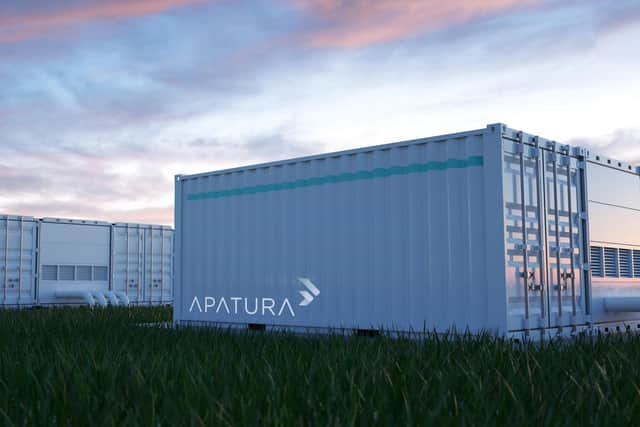

The latest planned development is located on land adjacent to Cochno Road, two miles from Clydebank and eight miles from the centre of Glasgow.
Andrew Philpott, chief development officer at Apatura, said: “The Whitehall project is in a carefully chosen strategic location that will directly support the UK’s energy security strategy. Once commissioned, it will play a key role in providing the resilient infrastructure network needed for a net zero future.
“Projects like Whitehall will directly contribute to stabilising energy prices and reducing bills for households and businesses, and are also integral to the UK’s goals of cutting emissions and boosting energy independence and security.”
He added: “Apatura is committed to opening up access to affordable clean energy for Scotland and the entire UK. Our BESS projects are an essential part of the wider nationwide effort to upgrade and future-proof the country’s energy infrastructure to meet our expanding energy needs in a sustainable way.”
In the decision letter granting consent, Scottish ministers said they “regard the proposed development as essential infrastructure. Through the provision of energy storage, it adds flexibility and resilience necessary to maintain secure and reliable supplies of energy to all our homes and businesses as our energy transition takes place.”
A battery energy storage system consists of several large batteries that store electrical power for use at a later time. They can be charged using excess electricity generated by wind or solar farms, for example, or by grid connection during periods of lower demand. However, many of these projects have attracted local criticism over their impact on the landscape and concerns regarding the risk of fire.
Several large-scale BESS projects have been given the nod in recent years. Such facilities generally provide sufficient power for relatively short periods of a few hours before requiring recharging.
In March, a vast £130 million facility in West Lothian was granted consent, with the 200-megawatt site having the capacity to meet peak electricity demands for approximately 240,000 homes for two hours.
Developed by onshore renewables firm OnPath Energy, the “state-of-the-art” facility will be located on Pond Industrial Estate near Bathgate. The firm said Pond Flexible Energy Park would play a vital role in Scotland’s journey towards its 2045 net zero goals.
Meanwhile, in May, ILI Group said planning consent had been granted for its 100-megawatt Learielaw battery energy storage system project near Broxburn, also in West Lothian.
Comments
Want to join the conversation? Please or to comment on this article.