
‘Never stand still’ - BrewDog’s new boss serves up growth plans as profits rebound
“We are not changing the DNA of this brand. What we are doing is reinvigorating it.” – James Taylor
BrewDog has hailed its largest ever share of the UK beer market and vowed to continue innovating and expanding after a “transformative year” which saw the Scottish craft beer maker return to the black.
Chief executive James Taylor, speaking just three months into the role, said the business would “never stand still” and insisted it was “going in the right direction” as he outlined a growth strategy that will focus on further bar openings and new product launches.
The full-year results showed a return to profitability in 2024, with adjusted earnings before interest, taxes, depreciation and amortisation (Ebitda) of £7.5 million. That followed last autumn’s news that the Aberdeenshire brewer had moved to a positive underlying profit position in the first half of 2024.

Underlying trading losses on the Ebitda measure had already been slashed from £12.8m in 2022 to £2.5m in 2023.
Ellon-headquartered BrewDog, which was founded in 2007 by James Watt and Martin Dickie, also suffered a hefty pre-tax loss of £59m in 2023, driven by one off impairment costs related to historic acquisitions and restructuring.
“No consumer goods business in the wider sense can last on that level of losses, no matter how much it is growing revenues or how exciting the brand is,” said Taylor. “We have made sensible cost decisions without affecting the drive for quality and innovation.
“We are not changing the DNA of this brand. What we are doing is reinvigorating it,” he added. “This is a good opportunity to reset and refresh this business but quality will remain at the heart of what we do. We are also a Scottish business and I am hugely proud of it.”
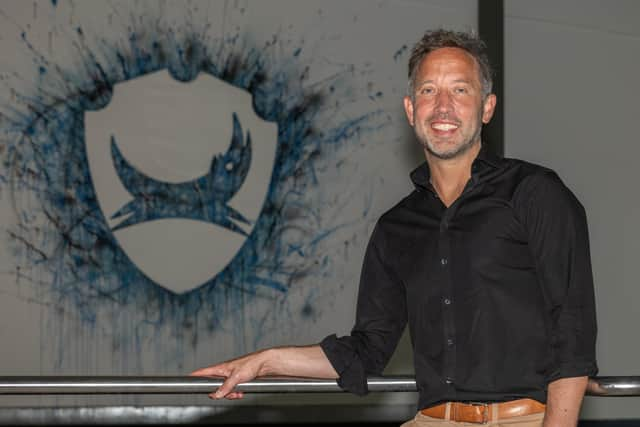
The Englishman - formerly BrewDog’s chief financial officer - was promoted to chief executive in March after James Arrow stepped down for “personal reasons”, having been in the top post for less than a year.
Arrow had taken over from controversial co-founder James Watt, who stepped aside to devote more time to his other business interests and in the wake of 2021 allegations of a “toxic culture” at the company, which began as a brewery in Fraserburgh before its rapid expansion, aided by a string of publicity stunts.
Taylor described the 2021 furore, which saw Watt admit he was “not always the best people manager” as “old news” now.
“We have moved on significantly as a business.” the new CEO said. “We’ve relaunched our charter and our mission and our values.
“The full employee journey that we take our staff on is absolutely central to us. As a leadership team we listen everyday to our people.”
The business has been looking to turnaround its financial fortunes as it continues to grow its footprint both at home and overseas.
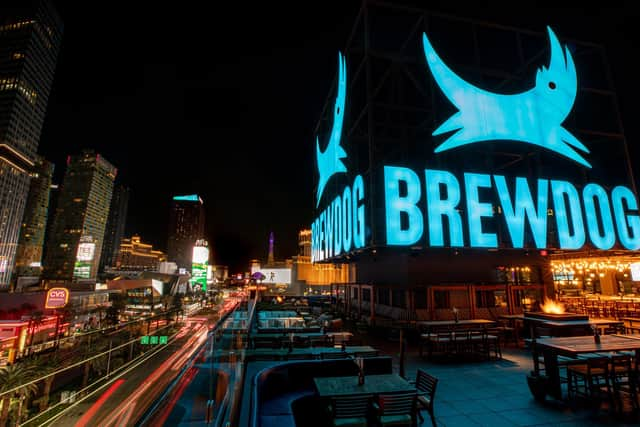
A global bar expansion has seen the brand increase its footprint across Europe, the US and Australia, while entering new markets, such as Thailand. It has also grown its presence at major transport hubs including a number of airports and railway stations such as Edinburgh Waverley.
The underlying profitability in 2024 came despite top-line revenue growth easing. Gross revenues topped £357m, with the net figure coming in at £280m - driven by a “market leading” performance in beer and a resilient performance in the bar division.
The brewer achieved its highest ever share of the UK beer market last year - at just under 4.6 per cent - selling the equivalent of 4.5 cans (330ml) of beer every second in UK supermarkets. It was also named by Tesco as supplier of the year in 2024.
Meanwhile, the firm commissioned a new brewing facility, increasing site brewing capacity to 2.5 million hectolitres, and implemented a new hopping system, enabling a productivity improvement of £1.4m.
Session IPA Wingman is now established as a top five craft beer brand in the UK, with flagship Punk IPA - which the venture launched with 18 years ago - and Hazy Jane remaining the number one and number two craft beer brands, with 17.3 per cent and 10.1 per cent market share respectively, according to industry data.
During 2024, BrewDog opened nine new franchise venues, including Bangkok, Perth, Denver and Rotterdam, and openings at transport hubs Columbus Airport, Edinburgh Waverley, Belfast Grand Central and a new pub at London Waterloo - the Waterloo Arms. More than six million pints were sold in its venues worldwide last year.
The group employs some 2,400 people worldwide, and has grown its workforce by 50 per cent since 2020. It operates breweries in Ellon, Germany, Australia and the US and exports its products to more than 60 countries.
Peak beer
Taylor does not feel that the market has reached peak craft beer, arguing that there is room for further innovation.
“The market is different to what it was three years ago and it will be different in the next three years,” he said. “We will be at the forefront of that innovation in the craft market, in the alcohol-free market, in the lager market and in the stout market. We want to broaden our base and our appeal across all categories.”
He added: “Clearly this business is about growing revenue and about being exciting and using fresh ways of talking to the consumer, and investing in our people and our sites. That will never go away. But financial responsibility is also absolutely at the heart of things. We can do both.”
The BrewDog boss also acknowledged the cost pressures facing the sector, including higher duties, rates and taxes.
“The brewing industry and wider hospitality industry employ hundreds of thousands of people and they do an incredible job for this country in terms of exports and product and we want to be left to get on with what we are good at. Those extra costs mean that we naturally invest less,” he warned.
Comments
Want to join the conversation? Please or to comment on this article.