
Let’s open our networks, not just protect them
Jude McCorry on efforts to get more women and girls into the cyber industry
Scotland's cyber defence needs an army. And if we are going to build one capable of responding to the threats we face today and tomorrow, it needs to draw on the widest possible range of people, perspectives and skills.
Yet we still struggle to convince enough women and girls that cybersecurity is a viable – and exciting – career for them. According to the latest statistics, women make up just 16% of cyber roles in the UK.
Earlier this month, that challenge was at the heart of our third See It Be It conference, bringing female pupils and students together with educators, cyber professionals and tech leaders. The principle is simple: girls need to see the reality of a cyber career before they can imagine themselves having one.
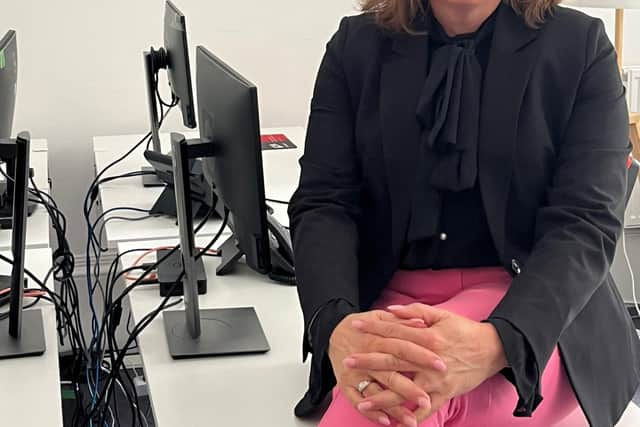

Keynote speaker Andrew Elliot, Deputy Director at the Department for Digital, Culture, Media and Sport, highlighted part of the national effort to improve that visibility: the new TechFirst programme and its Girls Competition, launched this week.
But one of the most powerful ideas discussed was much simpler – and something all of us could act on.
It was networking.
For an industry that spends so much time thinking about networks, perhaps we don't spend enough time thinking about our own. Panellists repeatedly talked about the people who had answered a question, made an introduction or encouraged them to apply for a role.
But we cannot tell young people to build networks without asking whether those of us already in the industry are opening ours.
Beyond creating routes into the industry, extending our networks is one of the most effective ways we can challenge the misconceptions that still surround cybersecurity.
There is no single cyber professional – and certainly no single route to becoming one. Yet the image of the highly technical "super coder" persists.
At See It Be It, we heard from people who had arrived through computer science and software engineering, but also the armed forces, recruitment, data analysis and many other routes.
Employers also emphasised attributes that weren't technical at all: curiosity, communication, relationship building, adaptability and resilience.
We often call these "soft skills". I heard a better term: power skills. While imposter syndrome can lead women to underestimate their value, these are precisely the skills an industry built on people, risk and relationships needs.
And they can really set people apart.
That reframe opens cyber to young people who might never have considered themselves “cyber people” – and could help our sector access a broader pool of talent at a time when we urgently need it. More than half of cyber firms expect to grow their workforce in 2026.
But we will not meet that demand if potential recruits rule themselves out before they have even discovered what the jobs are.
Organisations including SWiT, WiCyS, Empowering You, Women in Tech, Women Do Cyber and Abertay University's cyberQuarter are already helping widen the talent pool.
But we can all do more. So I have an ask for everyone already working in cyber and technology.
Speak to a school. Offer work experience. Give a student 20 minutes to ask about your job. Volunteer at a careers event. Make an introduction. And when a role comes up, think about someone who might never assume they are qualified enough to apply.
None of that requires a national strategy. But collectively, it could change who gets to see this industry – and imagine themselves becoming part of it.
The stronger and more diverse our human network becomes, the stronger Scotland's cyber defences will be.
Jude McCorry, CEO, Cyber and Fraud Centre Scotland
Comments
Want to join the conversation? Please or to comment on this article.