
Iran latest: What investors and borrowers should do now as shares tank and oil surges
“Volatility is an uncomfortable feeling for investors, but it is worth putting this in some context” – Adrian Murphy, Murphy Wealth
Investors need to stay focused and remain calm, experts have said, after global stock markets turned red and oil passed $100 a barrel for the first time since 2022 amid an escalating crisis in the Middle East.
The benchmark oil price pushed through $100 as the conflict entered a tenth day. There are fears that it could spiral towards record highs if the war continues, spelling misery for motorists at the pump and feeding into general inflation, which had shown signs of stabilising in recent months.
It is also likely to see the Bank of England pause on further monetary loosening, pushing any interest rate cuts back into the latter part of 2026. There had been hopes of a fresh reduction in borrowing costs as early as this month at the latest meeting of the central bank’s monetary policy committee (MPC) on March 19.
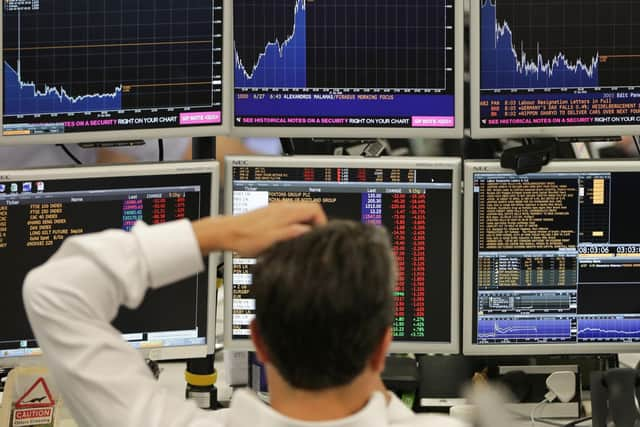

Adrian Murphy, chief executive of Murphy Wealth, said: “Last week, global stock markets were relatively sanguine in the face of an escalating conflict. But reality has begun to hit, with steep declines on Asian indices and falls across Europe as fears grow over the potential impact of surging oil prices on the global economy.
“Volatility is an uncomfortable feeling for investors, but it is worth putting this in some context. Even in recent years, markets have seen major downturns from events like ‘liberation day’, Russia’s invasion of Ukraine, and the Covid-19 pandemic - but in each instance they have bounced back.
“The S&P 500 has declined at least 20 per cent on more than 20 occasions, but it has also delivered an average annual return of more than 10 per cent since 1957,” he added. “Investing for the long-term inevitably means going through multiple periods of political and economic challenges, and the corresponding market turmoil.”
London’s benchmark FTSE 100 Index fell nearly 2 per cent on Monday morning soon after opening as the Middle East conflict caused an acute supply crunch. It began to claw back some ground later in the session. The vast majority of blue-chip stocks were down, although BP and Shell - perhaps unsurprisingly - were among the handful of companies to see gains.
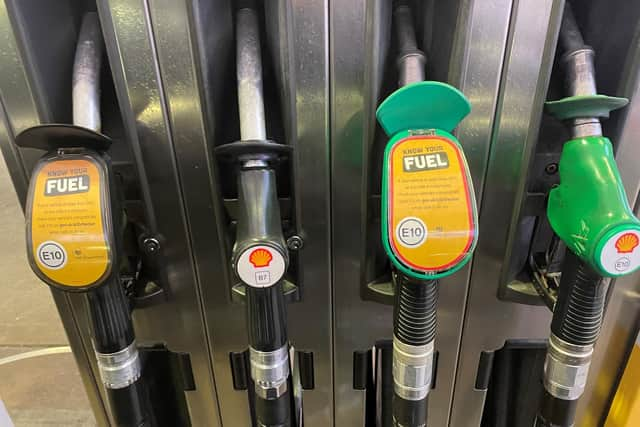
The soaring oil price remains the biggest concern, with the Strait of Hormuz being one of the world’s most critical energy chokepoints. About a fifth of the world’s oil supply is usually shipped through the Strait. However, traffic through the relatively narrow passage has all but halted since the conflict began more than a week ago.
Any prolonged disruption would have significant consequences for supply chains in the UK.
Jonathan Owens, supply chain expert and senior lecturer in operations management at the University of Salford, said: “Although the UK imports energy from a range of regions, global oil and liquefied petroleum gas markets are highly interconnected. A sudden reduction in supply from the Gulf would cause prices to surge worldwide.
“This would have a knock-on effect by increasing fuel costs for logistics companies, rail freight operators, and shipping companies moving goods across the UK.
“As fuel prices increase, companies would face higher operating costs and would likely pass these costs on to wholesalers, retailers, and ultimately consumers. This would come at a difficult time for households already dealing with cost-of-living pressures and could lead to higher prices for food, consumer goods, and industrial products.”
Signs of the war escalating over the weekend, alongside scenes of destruction of energy infrastructure both in Iran and across the wider Gulf region, saw markets take fright on Monday. In Asia, the price of Brent crude jumped by more than a quarter to touch almost $120 a barrel before falling back slightly.
Make sure you keep up to date with breaking news from across Scotland by signing up to our free newsletter here.
Gas prices also jumped. UK gas prices for month-ahead delivery leapt by nearly a quarter to 171p a therm when trading started on Monday, before easing back to about 156p a therm. Gas prices have roughly doubled since before the war in Iran began, although they remain well below the peak reached in 2022 following Russia’s invasion of Ukraine.
Susannah Streeter, chief investment strategist at Wealth Club, said: “The dramatic moves we’ve seen on markets will be worrying, but investors still need to keep a cool head and resist the temptation to switch and ditch stocks.
“During periods of volatility, it’s also important to remember that time in the market and diversification have consistently been the foundations of successful investing.
“For investors owning quality companies over the long term, big upsets are part of the journey. History has shown that after previous conflicts around the world, markets have recovered - but it can take considerable time and patience.”
Analysts now expect the Bank of England to hold its base rate at 3.75 per cent at this month’s MPC meeting. Swap rates have risen and mortgage rates are being increased by lenders to price in expectations that interest rates could go back up in the near term.
Darryl Dhoffer, founder of The Mortgage Geezer, said the “era of sub-4 per cent mortgage deals has evaporated”.
He added: “The Bank of England will likely hold the base rate at 3.75 per cent on March 19. Raising rates now could over-tighten an economy already cooling under high energy costs, risking a deep recession. The MPC prefers a ‘wait and see’ approach to ensure this spike isn’t transitory. However, the market isn’t waiting.
“Five-year swaps are at year-highs, making a jump in average mortgage rates above 5 per cent this week feel inevitable.”
Comments
Want to join the conversation? Please or to comment on this article.