
Inside the Edinburgh mill at the heart of Scotland’s food supply chain
Chancelot Mill, the most northerly of ADM’s seven UK mills


On the northern edge of Edinburgh, sandwiched between The Royal Yacht Britannia and Newhaven harbour, two hulking, off-white buildings loom over the Firth of Forth.
Unless you knew what happens inside, you would think this was something to do with nearby Port of Leith. A factory of some kind, with no company logos immediately visible to hint at an answer.
It’s not until you step off the tram at Newhaven that you see this on one of the buildings: “Chancelot Mill” and the name “ADM”. This former is the name of a flour mill built by the Scottish Co-operative Wholesale Society that stood on a site at Bonnington, and was demolished in 1971.
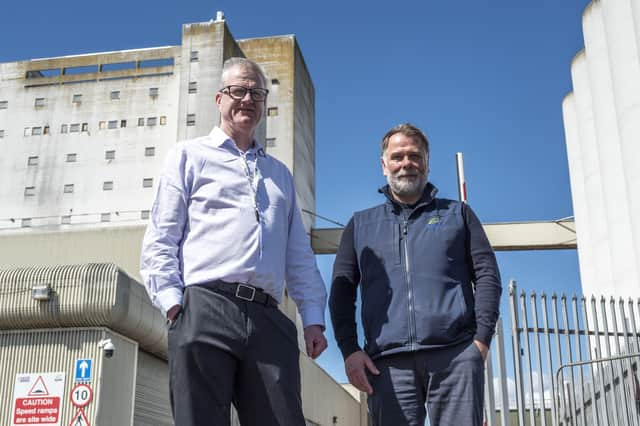
The current structure bearing the same name, which dates from the 1960s and was largely rebuilt in 1989, is also a flour mill. It was bought from Associated British Foods in 2003 by Archer Daniels Midland (ADM), a US-based company that’s one of the world’s largest agricultural commodity businesses.
ADM is one of a handful of such groups responsible for producing many of the raw materials that go into the food on millions of people’s plates every day – companies such as Singapore-based Olam and Cargill which, like ADM, is based in the US Midwest.
ADM’s website describes the group as “a pillar of the global food system”, with businesses in a sprawling global footprint across 325 plants. They range from grain processing in North America and animal feed additives in Brazil, to China where, last week, ADM opened a new aquafeed factory in Tianjin for fish and shrimp hatcheries.
One of those plants is Chancelot Mill, the most northerly of ADM’s seven UK mills. Here, wheat is milled into flour for supply to industrial-scale bread, roll and biscuit manufacturers across the Central Belt and further afield, making up about 80 per cent of ADM’s customer base in Scotland.
The rest is artisanal bakeries and other smaller businesses. Customers include shortbread makers like Dean’s of Huntly, and artisanal bakeries such as The Bread Guy in Aberdeen.
Two-thirds of Chancelot Mill’s flour ends up in biscuits and shortbread, around 20 per cent in rolls and breads, with the rest used mostly for pizza bases. The mill also supports neighbourhood bakeries including Masons, a Newhaven bakery that’s in its centenary year.
Craig Miller, the mill’s head of sales, says ADM is seeing growth in the artisanal side. “We’ve definitely seen that where you’ve got smaller businesses offering a more premium offer like sourdough or patisserie type offerings on top of the morning roll, the Scotch pie and other traditional fare these customers will also be doing some wholesale business into some of the higher end restaurants and hotels in Edinburgh.”

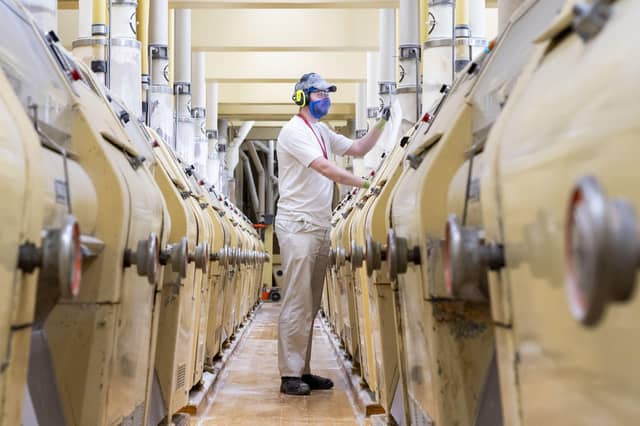
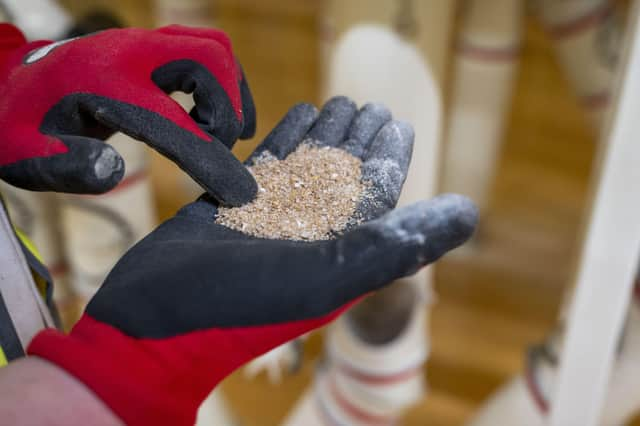
On a tour of the mill, site manager Eddie Burke shows me how the wheat is turned into flour, a process involving cleaning to remove chaff and stray material like stones. The wheat then spends eight hours in a “tempering” bin.
Before milling, there’s grinding and sifting to get separated by particle size. That involves being put through large metal containers that vibrate from side to side, suspended from the ceiling by rows of bamboo rods to take the repeated strain. “You need a material that can take all that shaking 24/7, year after year. They’ve never found a metal that could do the same job,” Burke explains.

Surprisingly, Scotland is not the main source of wheat. Over 60 per cent of it is shipped into Port of Leith from Germany, while around a third comes from England. That’s because Scotland’s cooler, wetter climate doesn’t support the growing of wheat with sufficiently high protein levels suitable for most breads and baked goods. Some of the rest comes from Canada, which produces the high-protein wheat often preferred for the Scots morning roll. Scottish wheat is mostly used for biscuits.

“It really depends on the quality of the domestic harvest each year how the harvests work, and then that will determine the supply chain strategy for the season,” explains Miller.
This year, the wheat harvest has faced significant challenges. James Webster-Rusk, senior agribusiness analyst at consultancy Andersons describes 2026 as “phenomenally challenging”, with drought in England sharply reducing yields.
Germany’s wheat crop is 10 per cent down on the previous year.
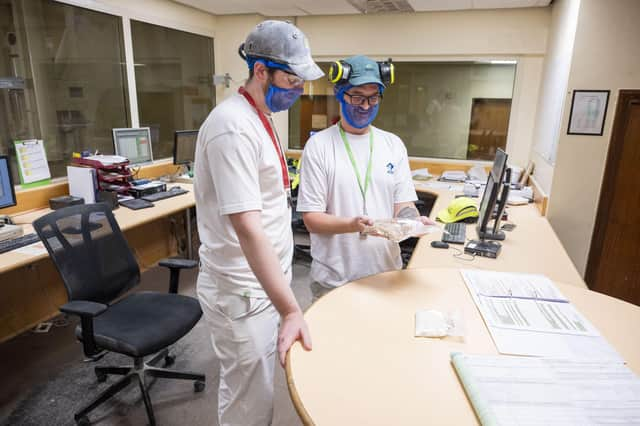
“The milling industry relies on a consistent supply of good quality wheat and that could mean variable quality and smaller crop sizes which create some of challenges for a procurement standpoint,” he says. There may also be emerging implications for Scotland’s food security.
To deal with this, ADM has the advantage of being able to rely on a global network including trading, supply chain logistics and long-standing commodity price risk management expertise.
“We have a robust supply chain that ensures security of supply, and we’re able to do that by leveraging our network of sister businesses across the globe,” Miller explains. A global sustainably sourced wheat programme that includes Scotland is part of the mix.
Last month, ADM opened a new storage and berthing capacity at Peel Ports group’s Port of Greenock, expanding on the company’s existing operations at King George V Dock in Glasgow. The additional logistics capability would “strengthen supply chain resilience and support our customers’ evolving needs across Scotland”, Jonathan Lane, ADM’s UK country manager, said.
Meanwhile, Miller says ADM is drawing on the mill’s local roots with the launch early next year of its own, Chancelot Mill-branded packs of sustainably sourced flour.
He says: “We saw that there doesn’t seem to be a Scottish branded wheat flour out there, made in Scotland by Scottish people for a Scottish market, so that’s what we intend to do.”
Comments
Want to join the conversation? Please or to comment on this article.