
Hubs, pop-ups, flying bankers and branch makeovers: How RBS is keeping it physical in the digital world
“You can start your journey digitally but at some point you may want to break out of that and speak to a human” – Jimmy Robertson
When it comes to retail banking, much of the talk in recent years has been around branch closures, which have numbered in the hundreds, as more and more of us conduct our financial affairs digitally.
The revolution has seen many smaller towns and communities left with no high street banking provision while customers in larger towns and cities have seen their local branch converted into yet another coffee shop, forcing them to travel further afield.
Royal Bank of Scotland has not been alone in undertaking what the major lenders would see as a bit of “right-sizing” amid the surge in cashless transactions and smartphone usage.

Earlier this summer, parent group NatWest announced a fresh tranche of branch closures across Britain, including a further half dozen in Scotland. It will leave the lender with a UK-wide network comprising 336 branches - 62 of them under the Royal Bank of Scotland banner - a shadow of what once was.
But, June’s announcement came alongside a pledge of no further branch closures until at least 2029 and a £50 million investment to modernise and upgrade the remaining network over the next 18 months. The group has already spent more than £17m overhauling its Scottish branch operations since 2020 and almost a fifth of that new £50m commitment is earmarked for sites north of the Border.
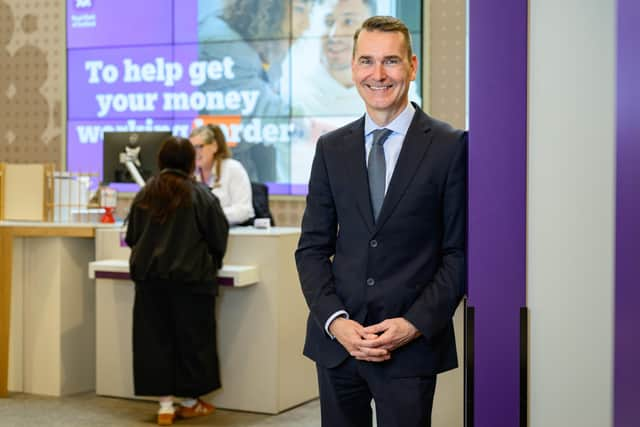
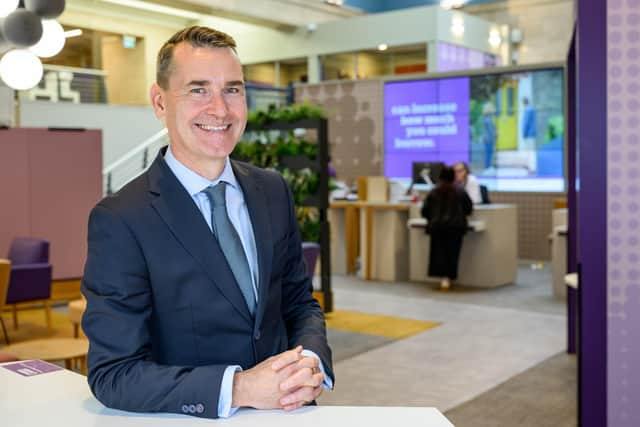
Having started his career at a Highland RBS branch 38 years ago, Jimmy Robertson, the financial giant’s head of branch and local banking for the UK, is passionate about face-to-face banking and argues that it can play a complementary role in today’s virtual world.
“Customer behaviour is changing, but it doesn’t change at the same pace for everybody,” he observes. “That’s why it’s really important that we are in a position about confirming there will be no further branch closures until at least 2029 and that we can invest in these services that are there to serve those communities.
“We are committed to having a full range of banking services available. You can start your journey digitally, for example applying for a mortgage, but at some point you may want to break out of that and speak to a human.
“As the world becomes more tech savvy, and more people are using AI and other technologies, the human service potentially becomes premium and a differentiator for us.”
Around half of the group’s Scottish branches have been refurbished in the past five years, with 11 more scheduled for the remainder of 2026, including Kirkcaldy, Stornoway, Edinburgh Corstorphine and Peebles.
RBS’s large West End branch in Edinburgh has undergone a £500,000-plus refurbishment with the site now playing host to one of the group’s small business Accelerator hubs. In Glasgow, it has completed a £3m redevelopment of its historic Gordon Street branch, while its state-of-the-art £2.5m Inverness site is now well established, having opened last year.
With 258 automated teller machines, RBS also offers Scotland’s largest bank operated free-to-use ATM estate.
Speaking on a visit to the new-look Inverness site, Highland-born Robertson highlights the investment the group is making in more “user-friendly” wider-screen ATMs, which offer improved accessibility.
“We still see people relying on cash and using it to budget, particularly in a cost-of-living crisis,” he says. “That’s not going away. But from our perspective we are committed to having a full range of banking services available.
“We are a big bank and scale is important but part of that scale is retaining your customers. For me that comes down to what we are doing with them day in, day out. There are many ways we can deepen that relationship and one of the simplest ways is brilliant customer service. We must make sure that we meet our customers’ needs and financial wellbeing.”
Part of that provision is the bank’s historic mobile service, which for some eight decades has been bringing face-to-face banking to some of Scotland’s most outlying areas, including the legendary “flying banker” serving the Orkney Isles. Each week, the mobile service covers more than 7,500 miles and it served some 69,000 customers in 2025.
The bank has invested £4.4m in 15 new vehicles - five of them electric - over five years, with recent stops added in Skye and Stornoway.
RBS is also “reimagining community banking” with flexible, modern formats that go beyond the traditional branch. Those innovations include pop-up locations in retail parks and shopping centres, with a new one due to go live at Glasgow Fort this week, having been trialled at Edinburgh’s Fort Kinnaird earlier in 2026.
Robertson, who worked his way through the various tiers of branch banking and other roles before taking up his current position in 2022, says: “We are looking at new branch formats. We need to project what we do better and look at how we create a connected customer experience.
“I certainly don’t see a future where we do not have colleagues in our branches. We want to create presentation spaces that we can bring customers into and present right across retail, business and wealth, or to local community groups.
“It’s the big moments where people need to speak to a colleague - getting a mortgage, remortgaging, dealing with a bereavement or encountering a scam. In these situations having human intervention makes a tangible difference.”
The group is also involved with 30 banking hubs now and more are set to open, further widening the distribution channel. Robertson sees that model evolving over time.
“I think we should look at things such as customer liaison officers,” he says. “That would mean having one consistent person there for the five days of the week as opposed to relying on one day a week. As with the branches, the hubs will evolve.”
Comments
Want to join the conversation? Please or to comment on this article.