
How the 'explosion of side-hustles' is helping this Falkirk candle-making firm burn brighter
“Scotland is a highly entrepreneurial society – and always has been.”
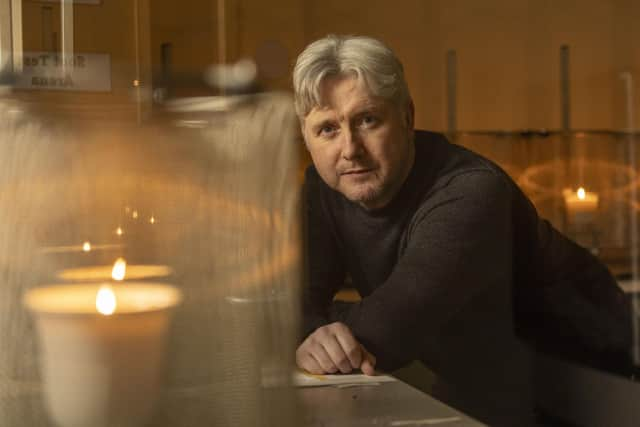
Duncan Maclean is the chief executive of Candle Shack, which is based in Carron near Falkirk, and says it is the UK’s top supplier of materials, training, and know-how for people looking to start their own candle-making business.
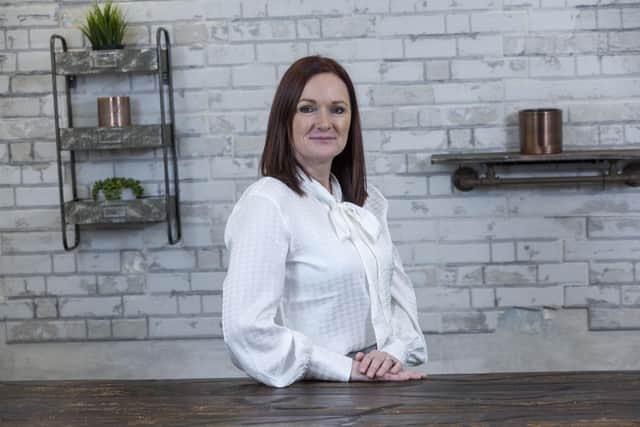
The former Army man, who had spent extended periods on operational tours including Iraq and Bosnia, started the firm with his beauty therapist wife Cheryl in 2010.
They decided to upgrade it from a side hustle to full-fledged business in 2011, and it has grown to a workforce numbering more than 80 and a European HQ in the Netherlands that opened last year, and turned over £13.4 million in its 2023/24 financial year, up 14 per cent from the previous 12 months.

It also says it has about 10,000 customers, including major international brands such as Paul Smith, Floral St, and Overose, plus side-hustlers and regional operators, and it recently found that around a third of Scots have considered taking a second job in the past year to boost their income.
Can you explain why you established Candle Shack? Do any key moments in its history stand out?
Candle Shack was established as my MBA final year project, while I was serving in the Army, and the decision to launch it as a fully fledged business was made at a service station on the M4 over a coffee. After 20 years away from Scotland, and with two young children, we decided to move back so the kids could get to know the wider family.
Memorable moments include renting our first space in Grangemouth, hiring our first employee (Robbie), winning our first white label contract, and the first year we exceeded £1m in revenues. Personally, winning the IoD Scotland Director of the Year award in 2021 was a highlight, as the 18 months prior had been a rollercoaster.
What have been key factors in its growth, such as the increase in e-commerce/side hustles/consumers looking for affordable ways to spruce up their homes?
The main drivers have been the explosion of side-hustles/micro-businesses, and the preference of consumers to buy from purpose-led and local brands. Most of the brands we support are small or medium-sized businesses, serving niche markets. I love seeing our customers' creations as I travel up and down the country. The other, more recent, growth driver has been our expansion into Europe, and our opening of the Dutch business.
The firm in April of this year announced the appointment of Lynne McNulty as chief operating officer, saying this would help such expansion. Can you give more details on this, including your outlook for international growth overall?
As the company grows, the level of complexity increases exponentially. Having the right senior team, with the right mix of skills, becomes increasingly important. As a business that sells thousands of items, the supply-chain complexity is huge, as is managing the associated cash flows. Hiring Lynne has brought discipline to the business, and a higher degree of focus. It now feels more in control, despite generating more revenues than ever before.
We have also now hired a chief marketing officer, Mehak, based in the EU, to help us build brand awareness and enhance customer experience in core European markets. With Lynne and Mehak onboard, covering supply chain and marketing, we are well-placed to accelerate growth in our core European markets: Germany, France, and the Netherlands.
You have your sights set on turning over £50m within six years, how do you aim to achieve this? What are the challenges?
At the moment, the sales split between the UK and the EU is about 70:30. We see most growth coming via expansion in Europe, and expect the split to reverse to 30:70 over the next few years. The main challenge is that Europe is vast, and it can be difficult to assess market maturity in each country, and so difficult to get marketing right.
Small home fragrance businesses are growing in popularity across Europe, but not everywhere, and it is far easier to set up a side-hustle in some countries than others. In addition, we are starting to see local competitors pop up in various countries, who are highly localised. We can either grow organically, or if the market moves more quickly, possibly via acquisition.
Candle Shack has taken on funding from Maven Capital Partners, for example, are you looking at raising more in the coming years?
We are not looking to raise right now, but depending on how the market evolves in Europe, this may become important. For example, if we wanted to grow more quickly via acquisition, additional capital would be required.
What is your view on how entrepreneurship can boost Scotland’s smaller communities and the nation’s economic growth?
Scotland is a highly entrepreneurial society – and always has been. What I love most about our business is the impact it can have on local communities and individuals. I find it heartwarming to see these small artisanal enterprises manufacturing beautiful products in small workshops. These hand-crafted products are lovingly made, and usually outperform mass-produced products, even from luxury brands. The people – or the town where they are based – often is the brand, and they create jobs locally.
To what extent are a military background/beauty therapy (in the case of Cheryl) an advantage in business?
Cheryl’s experience as a beauty therapist helped us as we had already run a business before starting Candle Shack, so, we had rented a premises, done book-keeping, handled customer support etc. She was also brilliant at talking to customers, as beauty therapy is a very intimate one-to-one profession.
My experience in the military helped with planning, and importantly, I was very comfortable with change and operating in an uncertain environment. In fact, I think that ability to function when everything feels outside your control, was the single most important factor in dealing with the pressures of early-stage business.
Comments
Want to join the conversation? Please or to comment on this article.