
How renewable energy projects can benefit Scotland’s peatlands
Heather Johnstone says renewable energy development and protecting one of our most valuable natural assests need not be competing objectives
It is clear to me that reducing pollution, tackling climate change and strengthening our energy security are some of the biggest challenges we face today. In particular, delivering more renewable energy infrastructure is essential if we are to leave a healthier environment for future generations. Scotland is particularly well placed to support the energy transition, due to its natural wind resource.
As someone who cares deeply about the natural world, I am equally passionate about ensuring we achieve these goals in a way that protects and restores the ecosystems that help sustain us. With the right approach, renewable energy projects in Scotland can do both, helping to tackle climate change while creating opportunities to enhance the environment and support a nature-positive transition.
Scotland's peatlands are one of the best examples of how climate and nature goals can be delivered together. These landscapes cover around 20 per cent of Scotland’s land area and play a vital role in both carbon storage and biodiversity. Unfortunately, around 75 per cent of Scottish peatlands are currently considered degraded.

Despite covering only around 3 per cent of the Earth’s surface, peatlands store approximately 30 per cent of the world’s terrestrial carbon, making them one of our most important natural carbon stores. What makes them so remarkable is that peat develops incredibly slowly, building up over thousands of years. Once damaged, these habitats can take centuries to recover naturally, and instead release, rather than capture carbon. They also provide a range of ecosystem services that benefit society in ways many people may never see. They help reduce downstream flood risk, improve water quality and support drinking water supplies. Around 72 per cent of the UK's reservoirs are fed by peaty catchments, providing drinking water to more than 28 million people. Healthy peatlands therefore make an important contribution to both environmental resilience and public wellbeing.
My own interest in peatlands began at the Royal Society for the Protection of Birds and continued latterly as a peatland scientist at the Environmental Research Institute. That experience took me across the Flow Country, the world’s first peatland UNESCO World Heritage Site. I have always been fascinated by the unique species these ecosystems support, from carnivorous sundew plants to the Sphagnum mosses.
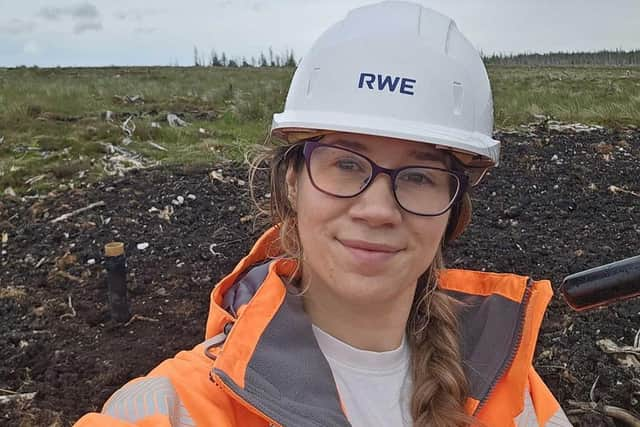
Today, I am working on a two-year project with the University of the Highlands and Islands and RWE, the UK’s leading power generator, that seeks to address how excavated peat can be incorporated meaningfully as part of restoration efforts, in a way that retains its ability to store carbon, support wildlife and provide other ecosystem benefits. Delivered through a Knowledge Transfer Partnership (funded by RWE and Innovate UK), the project brings together academic and industry expertise to ensure research findings can be translated into practical, real-world solutions.
Our work is beginning at sites in Caithness, where RWE's onshore wind farms provide opportunities to test innovative approaches of integrating excavated peat as part of restoration efforts. By demonstrating these methods in practice, we hope to show they are effective, scalable and capable of supporting habitat restoration alongside renewable energy development.
More broadly, if we can demonstrate that excavated peat can be successfully used to restore degraded habitats, Scotland has an opportunity to set a global benchmark for managing peatlands alongside development, energy or otherwise. This could deliver significant environmental benefits while helping to build confidence in renewable energy projects among local communities.
Ultimately, I do not believe renewable energy development and peatland protection need to be competing objectives. If this project succeeds, it will help demonstrate that we can deliver the clean energy infrastructure we need while safeguarding one of our most valuable natural assets.
Heather Johnstone is a KTP Associate: Peatland Management Project Officer and is leading a new peatland restoration project with RWE and the University of Highlands and Islands in Caithness
Comments
Want to join the conversation? Please or to comment on this article.