
How climate change is adding heat to Scotland’s housing market
“How do we design homes suited to the climate they will experience over their lifetime, rather than the climate we have been accustomed to?” – Angus Kelly
Property agents get an interesting early view of changes in the way people think about where they live.
During Covid, we saw buyers begin to ask different questions. Did they really need to live within commuting distance of the office? Was the house big enough if they were going to spend more time there? Would they rather have a garden, more space or access to the countryside?
We didn't know at the outset quite how significant those individual decisions would become. Eventually they developed into what became known as the "race for space", changing demand across parts of the rural property market.

Six years on, I am beginning to hear another consideration enter conversations with some prospective buyers: climate.
We have development plots for sale on Scotland's West Coast which have attracted interest from people living in drought-affected parts of southern England. They are looking north for familiar reasons, including landscape, lifestyle, space and value for money, but there is something else influencing their search.
They have had enough of increasingly hot, dry summers.
For some, climate has not simply been another factor to weigh up when choosing a property. It has been what prompted them to start looking elsewhere in the first place. That distinction interests me.

Climate change is obviously not new and predictions about how different parts of Britain could be affected have been available for years. What has changed is that people are experiencing some of those conditions for themselves. Questions about water security, summer temperatures and what the climate might look like in ten or 20 years become rather less theoretical when you have lived through periods of extreme heat and drought.
There are parallels with Covid, but this is much more gradual and it may never result in anything like the same movement in the property market. However, Covid has left a legacy that makes relocation easier. Flexible working and better connectivity mean that, for some people, moving hundreds of miles no longer means giving up a career or accepting an impossible commute.
Many of those we are hearing from are in their 40s to 60s, often with older children and fewer ties determining where they need to live. They can ask not just where they need to live now, but where they want to spend the next 20 or 30 years.
But there is another side to this which the property industry needs to think about. A changing climate won't just influence where people choose to live. It could change what they expect from their homes.
We have already seen that happen once. Covid accelerated demand for home offices, better broadband and more usable outside space. Developers and housebuilders responded because buyers' priorities had changed.
Could climate do something similar?
A home being designed today could still be occupied in 50 or 100 years. How it copes with higher temperatures, heavier rainfall or pressure on water supplies is therefore increasingly relevant. Drainage, water management, energy use, orientation and how easily a property can be kept comfortable in warmer weather could all become greater considerations.
Air conditioning might seem an obvious response to hotter summers, but widespread adoption brings its own energy and environmental questions. There is a wider challenge here for architects, planners and developers: how do we design homes suited to the climate they will experience over their lifetime, rather than the climate we have been accustomed to?
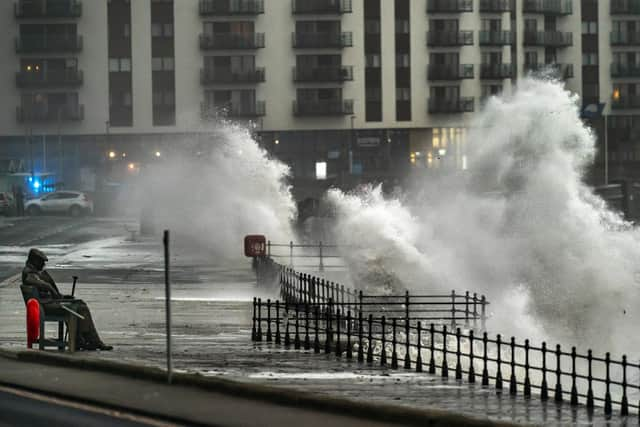
That question applies just as much to Scotland. Buyers may perceive Scotland as a more comfortable or climate-resilient option, but our climate is changing too. Wetter conditions and more extreme weather bring their own challenges.
And that creates an interesting change in perspective, particularly for the West Coast.
Rain is hardly something we have traditionally struggled to associate with the west of Scotland. It is more likely to feature in a joke about the weather than an estate agent's list of selling points.
But perceptions depend on what you are comparing it with.
If you have spent a summer experiencing prolonged heat, drought and restrictions on water use, a green landscape and reliable rainfall may start to look rather different. For someone who enjoys gardening, wants land or simply prefers a more traditional British summer, what was once regarded as a drawback could increasingly become part of the attraction.
It would be easy to get carried away with that idea. I don't think we're about to see a mass migration from southern England to the west of Scotland because people have had enough of hosepipe bans.
Property values are currently relatively stable and parts of the development plot market have softened. For buyers with the means and appetite to build, however, Scotland can offer considerable space and exceptional landscapes for the money.
It is simply too early to know whether the conversations we are having today will develop into anything resembling the change in buyer behaviour we saw during Covid.
But that comparison is precisely why I think they are worth noticing.
At the beginning of the pandemic, we did not immediately know that individual decisions to seek more space, leave cities or move closer to the countryside would develop into a wider property-market phenomenon. Agents saw the questions and changing priorities first. The data followed.
Climate may never produce a comparable shift. But the interesting thing is that it has entered the property conversation at all.
Buying a home is inherently a long-term decision. Increasingly, that may mean thinking not only about where we want to live, but what we need our homes to do for us when we get there.
And if that continues, Scotland's famously wet weather might one day turn out to be rather more of a selling point than we thought.
Angus Kelly is a partner at Bidwells based in the Fort William office
Comments
Want to join the conversation? Please or to comment on this article.