
How chemistry, biology, and sport have driven the career of this Scotch master blender
“Ultimately, we’re looking to expand our portfolio further around the world.”
Michael Henry holds the role of master blender at independent distiller Loch Lomond Group, which has been producing spirits since 1814, and whose assets include Loch Lomond distillery in Dunbartonshire, Glen Scotia distillery in Campbeltown, and its own bottling plant in Ayrshire, plus last remaining stock of silent distillery Littlemill.
Henry’s previous roles include a spell with InBev, brewing Tennent’s Lager in his native Northern Ireland and then in Glasgow, and he joined Loch Lomond Group (whose other brands include Glen’s Vodka and Ben Lomond Gin) in 2007, appointed master blender in 2015.
He says his current role spans the group’s whisky brands, including Loch Lomond Whiskies, Glen Scotia, and Littlemill, and developing spirits for its single-grain brand Spearhead, and blended malts for Noble Rebel. The group’s offering is stocked in more than 125 countries, and the Scotch Whisky Association (SWA) in February said the value of exports of the drink topped £5.6 billion in 2023 amid “significant” challenges for the sector.
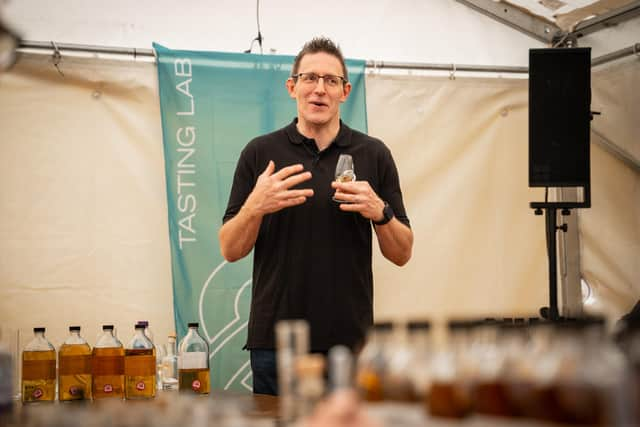

Henry states: “Ultimately, I’m responsible for upholding the quality and taste of [Loch Lomond Group’s] well-loved single malts. I lead a small team, and together we look after developing new expressions, preparing spirit for bottling, and planning for the future by managing stocks of our ageing whiskies to support our brands. We have our on-site cooperage and we work together with our coopers on sourcing and caring for the casks we use.”
Can you detail your path into the whisky industry, and and what has been the most memorable moment in your career?
My path into master blending was pretty straightforward. Growing up near Bushmills Distillery in Northern Ireland, the spirit was woven into the fabric of our community. Both my granddad and dad enjoyed a good dram, so my early experiences were quite positive.
At school, I was particularly keen on biology and chemistry, and my enthusiasm and talents for both subjects secured me a place on the brewing and distilling course at Heriot-Watt University in Edinburgh. That summer, I was working for Bushmills Distillery, and it agreed to sponsor my studies. This really was a pivotal moment in my career.
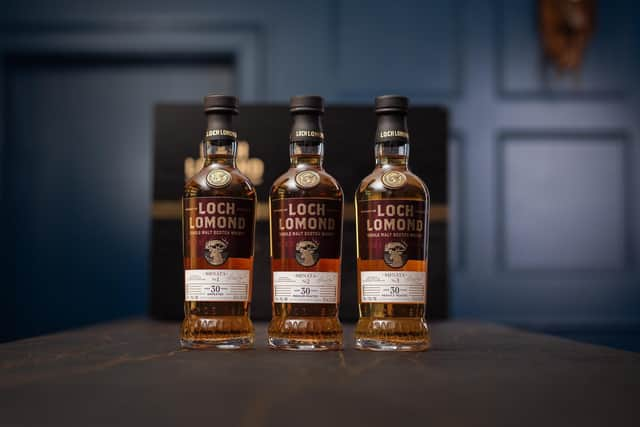
After graduating, I spent a decade in the beer industry, gaining a deep understanding of flavours that can be created through malted barley and fermentation. I returned to the world of whisky at Loch Lomond as a warehouse manager, and although it was primarily an operational role, it led to me taking on the blending responsibilities for the company. When the firm changed hands in 2014, I naturally transitioned into the role of master blender.
Working at The Open in Royal Portrush in 2019 was a hugely significant moment in my career. When I was growing up, hosting an international golf championship would never have been possible in Northern Ireland. Being part of this this historic sporting event as it returned to Portrush after 60 years, and having my family there to share in the moment, was really special.
There are currently about 150 operating Scotch Whisky distilleries north of the Border, according to the SWA. How can Loch Lomond Group stand out in a crowded market?
Each of our three distilleries brings something special for people who enjoy whisky. With Loch Lomond distillery, we embrace variation in the distilling process, using different yeasts, shapes of stills, and levels of peated malt, to create as much flavour in the new make spirit itself, then use the flavours from the cask as a background to showcase the distillery character. Our stills and approach to flavour give us vast potential for creating unique flavours.
Glen Scotia is in Campbeltown, the Victorian whisky capital of the world, and our Glen Scotia whiskies all have that distinctive corresponding signature character, oily mouthfeel, ripe fruit, and coastal salinity. Lastly, our Littlemill distillery was the oldest licensed distillery in Scotland, founded in 1772 and licensed in 1773. It closed in 1994 and we are guardians of its depleting cask stocks.
Loch Lomond Group has secured key sports partnerships, how do these help drive forward the brand?
We have established several of these in recent years such as The R&A for The Open Golf Championship. Loch Lomond Whiskies has been the official spirit of The Open for six years, and, as part of this ongoing partnership, we recently celebrated the 152nd Open at Royal Troon. Golf is one of the largest participation sports for men and women and our partnership with The Open has increased our brand visibility and awareness worldwide.
Our on-course presence allows us to directly connect with visitors. At The Open this year, we had more than 45,000 people on the course each day, we delivered on-course tastings, and had our own whisky bar that allowed guests to experience the brand and spend time with our whisky-making team.
Over the years, Loch Lomond Group has also held partnerships with the Scottish Professional Football League and the Super League Rugby. There’s a lot of synergy between historic whisky brands and sporting championships – both are steeped in tradition, and these partnerships have helped us to promote our brands globally as we continue to grow our international presence.
The group recently signed up a new US distributor, how will this help accelerate global growth? What are the key long-term targets for the group overall?
Appointing our new US distributor, Foley Family Wines, in April was an important milestone for us. From its base in Somona County, it is already playing a key role in Loch Lomond Group’s Stateside growth, acting as an importer and distributor through its wholesaler and supplier network.
Our current US portfolio includes Loch Lomond, Glen Scotia, and Littlemill single malts, Spearhead single grain, Ben Lomond Gin, and Champagne Piaff. Ultimately, we’re looking to expand our portfolio further around the world, and deliver our whiskies to new markets.
Comments
Want to join the conversation? Please or to comment on this article.