
Harvest 2026: Another defining moment for Scotland’s cereals and oilseeds sector

The pace and scale of change facing the sector today is unprecedented
Harvest is always a significant milestone in the farming calendar. It marks the culmination of months of planning, investment and hard work, while also providing an opportunity to reflect on the challenges overcome and those that still lie ahead.
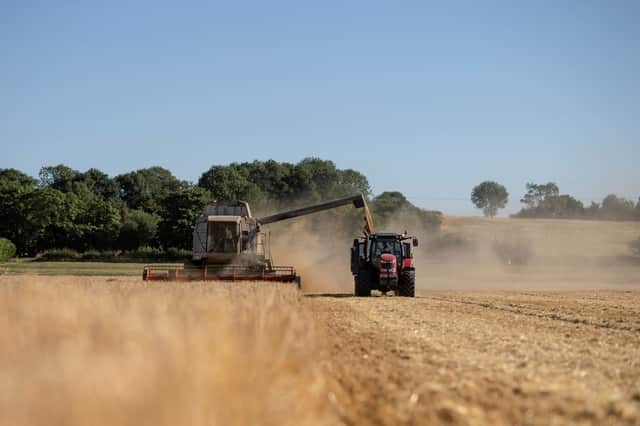

As combines begin to move into fields across Scotland, many growers will be hoping for settled weather and good yields. Yet, despite the optimism that accompanies every harvest, this season begins against a backdrop of considerable uncertainty. Our cereals and oilseeds sector continues to face a unique combination of economic, environmental and policy pressures that threaten both short-term profitability and long-term resilience.
Scottish arable farmers have always adapted to changing circumstances, but the pace and scale of change facing the sector today is unprecedented.
The first challenge remains profitability. While some input costs have moderated from the record highs experienced over the past few years, they have not returned to historical norms. Fuel, fertiliser, machinery, labour, and finance all continue to place significant pressure on farm businesses.
And right now, both the affordability and availability of red diesel are serious concerns.
At the same time, global grain markets remain subdued. Large international harvests, geopolitical uncertainty and fluctuating demand have all contributed to weaker cereals prices, leaving many Scottish growers facing extremely tight margins.
For many businesses, success this harvest will depend not only on yield and quality but also on careful cost management and marketing decisions. Even where crops perform well, strong production does not automatically translate into sustainable profitability.
Alongside economic pressures, growers continue to contend with increasingly volatile weather.

The last decade has demonstrated that climate change is no longer a future concern. It is already influencing day-to-day farming decisions. Wetter autumns can delay tilling and drilling, prolonged winter rainfall can impact crop establishment, while increasingly frequent dry spells during the growing season present new challenges for yield potential.
Scottish farmers are exceptionally skilled at managing risk, but weather variability is becoming harder to predict and even more localised. Investment in drainage, water management, improved varieties and precision technologies will become increasingly important if businesses are to remain resilient. However, these investments require confidence, and confidence comes from stable businesses operating within a supportive policy environment.
A further concern is the continued reduction in the crop protection tools available to growers.
The loss of active ingredients across herbicides, fungicides and insecticides is making crop management more difficult, not less. Farmers are fully committed to using plant protection products responsibly and only where necessary but removing proven tools without viable alternatives risks reducing productivity, increasing production costs and ultimately undermining food security.
Innovation undoubtedly has a major role to play. New plant breeding techniques, precision application technologies and integrated pest management all offer opportunities to reduce input use while maintaining productive agriculture. However, innovation alone cannot fill every gap overnight. Scottish agriculture needs access to an evidence-based policy approach that balances environmental ambition with the practical realities of food production.
Policy certainty is another critical issue.

The introduction of Scotland’s new agricultural support framework represents one of the biggest changes to farm policy in a generation. Farmers understand that public support must deliver outcomes for climate and nature, and the cereals and oilseeds sector has consistently demonstrated its willingness to play its part. However, environmental objectives cannot be achieved without financially sustainable farm businesses.
Food production and environmental delivery should never be viewed as competing priorities. They depend upon one another. A profitable farming business is far better placed to invest in soil health, biodiversity, carbon reduction, renewable energy and habitat management than one struggling simply to remain viable. As implementation of future support measures continues, clarity, simplicity and consistency will be essential. Businesses making investment decisions today need confidence that policy will remain stable over the years ahead.
Scotland’s cereals and oilseeds sector also deserves greater recognition for the contribution it makes beyond the farm gate.
Arable farming underpins some of Scotland’s most successful industries. Quality malting barley supports our globally recognised whisky industry. Feed wheat and barley sustain livestock production across the country. Oilseed rape contributes to domestic food production and crop rotations that improve soil health and help manage pests and diseases.
Collectively, these crops support thousands of jobs throughout processing, transport, engineering, research and food manufacturing. Their importance extends far beyond individual farms.
At a time when global events continue to expose the fragility of international supply chains, maintaining a productive domestic cereals and oilseeds sector should be viewed as a strategic national asset.
Producing more of our own food, to some of the highest environmental and welfare standards anywhere in the world, should remain a cornerstone of Scottish agricultural policy.
Looking ahead, there are opportunities too.
Advances in precision agriculture, digital technologies, plant breeding and data-driven decision making all have the potential to improve productivity while reducing environmental impact. Scottish farmers have consistently demonstrated their willingness to adopt innovation where it delivers practical and economic benefits.
The challenge is ensuring businesses have both the financial capacity and policy confidence to invest. That means maintaining support for research and knowledge exchange, encouraging investment in modern equipment and infrastructure, improving access to skilled labour, and ensuring regulations enable rather than constrain innovation.
As harvest begins, our immediate focus remains firmly on supporting growers through what is always one of the busiest and most demanding periods of the farming year.
We recognise the pressures many businesses are under, and NFU Scotland will continue to champion policies that support productive, profitable and sustainable farming.
And while the challenges facing the cereals and oilseeds sector are significant, they are not insurmountable - and harvest is a reminder of the resilience, professionalism and innovation of our farmers and growers.
Jonnie Hall is Director of Policy and Deputy CEO of NFU Scotland
Comments
Want to join the conversation? Please or to comment on this article.