
Feelings run high as energy transition focuses minds - Jeremy Grant
New Labour government has provoked existential tension in the Granite City
For a sense of how Scotland’s energy industry feels about policy emerging from the Labour government, the mood in Aberdeen is a good place to start.
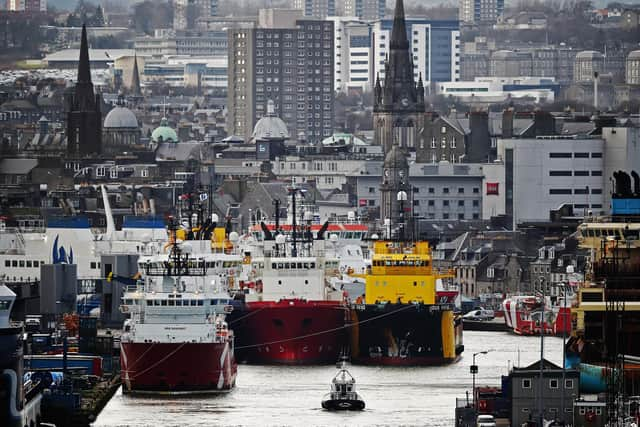

Two announcements last week reveal existential tension in the Granite City as it charts the best path between the beginning of the end of fossil fuels and the growth of green energy. At stake, of course, is preserving livelihoods for people in the Northeast – managing a “just transition”.
First, the Treasury said that a “windfall tax” on oil and gas companies’ profits in the North Sea – known as the Energy Profits Levy and in place since 2022 – would not only be raised and extended by a year to 2030, but also that a key element of what the government described as “unjustifiably generous investment allowances” would be abolished.

This triggered a furious reaction from the Aberdeen & Grampian Chamber of Commerce (A&GCC), whose chief executive, Russell Borthwick, slammed the move as “reckless, wrong and economically ruinous for businesses operating in the North Sea”.
The A&GCC is not alone in making the case that reducing incentives for continued oil and gas exploration will make it more likely the region faces a cliff-edge of job losses as energy groups scale back or cease operations early. Consultants Wood Mackenzie warn the EPL changes “could result in the premature slowdown of investment across the upstream sector which could lead to accelerated cessation of production”.
By contrast, two days later the Department for Energy Security and Net Zero handed a boost to the offshore wind industry by doubling the budget for the annual auction that provides developers with initial subsidies to build clean energy projects. Claire Mack, chief executive of Scottish Renewables, said the bigger budget “sends a positive signal to industry that the UK government is serious about achieving its clean power mission”.
Aberdeen has long been known as the oil capital of Europe. Yet the growth of green industries there means it has justified ambitions to be the “net zero” capital of Europe too. That is why the AGCC has been campaigning for Aberdeen to be the location for Great British Energy, a new publicly owned company that will use £8.3 billion in public funds to invest with the private sector in clean energy projects, including floating offshore wind farms in the ScotWind project off Aberdeenshire.
Politics aside, Aberdeen has cards to play, including a new South Harbour for offshore wind assembly at the port, and a green industries cluster emerging on an adjacent 40-hectare site known as the Energy Transition Zone (ETZ).
Yet so has Edinburgh. It has a well-established financial ecosystem with links to London’s capital markets and a growing legal and advisory scene in renewables. Most of the ScotWind projects’ operational headquarters are in the city.
The Aberdeen campaign has not always struck the right tone, with the A&GCC warning Labour that locating GB Energy elsewhere “will just confirm that our new government is happy to throw our region onto the scrapheap to support areas that chose to vote them in to power”. Let’s see if this wins hearts and minds in London.