
Eight in ten Scottish firms see productivity boost from AI but human touch vital - NatWest report
“There is a real risk of an AI adoption divide emerging, particularly for smaller businesses with less access to skills, investment and specialist expertise” – Robert Begbie, NatWest
Eight in ten Scottish businesses using artificial intelligence have seen a productivity boost from the technology, new research suggests.
The findings, published in NatWest Group’s AI Adoption Report, highlight Scottish and UK businesses’ take-up of AI, with firms pointing to improvements in efficiency, innovation and commercial performance.
Across Scotland, 82 per cent of businesses using AI reported increased efficiency, while 80 per cent reported greater innovation. The research also found that 60 per cent of businesses had seen higher revenue and 66 per cent higher profitability as a result of leveraging AI.
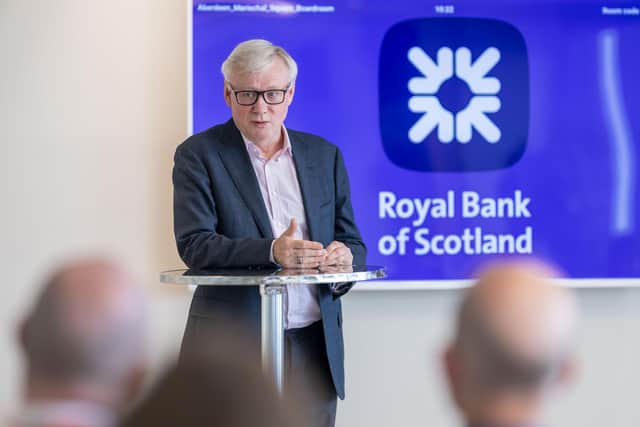

While AI adoption is becoming increasingly widespread, just 6 per cent of current business users nationally have reached the stage where AI is transforming how their organisation operates, which NatWest said highlighted significant untapped potential for future growth.
The report also suggests that technology alone will not determine which businesses succeed. Research among NatWest Group retail customers found that 81 per cent say the ability to reach a real person when needed is the most important trust factor, while 77 per cent value reliability, strong human oversight and transparency around data use.
The Royal Bank of Scotland parent group said that through its Accelerator programme, it was helping businesses across Scotland make the most of AI through “practical training, expert support, access to finance and the power of its innovation network”.
Robert Begbie, chief executive, commercial and institutional banking at NatWest Group, said: “AI has the potential to be a powerful driver of growth, but the businesses that succeed will be those that use it to deliver better customer outcomes while building trust through transparency and human accountability.
“There is a real risk of an AI adoption divide emerging, particularly for smaller businesses with less access to skills, investment and specialist expertise. As both a major adopter of AI and the UK’s leading business bank, we have a role to play in helping more businesses turn AI’s potential into growth.”
A separate study earlier this month revealed that almost four in ten mid-sized businesses in Scotland plan to accelerate AI investment in the coming months.
Despite the use of artificial intelligence in UK businesses rising in the last three years, AI adoption remains one of the biggest challenges facing firms in Scotland, according to accountancy and advisory firm BDO’s bi-monthly mid-market tracker.
Almost a quarter (24 per cent) of businesses north of the Border rank AI adoption and technological change as one of their top concerns over the next six months, outweighing reduced customer demand and spending, and access to finance. As a result, 37 per cent plan to accelerate investment in AI or automation in response, with the aim of improving productivity.
Earlier this summer, the UK government published figures showing that “self-reported” use of AI in UK businesses - with ten or more employees - has increased from around 12 per cent to around 35 per cent since late 2023, with larger firms more likely to have adopted AI.
Comments
Want to join the conversation? Please or to comment on this article.