
Driving Scotland’s freight into an electric future
SMEs need help in meeting the Scottish government’s net zero targets, writes Chris Thorneycroft Smith
Here’s a question for Scotland’s next Parliament: who will ensure the backbone of our economy, the vans and heavy goods vehicles that keep supply chains moving, is not left behind in the transition to net zero?

There are currently over 5,000 licensed operators of HGVs in Scotland, with the vast majority being SMEs. These operators transport approximately 134 million tonnes of commercial freight a year, worth over £32.3 billion. Yet transport is also responsible for a quarter of Scotland’s greenhouse gas emissions, with HGVs and vans contributing over 3.5 million tonnes of CO2 emissions per year.
While the environmental case for the clean energy transition has always been strong, we’ve recently seen an increasingly evident financial case for fleets of all sizes, as the savings begin to outstrip the up-front costs.

Holyrood has already promised a modernised transport ecosystem; the question now is whether investment in these shifting energy systems will serve as the catalyst for change.
Why now?
Recent global instability has driven diesel prices to their highest in years, exposing how vulnerable Scotland's van and HGV operators are to fossil fuel markets they cannot control.
Recognising the precarious nature of being tethered to global oil chains, interest in, and sales of, electric vehicles have jumped, with the most freight-reliant global economies witnessing an immense boost in interest for alternative fuel systems for commercial transport.
For HGV and commercial fleets, however, an all-too-familiar chicken-and-egg dynamic is at risk of forming. Many HGV operators cannot consider decarbonisation until suitable charging infrastructure exists away from their home depot, but until there is a confirmed customer base, infrastructure providers cannot back the business case to build the necessary facilities at pace.
A team sport
Recognising that no one body can implement change overnight, industry leaders, researchers, and government bodies are beginning to sing from the same hymn sheet.
We are proud to convene the Telford Consortium, a £1 million project funded by the HGV Market Readiness Fund. Named after the pioneering Scottish engineer Thomas Telford, the consortium seeks to bring together members from all aspects of the transition to create pragmatic, actionable steps for a national transition project.
The consortium has unearthed a promising solution to this deadlock. Infrastructure providers will apply private capital to build and operate the public access truck-focused charging infrastructure that is so desperately needed, whilst Holyrood underwrites a small proportion of ultimate demand for the first few years.
This system would de-risk the investment, giving all parties the confidence to begin building the necessary transport infrastructure. Crucially, this government guarantee would give vital support to SMEs, which are most likely to struggle to meet the upfront capital costs that fleet electrification requires. Government would not need to be directly involved, allowing private sector development to function at maximum efficiency whilst supported by modest public-sector guarantees.
This is similar to the highly effective Contracts for Difference scheme that helped accelerate offshore wind development, where the government provides a minimum amount of revenue stability to developers for a fixed term – a timely parallel of how targeted use of public money can encourage private sector investment, by lowering investment risk in emerging markets.
Yet this is not a one-and-done solution; change is complex and will require a variety of solutions. This is why continued engagement from one parliament to the next is critical, so as not to lose the momentum already achieved.
The direction of travel is clear, but the cost of hesitation is not. Scotland can choose to lead, building a freight system that is cleaner, cheaper and more resilient. Or it can watch other countries set the pace.
The industry is ready. The solutions are emerging. What’s needed now is the political will to support them.
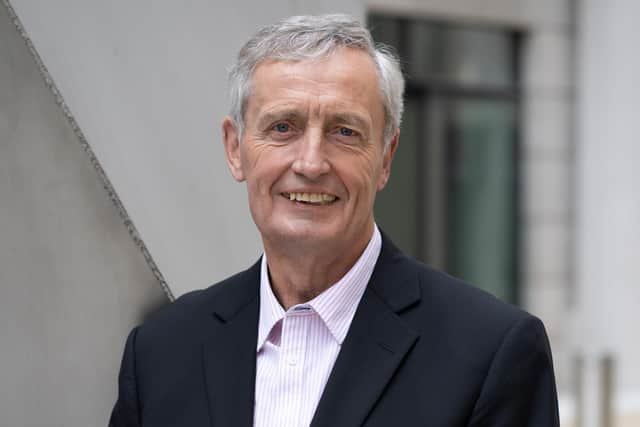
Chris Thorneycroft Smith, Co-founder of Aegis Energy and Lead Representative on the Telford Consortium
Comments
Want to join the conversation? Please or to comment on this article.