
Couple reviving Ayrshire salt-making complete new tower of thorns
The new structure stands 12 metres tall by 25 metres long
A husband and wife team have expanded their efforts to revive the historic salt-making trade on the Ayrshire coast, by building a new tower which produces salt from sea water.
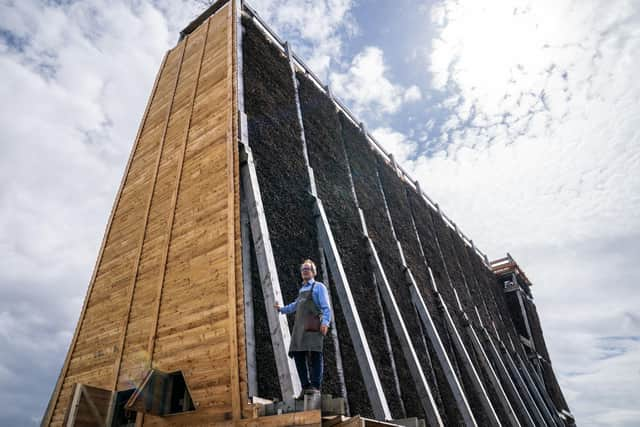

Gregorie and Whirly Marshall of Blackthorn Salt are celebrating after topping out their second graduation tower, an imposing structure filled with thousands of blackthorn bushes.
The new structure stands 12 metres tall by 25 metres long, dwarfing their previous tower which is only eight metres high.

Graduation towers use salt water from the sea, which is piped to the top of the structure and slowly trickled down through the thousands of thorns.
The vast surface area of the plants means the bracing winds of the Ayrshire coast evaporate the water and turn it into brine, as it is cycled through the tower. Salt is then extracted from the brine.
The Marshalls' site is unique in the UK in using this method, and examples of graduation towers around the world are rare.
They say their towers produce a "super-high" quality of salt in a more sustainable manner than other methods.
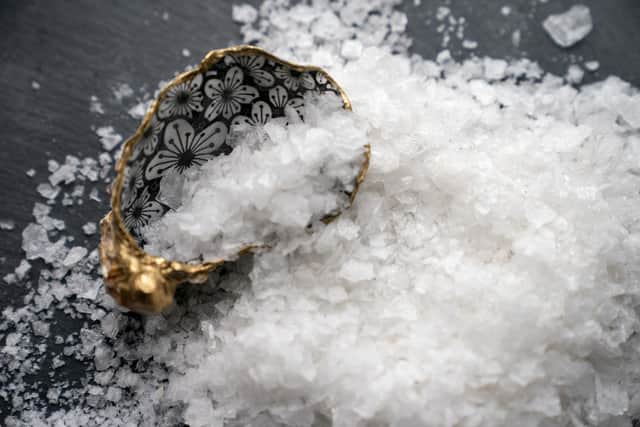
Their first tower began to yield salt on a regular basis in 2021, and they found the product was in demand.
Ms Marshall told the Press Association : "It's been an incredible journey, the fact people in Scotland and around Britain love our salt and appreciate and understand why it's produced the way it is - it's phenomenal."
Constructing the tower has taken about three years of on-and-off work, including laboriously fixing the blackthorn bushes in place.
The new tower has about 6,000 blackthorn bushes attached to it, which act as a "great washing line" to slowly evaporate the sea water.
Ms Marshall said: "They also impart flavour to it. The crystals have each of the five basic tastes."
She said the graduation tower method is far more sustainable than other ways of creating salt as it requires very little energy for the water to evaporate.
Historically, the Ayrshire coast had a number of salt-panning sites which came and went throughout the centuries, some dating back to medieval times.
These often burned coal to heat sea water, producing rudimentary salt in pre-industrial times.
Comments
Want to join the conversation? Please or to comment on this article.