
'We need to make sure it doesn't have a dodgy past': the process of acquiring art for the nation
The process of acquiring art can be lengthy

When Dr Tricia Allerston is considering acquiring a work of art on behalf of the Scottish nation, she has to consider if it could ever have previously been looted by the Nazis.
“We have to be as sure as we can be that there are no surprises in [an artwork’s] past,” says Dr Allerston, head of European and Scottish art and chief curator at National Galleries of Scotland (NGS).
“Some of our works are by artists that were, shall we say, greatly ‘appreciated’ by the Nazi regime. If there’s a gap [in a work’s history], we have to think about it and about the risks.”
The artworks acquired by NGS every year - the current financial year has seen 21 added to the collection so far - are all put through a rigorous process to ensure that they are legally and historically suitable for acquisition, as well as being considered important for the nation.
“The acquisition process probably involves the special skills of almost every department we have,” says Dr Allerston. “From a curatorial point of view, it’s provenance and research, but we can’t acquire anything unless we’re really sure of its condition or if it has any problems for the future we need to know about.”
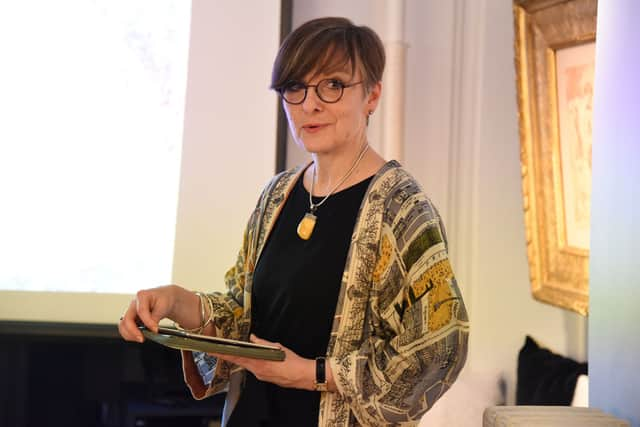

“It’s our responsibility to know it’s come with a good background and a good provenance, adds Sally-Ann Coxon, senior collections registrar at NGS. “We need to make sure it’s ours to acquire, or theirs to sell or donate and that it doesn’t have a dodgy past.”
Ranging from just £30 to potentially millions - Monarch of the Glen, an iconic work by Sir Edwin Landseer depicting a stag in a Highlands setting, cost £4 million when it was bought by NGS in 2017 - the galleries’ acquisitions include smaller, lesser-known Scottish artists as well as major international names.
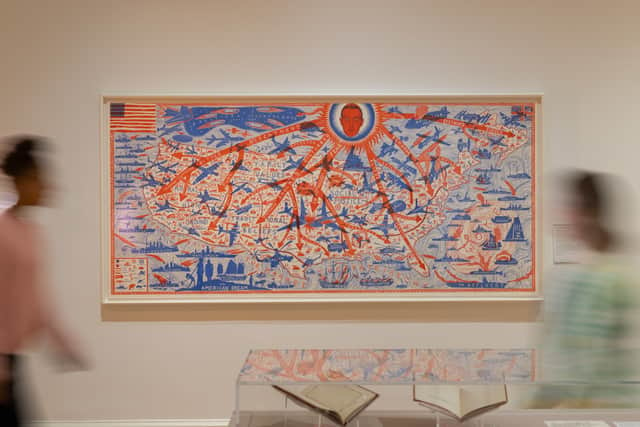
The latest came in November, when a Grayson Perry print which had been displayed in an exhibition by the artist in Edinburgh two years earlier, went on display at NGS’ Modern One. The American Dream, a 2.5m print of a map created by the artist, was bought for £30,000.
“We have a statutory duty to acquire art for the collection, it’s part of our blood, it’s really key to what we do,” says Dr Allerston. “It’s also the most fun bit of what we do.”
All artworks owned by NGS are the property of the nation, under statutory laws. Once in NGS possession, nothing can be sold or disposed of without an act of parliament.
Senior conservator Lesley Stevenson is responsible for the paintings once they are in the care of NGS, ensuring they are properly framed, glazed and checked over before they are hung in a gallery.
Three years ago, in a routine x-ray of Van Gogh painting Head of a Peasant Woman, Ms Stevenson uncovered another self portrait by the artist on the back of the canvas, covered by layers of glue and cardboard.
“The acquisition process is particularly rigorous, because once a work is acquired, that’s forever,” she says. “It will be looked after, it will be in the care of the institution. That’s why it is quite right that it should be so rigorous.”
No two acquisitions are the same, with some taking weeks or even months, to pass each stage. Others can happen quite quickly.
“If there’s an auction we don’t know about until late and it’s something really important, then we really go for it,” says Dr Allerston. “There’s a whole process of authorisation for that, including agreement by the trustees, so it can go very quickly if necessary.”
While funding for some works comes from gifts, grants or collaborations with other galleries, NGS also receives ringfenced funding from the Scottish Government worth around £200,000 a year for the last decade, which is required to be spent on acquiring artworks.
“Very few municipal, civic or even national galleries in some countries get funding like that,” says Dr Allerston. “It’s sometimes bunched together, we get too much one year and we can’t spend it all in the timeframe and the next we have none, but we are very lucky.”
Not all acquisitions are paid for. Some new works brought into the galleries are bequests, gifted to the nation as part of a legacy.

Meanwhile, another route for art to end up in the hands of NGS is via “acceptance in lieu of tax”, a UK-wide scheme which enables taxpayers to transfer important works of art and heritage objects into public ownership to settle inheritance tax liabilities. In 2016, the scheme saw the first work on paper by French Impressionist Claude Monet enter the national collection, while in 2011, a watercolour by JMW Turner was handed to NGS through the process.
Potentially the best-known bequest to NGS came in the form of a fund, left by James Cowan Smith more than a century ago. The sum of £52,257 gifted at the time of his death in 1919 and believed to be worth more than £2m today, has since been invested, allowing the galleries to draw down on the interest each year to buy artworks.
However, this gift came with conditions: the National Gallery of the time had to care for his dog, Callum, as long as he lived - and a painting of Callum, a Dandie Dinmont terrier, the same breed beloved by author Walter Scott, would forever be displayed in the galleries. It still is.
Meanwhile, individual philanthropists also make grants to the galleries, allowing them to make specific purchases.
Dr Allerston points to the acquisition of painting Arthur's Seat and St Anthony's Chapel, by Alexander Nasmyth, which was eventually purchased with the aid of philanthropist Teresa Macdonald as well as money from the Cowan Smith Bequest Fund.
“That was something we had in our sights that had come up at auction, but we didn't have any money at that time,” she says. “And then out completely out of the blue, one of our philanthropic friends at the gallery offered £10,000 for an acquisition. It was quite specific, it had to be for an acquisition and we had to pitch various possibilities.”
“She started off saying that she wasn't interested in early 19th century or 18th century paintings, and then in the end, decided this was the one she wanted to support. That was something that we would we had been quite sad about because we’d missed it at auction, then we'd seen it in a dealers again and we thought we wouldn’t be able to afford it, but by happenchance, it worked out and we acquired it for the people of Scotland forever.”

UK-wide organisation the Art Fund helps institutions from across the UK make acquisitions, funding up to 40 per cent. Monarch of the Glen and a portrait of forensic anthropologist Professor Dame Sue Black by Ken Currie, which hangs in the Portrait Gallery, were both Art Fund acquisitions.
To win a grant through the competitive application process, the work has to be proven to be “of national importance”.
“What is considered of national importance changes,” says Dr Allerton. “More recently, we’re looking at more works by women artists, who maybe weren’t in the RSA in the past because they couldn’t be. And the collection should reflect the visitors’ interests. There’s always a discussion about what makes a good work or art and what people like.”
However they are acquired, any artwork held by NGS is publicly available for members of the public to view privately by arrangement. Staff members are also on hand to answer any questions on conservation work. Paintings by Joan Eardley are reportedly particularly popular among the hundreds of people who request viewings every year.
“You don’t need to be an art history professor from Yale to come,” says Ms Stevenson. “It’s also for Joe Bloggs, who is just interested in looking at paintings by whoever, which happens a lot.”
Comments
Want to join the conversation? Please or to comment on this article.