
Exclusive:Threat to UK's oldest literary prize with DH Lawrence among winners amid university strike action
Lead judge Hannah Kate Boast said ‘at present, there will be no prize’

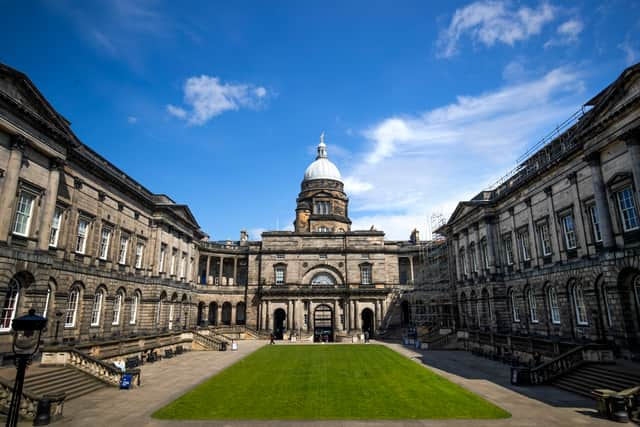
The UK’s oldest literary prize, which counts DH Lawrence and Evelyn Waugh among its previous winners, looks under threat this year for the first time in its history amid strike action at the University of Edinburgh.
This year's James Tait Black prize for fiction, awarded at the university since 1919, is in jeopardy after the lead judge said it was unlikely to go ahead due to a marketing and assessment boycott.
Dr Hannah Kate Boast said the university was withholding 100 per cent of her pay due to her participation in the boycott and said "at present, there will be no prize".
Founded in 1919 by Janet Coats, the widow of publisher James Tait Black, the prizes commemorate her husband's love of good books.
Previous winners include DH Lawrence, Ian McEwan, Muriel Spark and Evelyn Waugh in the fiction category and Martin Amis, Quentin Bell, Hermione Lee and Lytton Strachey in biography.
The boycott, which started on 1 May, is the latest escalation in a long-running dispute over £140 million in budget cuts and an estimated 1,800 job losses at the university.
Dr Boast said: “I'm lead judge of the James Tait Black Prize for Fiction, awarded at University of Edinburgh since 1919 and due to be announced this month. But the university is currently withholding 100 per cent of my pay for participating in a marking and assessment boycott. So, at present, there will be no prize.”

She added: “This is a last effort to stop management from moving to compulsory redundancies. They want to save £92m in salary costs out of a total £140m cuts programme - all unnecessary at one of the richest universities in the sector.”
The prize is comprised of two awards, each of £10,000, presented annually for books published in the UK during the previous year – one for the best work of fiction and the other for the best biography.
Edinburgh academics and postgraduate students, who nominate books for the shortlist, read more than 400 books. The winners were due to be announced later this month.
The first prizes in 1919 were judged by Professor Herbert Grierson, Regius Professor of Rhetoric and English Literature at Edinburgh. The inaugural fiction winner was Hugh Walpole for The Secret City, his work about the Russian Revolution.
On this year’s shortlist for the fiction prize is Vivek Shanbhag’s Sakina's Kiss, Nell Stevens’s The Original, Claire-Louise Bennett’s Big Kiss, Bye Bye from Fitzcarraldo Editions, Jackie Ess’s Darryl, and Shady Lewis’s On the Greenwich Line.
Meanwhile, the biography shortlist features Marlene Daut’s The First and Last King of Haiti, Jenny Erpenbeck’s Things that Disappear: Reflections and Memories, translated by Kurt Beals, Fiona Mackenzie’s The Cadence of a Song: The Life of Margaret Fay Shaw, Nicholas Blincoe’s Oliver Twist & Me: The True Story of My Family and Charles Dickens’s Best-Loved Novel and Peter Stothard’s Horace: Poet on a Volcano.
Announcing the shortlist in March, Dr Boast said: “The James Tait Black Prize for Fiction is an independent prize with no commercial or market pressures – our only concern is for great literature – so we’re truly free to go beyond the mainstream.
“I'm thrilled to present a fiction shortlist that shows the endless capacity of contemporary writing to provoke, challenge, and surprise its readers.”
Earlier this week, fourth year students at Edinburgh College of Art were forced to install their degree show works without the support of artists and lecturers who teach them due to the boycott.
The University of Edinburgh said it was looking into ways it can support the prize going ahead.
A University of Edinburgh spokesperson said: “The James Tait Black Prizes are awarded annually by the University of Edinburgh to the best work of fiction and biography. As well as being the UK’s longest-running literary prizes, it is the only major book awards judged by academic scholars and literature students.
“While we respect the right of our staff to take part in industrial action, we will work to minimise disruption and support the Prizes to go ahead as intended. Should plans change, we will communicate with publishers and others affected in due course.”
Comments
Want to join the conversation? Please or to comment on this article.