
Theatre reviews: The Duchess of Malfi | Emma

The latest Bard in the Botanics shows light up summer evenings, writes Joyce McMillan
The Duchess Of Malfi, Botanic Gardens, Glasgow ★★★★
Emma, Botanic Gardens, Glasgow ★★★★
Lovers and madmen is the overall title of Bard In The Botanics 2026 and both are certainly in evidence, in these two final shows of the season. There’s another theme underlying this year’s plays, though, and that is the contrast between the vicious misogyny and femicide that features in this year’s tragedies – Shakespeare’s Othello, and John Webster’s Duchess Of Malfi – and the lively sense of power and agency projected by the women at the centre of the other two shows, Shakespeare’s Twelfth Night, and Bard associate Jennifer Dick’s new adaptation of Jane Austen’s Emma.
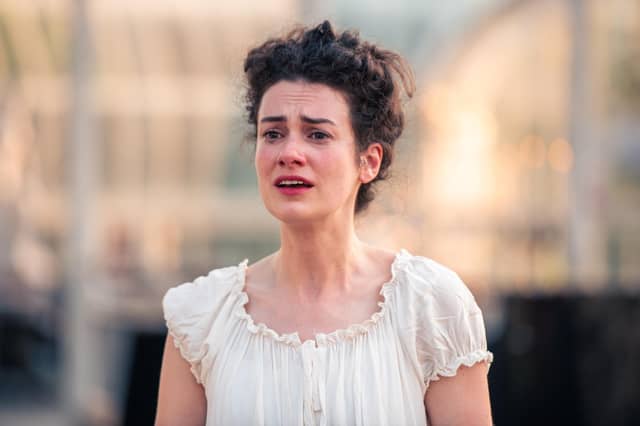
So in the elegant surroundings of the Kibble Palace, Dick’s production of her own 100-minute version of Webster’s tragedy shows us a beautiful and nominally powerful woman – a young widow ruling over a large Italian duchy – utterly destroyed by her own insanely possessive and power-seeking brothers, after she commits the ultimate sin, in their eyes, of falling in love with her loyal steward, marrying him in secret, and bearing him three children.
With a poised and poignantly lovely Rebecca Robin centre stage as the Duchess, Dick’s version of the play for five actors is completely faithful to the outline of Webster’s drama, and to its most vivid poetry. Its gender politics is interestingly nuanced by having the Duchess’s in-house villain Bosola played by Claire Macallister as a distinctly macho woman, who turns against the men who employ her only when she witnesses the full extent of their misogynistic cruelty; Stephen Arden is chilling as the Duchess’s elder brother, and there is strong support from Manasa Tagica as her husband, Antonio.
Most outstanding, though, is this production’s searing insight into the relationship between the Duchess and her twin brother Ferdinand, terrifyingly well played by Adam Donaldson, in which the full pathology of patriarchy is laid bare; from its fierce and sometimes incestuous controlling impulses towards women perceived as property, to the insane violence that can emerge when those impulses are frustrated.
And as in Zinnie Harris’s brilliant 2019 reimagining, this version dwells on Webster’s vision of how the Duchess’s moral presence lives on after her terrible death, reprimanding those who have murdered her and her children with the same terrible authority as all those 21st-century victims of violent and unhinged men in power, whose stories are so familiar to us from every dally news bulletin.
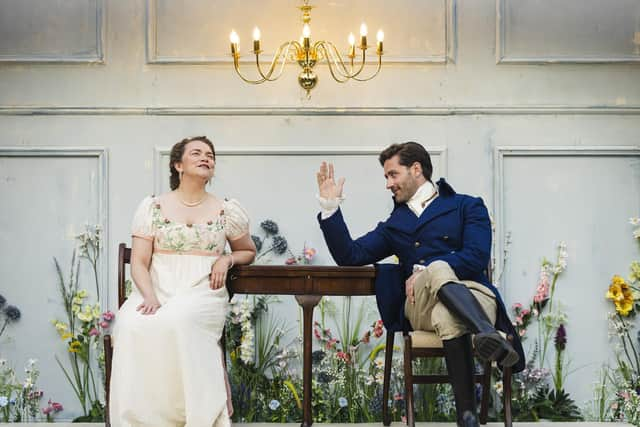
Out in the garden, meanwhile, Gordon Barr directs a joyous celebration of the wit and wisdom of Jane Austen, in Jennifer Dick’s clever adaptation of her 1815 novel Emma, which stars the forceful and delightful Esme Bayley as our heroine and occasional narrator; a “handsome, clever and rich” young woman of great social standing, who disdains the idea of marriage for herself, but confidently seeks to match-make among her friends and acquaintances.
Through the prism of these efforts, we learn a great deal about the society in which Emma moves, from its intense insistence on maintaining social differences, to the growing disruptive influence of a more urban world where traditional hierarchies were beginning to break down. And we also, often, have a good laugh as Jane Austen intended, whether at Emma’s fussy old hypochondriac of a father (played here with a hilarious delicacy by Alan Steele), or at the local vicar Mr Elton’s wealthy but jaw-droppingly ghastly new wife.
Jane Austen is a terrible old romantic, of course, and always finally conjures up a hero worthy of her heroine’s steel, and of her love; in this case, the staid family neighbour Mr Knightley, wise, kind, and rather too handsomely played by James Boal. The rest of the seven-strong cast are all pitch-perfect, in a whole range of roles.
And as the mounting oohs, aahs, and joyful applause from the audience make clear, at heart we are all still a bit like Jane; who despite her sharpness of wit, and fierce clarity of vision, still chose to believe in true love and happy endings, to the last.
Both shows run until 1 August
The Scotsman’s arts newsletter is now sent twice a week - subscribe today
Want the latest Scottish headlines sent directly to your phone? Sign up to our new WhatsApp channel here
Comments
Want to join the conversation? Please or to comment on this article.