
Stef Smith on writing a play to mark QMU's 150th: 'I found it very moving'
From the Second World War to the Covid-19 pandemic, in writing a play inspired by the history of Queen Margaret University Stef Smith focused on stories with an emotional pull, writes Mark Fisher
Twenty years ago, when playwright Stef Smith landed a place at Edinburgh’s Queen Margaret University, she often heard the institution referred to as the “women’s uni”. It was not a remark she gave much thought to, although even today, female students make up roughly 70 per cent of the intake.
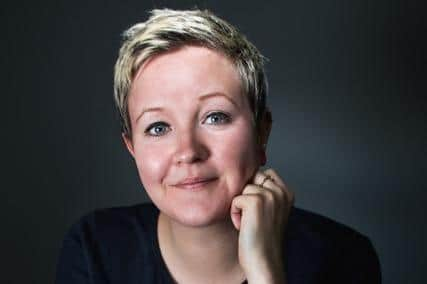

Only when the university commissioned her to write a play to mark its 150th birthday did she realise the significance of the comment. Delving into the archives as well as talking to staff and alumni, she discovered the story of an institution that began life as the Edinburgh School of Cookery. In 1875, its roll call was entirely female, part of a Victorian drive to give women an education. The mission was to reduce poverty, improve diets and end malnutrition.
“When I was a student, I had no concept of the university’s quite humble beginnings,” says Smith. “It began as a series of lectures and classes for predominantly working-class women about ensuring their kitchens were run in the most efficient and cost-effective ways. I found it very moving that that was the start of the university.”
READ MORE: 2026 Arts Preview: The year ahead in theatre
The first lectures were delivered in what was then known as the Industrial Museum on Chambers Street. The opening ceremony was so popular that hundreds of women had to leave disappointed, unable to squeeze into the main hall to hear the speeches. They also missed the school’s first “lady teacher,” Miss Middleton, demonstrating the art of making soufflés and omelettes, and passing them around for her audience to sample.
The Scotsman reported: “All classes of the community were here represented – ladies of fashion, young and old, being quite as numerous as plump cooks and girls apparently of the domestic servant class.”
After a couple of rootless years, the school settled in Shandwick Place and later Atholl Crescent. By 1909, it had expanded its remit to become the School of Domestic Science. Having moved to a purpose-built campus in Clermiston in 1970, it became a higher education institution, offering courses in everything from nursing to speech therapy. Changing its name to Queen Margaret, it absorbed several institutions including the Edinburgh College of Speech and Drama. By 1992, it was offering its own degrees.

“It feels like it’s in conversation with the world, which is what drew me to study there in the first place,” says Smith, fondly remembering her time studying drama and theatre arts, and graduating in 2009. “Most universities have colonialism and imperialism tied into the roots, but Queen Margaret has a happy origin story, which is something worth celebrating.”
Having moved again in 2007 to Musselburgh, Queen Margaret has quite the history. It was all Smith could do not to be overwhelmed. Rather than be exhaustive, she opted to focus on four key moments. “Some stories rose to the surface over the 150 years,” she says. “There’s so much history and heart packed into the institution that I had to pin a few events. I could have put a pin the map and spoken about other things, for sure.”
Taking its name from the university’s motto, Head. Heart. Hand., Smith’s play goes on an epic sweep through history, starting with the cookery school, and moving on to the Second World War, when students took cakes for the soldiers returning to Leith docks. Next we arrive in the 1970s, when a student sit-in against teaching cutbacks was mentioned in parliament. In the present era, we see the training of nurses during the pandemic.
Linked by a narrative chorus, they are all stories with an emotional pull that, in some cases, still strike a nerve. “At an alumni event, an ex-physiotherapy student came up to us and said, ‘Oh, you drama students, you were the ones who got in the way and I couldn’t do my final exam because of that f***ing protest,” laughs Smith. “It was very much still awake in her all these years later.”
She adds: “I had the privilege of speaking to the head of nursing and was fighting back tears as she spoke about what it meant to train nurses during the pandemic. She said, ‘We weren’t training nurses to be nurses, we were training them for war.’”
A big story demands a big cast and Smith has the rare luxury of writing for an ensemble of 13. The playwright, who arrived on the theatre scene in style a year after graduating with the sex-trafficking drama Roadkill, is working with students on the acting and performing course, shaping the play for their particular skills.
“I don’t think I’ve ever written for 13 people before,” says the author of Swallow, Enough and Girl in the Machine, as well as adaptations of Nora: A Doll’s House and The Outrun. “It’s a double whammy in that I’m writing for a big cast and I’m also making sure I’m writing equitable parts that help those individuals shine. I hope I can play to their strengths.”
Celebrating the achievements of 150 years is one thing, but Smith also wanted the play to carry weight. The production, directed by Bruce Strachan at the city’s Traverse Theatre, does not pretend everything is perfect in the world of education. QMU has been running a surplus, but others have not.
“I don’t want to make a piece of propaganda,” she says. “I’ve tried to question the nature of tertiary education, particularly at the moment. This is people’s money and lives. The funding situation is disastrous for universities – 43 per cent are running a deficit. It’s a precarious job to be a full-time lecturer and I didn’t want to shy away from that like it was all sunlight and roses.”
Not that she is short of sunlight and roses: “The through-line is about education as an act of hope and a belief in trying to create a better future. It’s also that the things we learn at university aren’t only the things that we’re taught. It’s the life-skills, it’s learning how to be the human you want to become.”
Head. Heart. Hand. is at the Traverse Theatre, Edinburgh, from 19–21 February, see www.traverse.co.uk. For more on QMU’s 150th anniversary celebrations, visit https://www.qmu.ac.uk/about-the-university/qmu150
The Scotsman’s arts newsletter is now sent twice a week - subscribe today
Want the latest Scottish headlines sent directly to your phone? Sign up to our new WhatsApp channel here.
Comments
Want to join the conversation? Please or to comment on this article.