
Out in the Hills, Pitlochry review: 'a whirlwind celebration of LGBTQ life'
The first Out in the Hills festival was a stunning success, writes Joyce McMillan
Out in the Hills, Pitlochry Festival Theatre
There was a time when it might have seemed that there would be no demand for an LGBQT festival in Pitlochry, in the middle of January. No more, though; because this chilly winter weekend, the gorgeous Pitlochry Festival Theatre has been packed to the rafters for artistic director Alan Cumming’s inaugural Out In The Hills festival, a whirlwind three-day celebration of LGBTQ life and creativity in our time that has proved popular beyond the theatre’s wildest dreams.
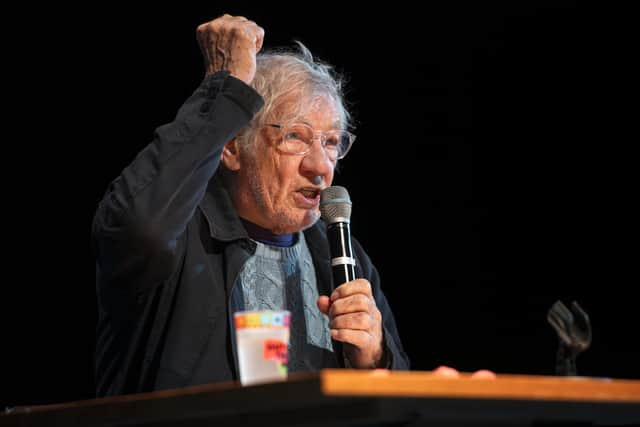

The centrepiece event, on Saturday afternoon, was a rehearsed reading by Sir Ian McKellen, who heard about the festival and simply volunteered to take part. The play, Equinox, was a new 90-minute monologue by Laurie Slade about the last hours of an old man called Ed, who lives with huge rage and regret, but also with intense ecstatic memories both of his early marriage, and of his later life as a gay man.
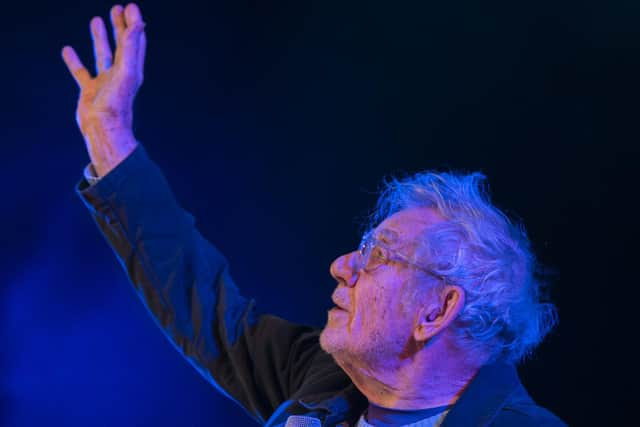
Equinox emerged, in other words, as a lyrical and slightly overwritten revisiting of the near-death landscape captured with such brilliant wit and economy in Beckett’s Krapp’s Last Tape. What Slade’s play adds, though, is a 21st-century sense both of gay sexuality in all its complexity, and of underlying environmental despair, as Ed mourns the great trees near his Dorset birthplace. And on a dark stage, seated at a simple desk, Ian McKellen – now 86 – delivered a truly tremendous performance, hugely impressive and nuanced both emotionally and vocally, and greeted with a standing ovation.
And around the McKellen reading swirled a brilliant and wide-ranging three-day kaleidoscope of events. Over two days I watched Who Will Be Remembered Here?, an exquisite film in four languages of Scotland by festival programmer Lewis Hetherington and others, in which four queer artists reflect at four historic sites across the country, in a memorable reclamation of history by those so often written out of it. Hidden histories also featured in a fascinating session by historian Ashley Douglas, and Catherine McPhee, archivist on the isle of Skye.
Dame Evelyn Glennie supported her friend Juano Diazfor with an extraordinary percussive accompaniment, as he and his son Caden read from his searing book Slum Boy, about a nightmare upbringing in Glasgow healed by a new family and his own creativity; she also shared her wisdom in an inspiring post-show discussion. An injured Armistead Maupin sent his apologies in a touching video; but was replaced by a brilliant conversation between poet Jackie Kay and award-winning TV writer Russell T Davies, who had only just met, but chatted like superbly insightful old friends about life, culture, politics and their respective family stories.
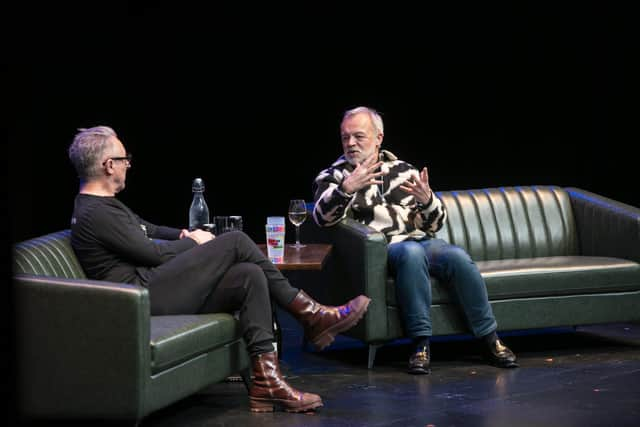
On Saturday there was a terrific and moving studio conversation about gay people in football, featuring Amy McDonald, Zander Murray and Hebridean Baker Coinneach MacLeod, once a football club executive. The Hebridean Baker himself was so wildly popular that his session had to be moved from the Studio Theatre into Pitlochry’s main auditorium; the same big space rang with laughter on Saturday night, as Alan Cumming and Graham Norton chatted in light-touch but brilliantly funny style about their gay life and times in showbiz and the media.
Every day ended with a foyer ceilidh, hosted by remarkable DJs, musicians and dance-callers; on Friday night, Pitlochry witnessed what was possibly the gayest Gay Gordons ever danced. And I left, on Saturday night, with many more moments of delight and insight still to come, from Niall Moorjani’s new queer version of Sir Gawain And the Green Knight, to a session with playwright Jo Clifford, appearing with her daughter, journalist Catriona Innes, in a conversation about trans family life.
The audiences, throughout, were huge, diverse, and strikingly varied in age and mobility, perhaps because this was a weekend, above all, about human beings surviving adversity, and using their creativity to escape, to heal, and to begin to build a better world. And in the end, those are the stories that touch us all; in times when we have never needed them more.
The Scotsman’s arts newsletter is now sent twice a week - subscribe today
Want the latest Scottish headlines sent directly to your phone? Sign up to our new WhatsApp channel here
Comments
Want to join the conversation? Please or to comment on this article.