
Exclusive:King's Theatre Edinburgh: Descendants of a 'message in a bottle' discovered in 120-year-old theatre's walls
The People’s Archive will explore the heritage of the King’s Theatre in Edinburgh.


A descendent of a workman who built a Scottish theatre and whose signature was found in a bottle hidden in a wall during a refurbishment has told how she had not been aware of her family connection - despite living a stone’s throw from the iconic venue.
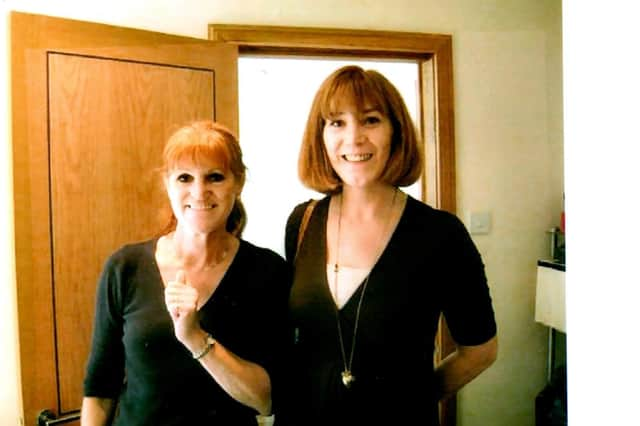
Valerie Moar, who has lived in Edinburgh all her life, said she and her sister, Irene McCullough, had visited the theatre often as children, but had not realised their family had a link to the building.
Her ancestor William Begg’s signature was among 16 names found on a piece of paper put into a bottle and concealed in Edinburgh’s King’s Theatre when it was built in 1906.
The bottle was found hidden behind a plaster crown above the theatre’s auditorium in December by a donor to the theatre. The donor was on a tour of the 119-year-old building, which is undergoing a major refurbishment, when they made the discovery.
Ms Moar’s story, and that of other descendants of the signatories of the paper, are to be told as part of the new People’s Archive, an online project celebrating and exploring the heritage of the historic theatre.

The archive, launched today and compiled by volunteers, offers free online access to a wide selection of archival materials from the King’s Theatre. These materials span more than a century of history, including programmes, historic photo galleries, playbills, newspaper clippings and oral histories.
When the theatre reopens next year, amateur historians will also be able to book time to physically trawl parts of the archive. Much of the archive has been donated by individuals who have performed, worked or attended productions on the King’s Theatre stage over decades.

Ms McCullough, a keen family historian who recalls regular visits to the theatre to see ballet as a child with a family member, said: “We knew William Begg was a decorative plasterer and the basic stuff about his life, but not what he’d worked on or anything about him as a person. When we saw his name on the [message in a bottle] list, I had a feeling it was him. I sent an immediate email to Valerie, saying ‘look what I found’.
“I didn’t know it was definitely our man until I contacted the theatre, but I had a strong feeling.”

Ms Moar said: “We didn’t realise the connection, but mum and dad used to take us to the pantomime at the King’s Theatre every Christmas.”
She recalled a part-time job at a catering firm when she was a student in the 1980s, working at a post-show reception for actors at the theatre, who were performing A Midsummer Night’s Dream.
“We were told that we could sit quietly at the back and watch,” she said. “I thought ‘oh, well, we'll see’. I hadn’t read anything like that since school. And it was absolutely astonishing. I can still remember it vividly today.
“If I’d realised our connection to the building of the theatre, I’d have been getting the binoculars and lifting them up and checking out the plaster work. Although I think everybody who goes to that theatre does that anyway, you can't not look up, it is so beautiful.”
Ms Moar even once worked on an art project for a calendar, where she painted an exterior view of the theatre.
“I painted the King’s, and I did little scenes going on behind each window,” she said. “I imagined it in the 1930s and had people having a glass of champagne in there.”
Ms Moar, who now lives just a couple of minute’s walk away from the theatre, added: “I’m really glad William was part of creating this building. Of all buildings in Edinburgh, I am so glad it’s the King’s. It is so special.”
Sue Purslow, who is the great, great, great-niece of main contractor William Cruikshank and now lives in Australia, said another relative had sent her a news story about the discovery.
“We always knew William Cruikshank was a builder and the family story was that he had built a theatre in Newcastle,” Ms Purslow said. “But I had no idea he had done one in Edinburgh too.”
She said she had worked in Edinburgh for five years between 1995 and 2000, at financial services company Standard Life, while living in the Scottish Borders for her husband’s job.

“I must have walked past it, but I had no idea of the connection and I actually never even went there when I was in Edinburgh,” she said.
“As kids, we all did those time capsule things at some point. I thought about it and I could imagine what it was like for them putting the paper in the bottle and thinking ‘I wonder if anybody will ever find this, and would anybody be interested?’
“They must have done it in the hope that somebody would have found it, because that's your intention when you do something like this. But there's no guarantees.”
Mr Cruikshank’s son, Alexander, became director of the theatre after its completion and merged it with theatre company Howard and Wyndham, which was at the time behind Edinburgh’s Royal Lyceum Theatre and others. It earned him the moniker of “the most powerful man in the British theatre industry” in The Scotsman.
Another ancestor, Karen Dickey, the great–great-granddaughter of William Cruikshank, uncovered her link to the past through a chance conversation. Her husband, John, an Edinburgh taxi driver, had dropped off a member of the construction team at the theatre site.
The couple have now been presented with a framed copy of the letter found in the bottle.
Ms Dickey said she remembered being shown a plaque with William Cruikshank’s name on it at the theatre by her grandmother.

“As a child, I thought it was incredible that I had a relative who had built something so monumental,” she said. “It is amazing that the bottle was kept when it was found and wasn’t just chucked out as rubbish.”
Abby Pendlebury, heritage engagement manager for Capital Theatres, said: “The People’s Archive is a digital exploration into the 119-year history of the King’s Theatre story.
“It has everything from programmes to photographs. We have personal letters and paintings, as well as the letter which was uncovered as a message in a bottle. From this, we have been able to dive into the stories of some of the people who worked at the King’s and were involved in some of the construction of the King’s.”
The archive, made possible by the support of The National Lottery Heritage Fund and Historic Environment Scotland, contains over 2,500 items. The collection is hosted at the Edinburgh City Archives. The archive can be explored online here.
Comments
Want to join the conversation? Please or to comment on this article.