
Jennifer Dick's #MeToo take on Measure for Measure: 'to speak out against a powerful abuser comes at a cost'
Jennifer Dick has ‘gutted’ Measure For Measure for this year’s Bard in the Botanics season, removing all its subplots and focusing on its central dilemma. Interview by Mark Fisher
It has been all steam ahead at Glasgow’s Bard In The Botanics, where director Jennifer Dick was already in rehearsals for Measure For Measure before her version of Jane Eyre had even opened. “I’m a little tired,” she says, laughing off her exhaustion.
If it has been a full-on summer for her, the same is true for the actors: by night, Stephanie McGregor has been playing the lead in the Charlotte Bronte adaptation (running until 6 July); by day, she has been rehearsing Isabella in Dick’s stripped-down version of Shakespeare’s Measure For Measure.
“Stephanie has incredible natural instincts,” says the director. “I find her such an engaging performer. She makes things sound fresh and natural. She’s incapable of not being truthful. I am very envious of that.”
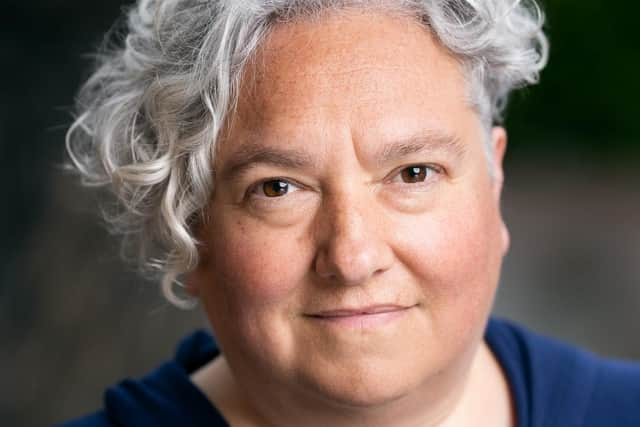

Joining McGregor in the Kibble Palace are three actors: James Boal (Claudio), Graham Mackay-Bruce (Duke Vincentio) and Sam Stopford (Angelo). And that is it. Dick has gutted Measure For Measure to remove its subplots, leaving all focus on its central dilemma.
That dilemma strikes Dick as troublingly modern. The play takes place after Duke Vincentio has left his supposedly devout deputy, Angelo, in charge of Vienna in his absence. Rather than leave, however, the Duke goes undercover to observe how people behave without him. Meanwhile Angelo makes Isabella an indecent proposal. He gives her the choice of losing her virginity to him (not so righteous after all) or allowing her brother Claudio to be executed for the crime of fornication.
Isabella’s decision to speak out resonates with the director. She thinks in particular about Dr Christine Blasey Ford, the American professor of psychology who, in 2018, took the stand before the Senate Judiciary Committee. It was considering the nomination of Judge Brett Kavanaugh to the US Supreme Court and she was concerned about his suitability for such high office. In her testimony, Ford alleged Kavanaugh had sexually assaulted her at a party 36 years earlier when they were high school students. It was a charge he denied. Ford has recently written a memoir, One Way Back, in which she restates her case.“The jumping off point for my production is a very visceral reaction I had to that testimony,” says Dick. “I watched that woman stand up in front of this bank of people and give this horrifying testimony. I thought it was an incredible act of bravery and of civil responsibility. It moved me and I was also horrified by it. That’s what resonates for me in Measure For Measure.”
Ford’s case is one example of many. For anybody to speak out against someone they allege is a powerful abuser comes at an emotional cost. “Isabella stands up and says, ‘I will not be silenced,’” says Dick. “What struck me about Christine Blasey Ford was all of these men were sitting in judgment over her. There’s a thing about men in positions of power making decisions about what women do with their bodies and how women live their lives.”
Despite Ford’s allegation, Kavanaugh was accepted onto the Supreme Court. “That woman took that incredibly brave step and it kind of went for nothing,” says Dick. “That feels very current to me. These days nothing shocks me about people in positions of power. Post-pandemic, there doesn’t seem to be any act a person in power won’t do.”
She is, however, being careful not to impose a political view on the play. She has her own attitudes to the issues it throws up, but she also believes in the power of drama to deal with complexity. It is the hard-to-resolve nature of Measure For Measure that accounts for its longevity.
“One of the things that’s brilliant about the play is it is not about good and evil,” she says. “It is much more complicated than that. They are richly textured characters that you have to make complicated decisions about. I don’t want to hector people or tell them what to think. I want to tell a story and have people make their own decisions.”
The show runs alongside an outdoor production of The Merry Wives Of Wishaw, a Scottish version of The Merry Wives Of Windsor, in which the favourite character of Sir John Falstaff (played here by Alan Steele) makes a comeback after the Henry IV plays. In contrast to that breezy comedy, Measure For Measure is knotty and intense. “Four hundred years after he wrote the play, it is horrifyingly relevant,” she says. “It’s all still happening.”
Counterintuitively, the weighty subject matter produces a happy rehearsal room. “I’m all about the laughs,” says Dick. “We’re covering some dark territory and the rehearsal room laughs are even more important when you’re doing something like that. You can’t carry that around; it’s not healthy. To be in that dark headspace you’ve got to remember it’s a play and it’s pretend. That has a different power from pretending it’s real.”
Any thematic connection with Jane Eyre is coincidental, except in the sense that McGregor’s Isabella will be equally sure of herself. “The women characters in both are uncompromisingly and unrepentantly themselves,” says Dick. “I love that about both of those women. Jane makes her own choices and she makes them based on her own moral compass and her own emotional requirements. The same can be said for Isabella. She will not be oppressed, subjugated, assaulted without speaking up.”
Measure For Measure, Bard In The Botanics, Glasgow, 11–27 July.