
Edinburgh International Children's Festival reviews: TRASHedy | An-Ki | Cabinet of Miracles | Univers | The Unexpected Gift | Yellow Canary
Many of the shows in this year’s Edinburgh International Children’s Festival are attempts to dramatise difficult political subjects for young audiences, writes Joyce McMillan
Among its many other qualities, the Edinburgh International Children Festival is famous for the scale and quality of its world-wide delegate programme. In that sense, it’s not only a wonderful festival of performance, but also a conference and gathering-place for the children’s theatre world; and if that conference had a headline theme, this year, it would surely be the question of how to dramatise truly difficult political subjects for children of all ages.
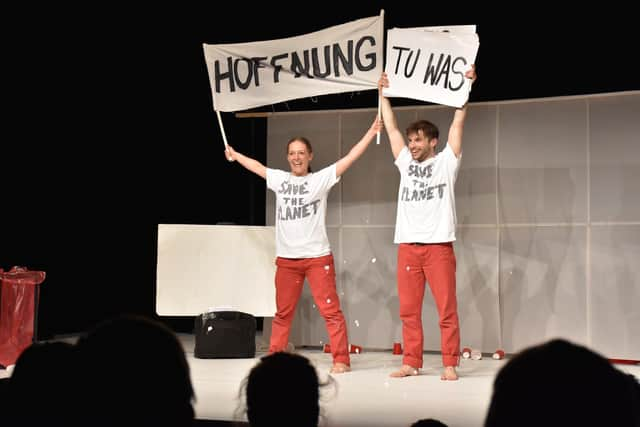
The toughest subject of all, of course, is the looming crisis of environmental breakdown; and the festival’s opening night at the Traverse featured Performing:Group of Germany’s show TRASHedy (****), for 11-15 year olds, which tackles the crisis head-on, demonstrating – through dance, music, sound, and powerful projected graphics filmed in a process of constant drawing and re-drawing – how our hectic consumer economy is steadily destroying the natural world on which we depend.
The show is also fiercely meta-theatrical, in that having delivered this frightening truth, performers Julia Mota Carvalho and Daniel Mathéus plunge into a deeply dispirited conversation about how all they’ve learned about the crisis leaves them feeling powerless, and ever less certain what to say about it. TRASHedy, in other words, is a funny, varied and vivid show, brave enough to describe how most of us now feel, confronted with this crisis; and Leandro Kees and his bold Cologne-based company richly deserve the ovation they received, for daring to tell it exactly as it is.

Compagnia Ortiga of Barcelona’s beautiful immersive show An-Ki (****), staged in its own specially-crafted tent at Summerhall, is also a story about environmental destruction, told through a dazzling range of theatrical techniques. The show begins in a central arena, where we see, in miniature, a little island covered in trees, and a little girl called Adja who has a special tree called An-Ki, right beside her house.
A terrifying giant comes and rips up all the trees except An-Ki; and then the audience – mainly children aged 7-10 – set off on an astonishing journey around the tent’s magical dark spaces, finding ourselves in the bowels of the giant’s ship, and on the devastated island where Adja’s family now survives by collecting scrap metal. In the end, even An-Ki cannot survive the giant’s destructive rage; and although this beautiful, intensely vivid show suggests that there is hope in the salvage of An-Ki’s seeds, many of the children, by the end, seem almost beside themselves with anger and despair, and determination to “be heroes”, fighting to save the world they love.
Both the Czech show Cabinet Of Miracles (***) at The Studio and Engruna Theatre of Spain’s Univers (****) at Assembly Roxy also encouraged young audiences to marvel at the beauties of our world, little faces aglow with wonder at Univers’s gorgeous vision of golden pebbles and floating planets. And Barrowland Ballet’s revamped The Unexpected Gift (****) drew an equally intense response from a group of children with special needs at Lyra in Craigmillar, beautiful to watch.
At least as compelling, though, was Tashi Gore of Glass Performance’s haunting family memoir Yellow Canary (****) for audiences aged 9-15. Based on the story of Gore’s great-uncle Bernard, now 94, Yellow Canary traces how his Jewish family fled from Nazi-occupied Paris and travelled in desperate danger through Vichy France and into Italy, with ten-year-old Bernard always clinging to the cage that held his pet canary Kiki, his talisman and sign of hope.
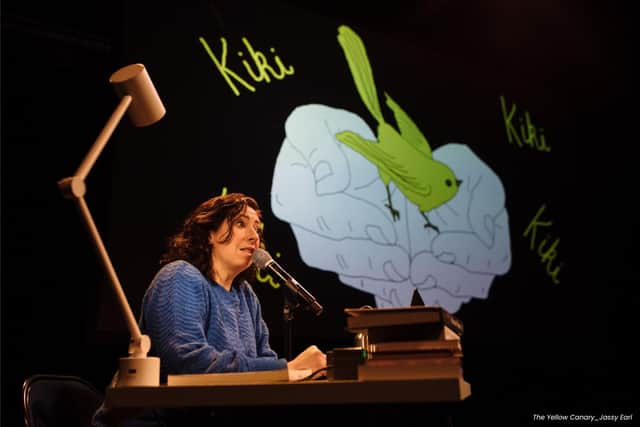
Illustrated by beautiful animated graphics created by Ross Collins MacKay, Yellow Canary is a passionate, timely reminder of the fate of young children in times of genocidal horror. And it embodies the truth expressed by the whole of EICF 2024 – that if theatre is a vital forum for confronting the crises threatening our world, then theatre for children and young people is more than playing its part, with seriousness, and also with a wealth of grace, beauty and fun.
The Edinburgh International Children’s Festival continues across Edinburgh until 2 June