
'Dance is vulnerable' - Joan Clevillé on the past, present and future of Scottish Dance Theatre


As Scottish Dance Theatre prepares to celebrate its 40th birthday, the company’s artistic director Joan Clevillé reflects on its past achievements - and considers what needs to be done to safeguard its future
There is a paradox at the heart of dance that I keep returning to: it disappears the moment it is made. There is no object left behind, nothing to preserve in the way you might with a painting, a building or a book. And yet, for those who make it, and those who encounter it, something stays. Something continues to move. That fleeting quality is part of dance’s beauty. It is also what makes it vulnerable.
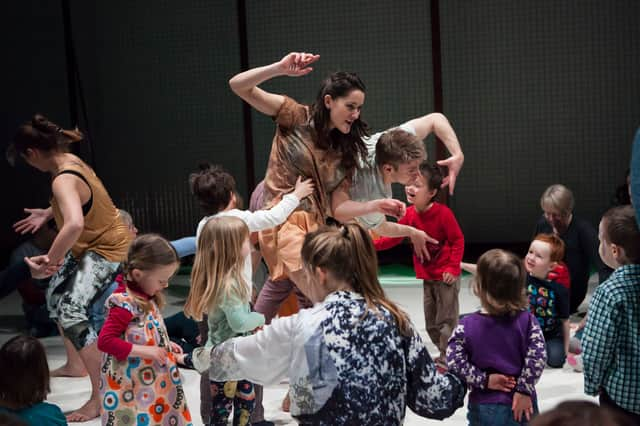
At a time when public spending is under immense pressure, the value of dance can be difficult to articulate in the language of budgets and spreadsheets. Its impact is rarely visible on a balance sheet. It is felt in bodies, relationships and communities. Ask one of the hundreds of people who take part each week in Dundee Rep and Scottish Dance Theatre’s ENGAGE programme and they will tell you. Better still, be in the room. Feel it for yourself: your mood lifts. Your confidence grows. Your body feels more alive. You connect with others, collaborate, perhaps even discover something new about yourself. You leave feeling different from when you arrived. That is the power of dance.
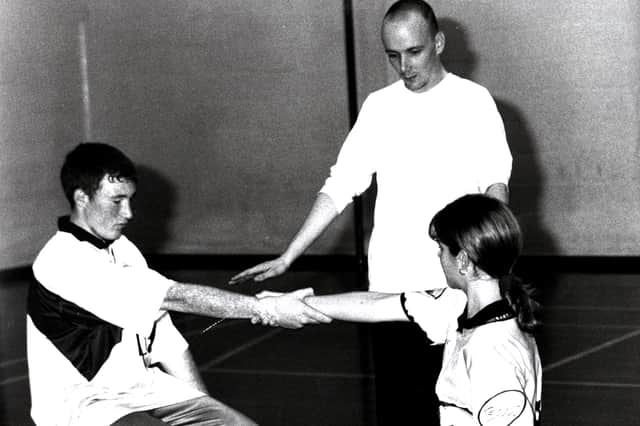
Many of us learn dance at a very young age, as we do with music, not necessarily to become professional artists, but because of the profound and often immeasurable impact it can have on our lives. The benefits can be lifelong, fostering physical and mental wellbeing, creativity, confidence and a sense of belonging. As we move through different stages of life, dance evolves with us, offering new ways to express ourselves and connect with others. That is why access to dance education matters so deeply: it is not simply about nurturing future artists, but about giving young people skills, experiences and opportunities that can enrich their lives for years to come.
Venues, festivals, arts organisations and freelance artists play a vital role in sustaining this work across Scotland. Yet the very qualities that make dance valuable make it also difficult to measure. That intangible value will never fully show up on a ledger.
I do not envy the decisions facing local authorities, public agencies and government as they balance increasingly strained budgets against growing social need. But recent events should give us pause for thought. This year, Scotland lost its only contemporary dance degree programme when Dundee and Angus College announced the closure of the course after more than three decades. The purpose-built studios at The Space, which have served generations of artists, are also set to close for the foreseeable future.
READ MORE: Edinburgh International Children's Festival director: 'We should never underestimate our audience'
No doubt those decisions needed to be taken. But their consequences will ripple far beyond the institutions themselves. Talent will leave Scotland. Young people will seek training elsewhere, or abandon their ambitions altogether. What took decades to build can disappear in a moment. Dance, like any fragile ecology, requires care and protection. We readily understand the need to preserve a historic building, a manuscript or a painting. Yet dance, despite its contribution to public life, is often treated as though it can somehow look after itself. It cannot.

If Scotland wants a thriving cultural future, we need sustained investment and long-term strategic thinking. That means supporting artists and organisations, but also investing in the buildings and infrastructure that make cultural life possible. If you want a concrete example, come and visit us at Dundee Rep Theatre. You will find a building full of life: audiences gathering in the auditorium, children arriving for classes, dancers in rehearsal, community participants meeting friends.
Then I will take you backstage. I will show you buckets catching water beneath a leaking roof and towels spread across the floor of the dance studio. Like many cultural organisations across Scotland, we are doing extraordinary things with infrastructure that has been stretched for years. Yet alongside maintaining ageing buildings, we are also expected to meet ambitious net-zero targets, an enormous challenge without the capital investment needed to make it possible. We cannot ask cultural organisations to preserve the past, serve the present and build a sustainable future without investing in the conditions that make those ambitions possible. These questions of preservation and continuity have been very much on my mind as Scottish Dance Theatre celebrates its 40th anniversary.

Founded as Dundee Rep Dance Company in 1986 by Royston Maldoom OBE, the company emerged from a belief that dance should belong to everyone. Performance and participation were never separate ideas. Dancers performed on stage, but they also worked in schools, village halls and community settings. That conviction still remains fundamental to who we are today.
Our anniversary archive project, Memory in Motion, has revealed a history far richer, more diverse and more interconnected than any of us could have imagined. Through photographs, recordings and oral history testimonies, we have traced the company’s journey across four decades. Yet what struck me most is how incomplete any archive inevitably is. The real history lives elsewhere: in bodies, memories and relationships.
Seventeen years ago, I arrived in Scotland to join Scottish Dance Theatre as a dancer. Little did I imagine that I would one day have the privilege of directing Scotland’s flagship contemporary dance company and leading it into its 40th anniversary season. That journey speaks not only to the company’s openness but to something I have come to recognise as one of Scotland’s great strengths: a willingness to welcome new voices and ideas while remaining deeply connected to place and community.

Based in Dundee, Scottish Dance Theatre has always been rooted in a specific place while looking outward to the world. This year, we commissioned Edinburgh-based choreographer Tess Letham and internationally acclaimed choreographers Emilie Leriche and Edouard Hue to create new works for the company. We will perform them in theatres across Scotland, the UK and internationally, but also in church halls, village halls and community spaces. Through RECollect, community participants from across Dundee and Tayside will create new work inspired by our history.
Anniversaries are moments for celebration, but they are also moments to ask what kind of future we want to build. Dance is ephemeral. We know that better than anyone. Yet 40 years of Scottish Dance Theatre proves that disappearance is not the same as loss. What remains lives in bodies, memories, communities and places. Its intangible legacy continues to move through the people who experience it and carry it forward.
For details of Scottish Dance Theatre’s upcoming 40th anniversary performances, visit https://dundeerep.co.uk/about-us/scottish-dance-theatre
The Scotsman’s arts newsletter is now sent twice a week - subscribe today
Want the latest Scottish headlines sent directly to your phone? Sign up to our new WhatsApp channel here
Comments
Want to join the conversation? Please or to comment on this article.