
'She deserves to be celebrated': New bid to honour leader of the Edinburgh Seven in home city

Gillian Brett wants Sophia Jex-Blake to be remembered
They were the first ever female students to be matriculated at a British university when they registered as medical students at the University of Edinburgh in 1869 after banding together through an advert in The Scotsman.
Now, an artist has launched a drive to create a bronze statue of the female leader of the Edinburgh Seven, a campaign which saw women granted access to university education for the first time.
Sophia Jex-Blake advertised in the newspaper for more women to join her in her campaign for females to be allowed to study at university level after being told by the university court that her application to study medicine had been rejected on the grounds that the university could not make an exception "in the interest of one lady".
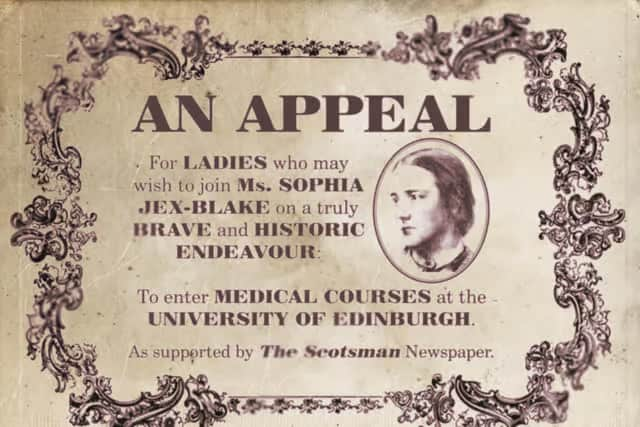

She then led the group, who later became known as the Edinburgh Seven, to become the first females to be matriculated at a British university when they joined the University of Edinburgh in 1869.
Now artist Gillian Brett, who is holding an exhibition inspired by the women, wants to honour the women's efforts in a more permanent way.
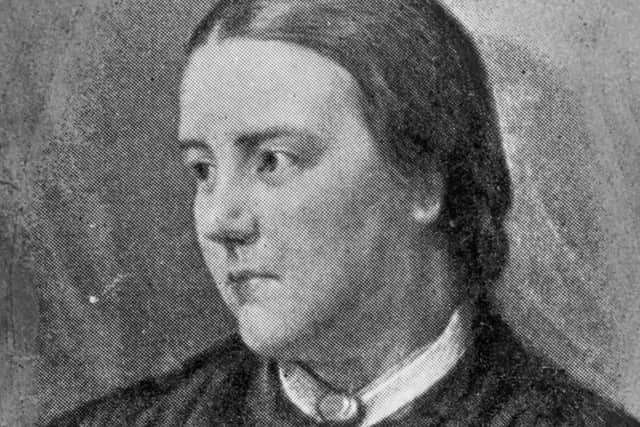
Ms Brett's installation on show at Summerhall in Edinburgh this week comprises a life-size portrait bust of Ms Jex-Blake in raw clay, as well as a wall of thrown clay bringing to life the attempts of the Surgeons’ Hall rioters to stop the Seven taking their anatomy exams.

She hopes her bust of Ms Jex-Blake could ultimately be cast in bronze and put on permanent display in Edinburgh.
She said: “There are so many brilliant credentials for this very determined woman and she deserves to be celebrated. I've made a portrait bust of her, but it's just in raw clay and the choice is, do I take that back to London and just put it on a shelf, or would Edinburgh like to make a bronze of it?”
Ms Brett was inspired to create the sculpture as part of a series of work she is carrying out, called “Disappearing Women”. Her first commission in the series was of Fanny Wilkinson, the designer of multiple London parks, who is now remembered with a sculpture created by Ms Brett in Wandsworth.
She said: “Unless we remember them and commemorate them, nobody will remember anything about them, they'll just disappear to history.
“Fanny Wilkinson was my first, and then when I was invited to come and exhibit in Summerhall. I thought, let's do somebody who is relevant to Edinburgh. I had a look into the histories of important women and found out this incredible story about Sophia Jex-Blake and the Edinburgh Seven, and I'm now absolutely obsessed with it.”
Ms Brett hopes the project could be funded by university alumni - or potentially through a crowdfunding campaign. Edinburgh notoriously has few statues of women, with fewer than ten currently standing in the city. However, there are 79 statues of men and around 15 of animals.

Alexander Russel, who was editor of The Scotsman from 1848 to 1876, was among the earliest and most important supporters of the Seven, publishing their story at a time when few others would.
He later married Helen Evans, one of the Seven, while Ms Jex-Blake herself secretly wrote for the newspaper over several years - which was uncovered by academic Sarah J Ghasedi, four years ago, while conducting research for her PhD thesis.
Ms Brett said she had originally considered creating sculptures of all of the women, but that no images were available for four of them.
She said: “Of these seven women, there are there is evidence - photographs and oil paintings - of three of them, but four of them I couldn't find any visual representation of them at all, even though they went on to do things like set up a hospital in Mumbai. These women, all seven of them, made huge achievements in their lives, but some of them have just completely disappeared.
“That just shows that women do disappear and continue to do so if we don’t recognise them.”
Jo Spiller, director of operations and partnerships at the University of Edinburgh’s Digital and AI in Advancing Pedagogy Research Hub, and part of the team who campaigned for greater recognition of the Edinburgh Seven, said: “Sophia Jex-Blake was a pioneering figure in the history of medicine and women’s rights. This year, the Edinburgh Medical School celebrates its 300th anniversary – Jex-Blake was the first woman to enrol here, 157 years after its founding.
“Jex-Blake campaigned for women to be given the opportunity study and practice medicine, and by doing so, challenged the widely held belief at the time that women lacked the intellect and stamina to succeed. The events in Edinburgh from 1869-1874 sparked a national debate on equality of access to education and professions, galvanising supporters and detractors, alike.
“We are delighted the story of the Edinburgh Seven continues to inspire artists, campaigners and communities, and that the values and principles they demonstrated are as relevant now as they were then.”
The exhibition, in the Sciennes Gallery at Summerhall, runs until Wednesday.
Comments
Want to join the conversation? Please or to comment on this article.