
Scottish university photography collection dating from 1830s formally recognised by national body

The collection dates back almost 200 years
A Scottish university photography collection begun in the 1830s with the inventor of paper-printed photography has been formally recognised as one of "national significance" by Museums and Galleries Scotland.
With approximately 1.6 million photographs in a wide variety of formats – including negatives on glass and film, lantern slides, prints, postcards, transparencies and born-digital images – the University of St Andrews is also thought to be the oldest photography collecting institution in the world.
Several pioneers of early photography dating back almost 200 years are represented in the collection, including local physician and chemist John Adamson and Thomas Rodger, who was St Andrews’ first professional photographer.


Dr Katie Eagleton, university librarian and director of collections and museums at the University of St Andrews, said: “St Andrews has been collecting photography since the early 1840s, and today is one of the most important among the university’s collections.
“We are delighted that our nationally (and internationally) important collection has been recognised, and look forward to continuing to develop it in the years to come.”

The roots of the collection began with members of the St Andrews Literary and Philosophical Society, who worked with Henry Fox Talbot, the English scientist credited with inventing photography, to develop and perfect the first photographic processes on paper in the late 1830s.
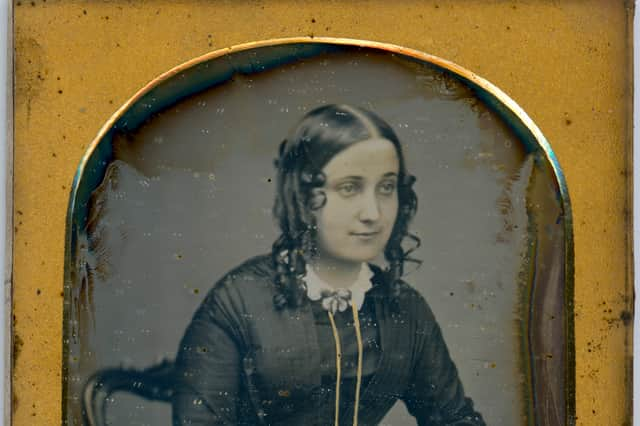
University principal Sir David Brewster was an enthusiast of Mr Fox Talbot’s work and often acquired calotypes by the inventor for the Literary and Philosophical Society to see.
One entry to the society’s minutes from April 1945 states: "Sir David Brewster sent thirty six beautiful calotypes executed by Mr Fox Talbot for the inspection of the members of the Society".
These early experiments with salted paper now extend to the latest digital printing processes.
The collection covers subject areas from social documentary to Scottish landscape, travel and exploration. It is uniquely important due to its completeness, depth and rarity, and provides extensive documentation of the social and cultural transformation of Scotland and its forays into the world, for nearly two hundred years.

Lucy Casot, chief executive of Museums Galleries Scotland, the national development body for Scotland’s museums sector, said: “Congratulations to the University of St Andrews on being recognised as a collection of national significance. Scotland’s Recognised Collections of National Significance are a valuable reminder of the breadth and quality of what our museums and galleries have to offer.”
She added: “I hope this achievement and status helps further their work to conserve their collection and also share them and the stories they tell with their communities and wider audiences.”
Nationally Significant Collections are named once every three years by Museums Galleries Scotland on behalf of the Scottish government. Together, the collections tell the stories of Scotland’s rich culture and history.
The announcement coincides with the collection moving to its new home in the centre of St Andrews, where the entire collection can be more accessible to researchers and the wider public.
Comments
Want to join the conversation? Please or to comment on this article.