
Exclusive:Scottish musicians to benefit from fund to help plug rising post-Brexit tour costs

The fund will be trialled for one year
Scottish musicians are to benefit from a new £300,000 fund to help cover rising costs of international touring after Brexit.
Creative Scotland will receive £300,000 from the Scottish Government to establish a pilot rapid-response fund to support musicians with costs such as travel, freight and visa applications.
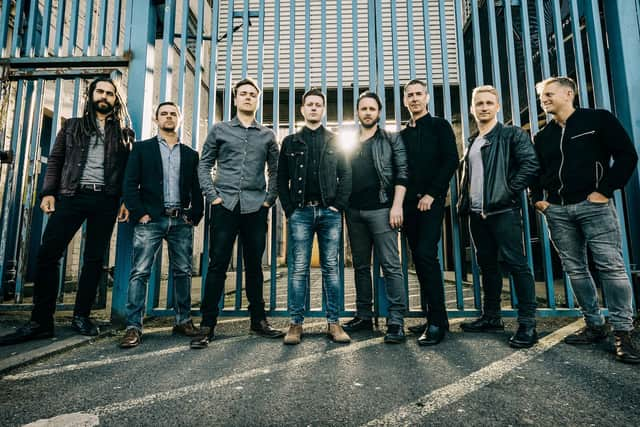
Artists including Celtic rock band Skerryvore have welcomed the fund, saying support is vital to allow Scottish performers to showcase their work overseas.
Musicians and other artists have struggled with red tape on tours to Europe since Britain left the European Union. Touring performers are no longer allowed to travel freely between the 27 member state countries, while they often also face costs for equipment under regulations requiring an international customs document known as a carnet.
According to the UK Government’s Department of Digital, Culture, Media and Sport, 21 member states allow “some form” of musical touring without a work permit or visa, however six do not. Individual countries may also have additional restrictions, such as France requiring musicians to be employed by a registered venue.

The one-year trial scheme will be evaluated to gather data on the wider support needs of the sector, aiding research already underway by British Council Scotland on the establishment of a dedicated export service to help Scotland's arts and culture sectors reach international audiences.
Daniel Gillespie, accordion player in Skerryvore, said the cost of carnets - an annual fee for each piece of equipment taken into Europe for touring purposes - could run into thousands of pounds for a large band like his.
In 2023, the band told MSPs at a Holyrood committee meeting that a post-Brexit tour had made a loss due to rising travel expenses and red tape.
He said: "It very much depends on how many people, how many instruments, how many bits of equipment and the value of those bits of equipment and instruments, but it is a lot. And it is not just about costs, but the time as well, that the restrictions takes.”]
He added: "Any support like this is obviously hugely welcome. We've spoken out quite a lot about the support that Irish artists have had for a long time internationally. So anything like this is a big bonus for Scottish acts, for sure."
Culture Secretary Angus Robertson said the fund would bridge the gap while the possibility of a dedicated cultural export service was being explored by the Scottish Government.
A joint project with British Council Scotland is currently examining the challenges and opportunities facing Scottish cultural organisations and artists in accessing international market. It aims to identify gaps in current support, and develop recommendations for a new service to boost cultural exports.
He said: “International touring is vital to Scotland's music sector, enabling artists to generate income, reach new audiences, build networks across borders, and showcase Scotland's creative talent on the world stage.
“However, musicians have told us that international tours are increasingly challenging for many acts, due to ever-increasing travel costs. Brexit has also hit them hard, with musicians no longer free to move between the 27 EU member states and significant costs and paperwork now required for any equipment they want to travel with.”
Robert Kilpatrick, chief executive and creative director of the Scottish Music Industry Association, welcomed the fund as an “important step” in supporting the progression to sustained touring and audience growth, but said “continued investment” was needed.
He said: “International touring is fundamental to how Scotland-based artists grow sustainable careers and reach new audiences – sharing the soundtrack and stories of our lives on the global stage.
“Despite strong international foundations that create meaningful global connections and opportunities, rising costs, ongoing administrative challenges and limited support to capitalise on them continue to limit many artists’ ability to build on that momentum.”
He added: “Crucially, Scotland-specific support allows us to better champion the depth, diversity and distinctiveness of Scottish music internationally, and to build audiences in a way that reflects our cultural identity and storytelling.
“While this pilot is an important start, continued investment will be key to fully realising the international potential of Scotland’s artists, delivering lasting cultural and economic impact.”
Comments
Want to join the conversation? Please or to comment on this article.