
Exclusive:'New era' for Little Sparta as gardens eyes £5 million endowment fund to secure future
The gardens are celebrating their 60th anniversary this year

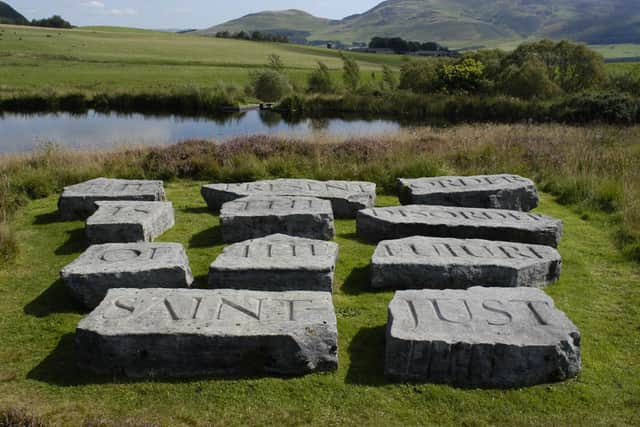
It is the garden of late Scottish artist and poet Ian Hamilton Finlay, created on a seven acre moorland near Edinburgh over several decades.
Now Little Sparta is to enter a transformational “new era” - as it celebrates its 60th anniversary - after the trust behind it announced plans to create a £5 million endowment fund for a major development and secured funding to buy two buildings at the heart of the site.
Magnus Linklater, chair of The Little Sparta Trust, said £262,000 had been raised from a range of sources, including the National Heritage Memorial Fund and the Art Fund to purchase the Temple of Apollo and an attached building, which had belonged to an old associate of Mr Hamilton Finley since his death in 2006.
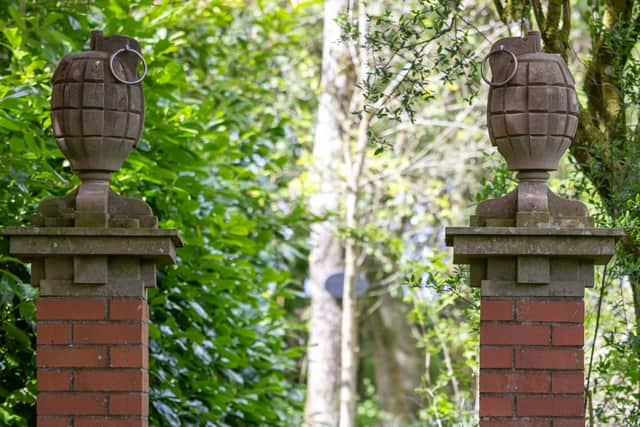

The temple, a converted steading, had been left in Mr Hamilton Finlay’s will to Pia Simig, his executor and collaborator, who travelled regularly from her home in Budapest to stay in the attached apartment.
Now Ms Simig is to sell them to the Trust, which plans to transform them into a space for exhibitions, talks, readings and screenings, alongside accommodation for visiting artists in residence, as well as upgraded visitors’ facilities including a new cafe. It also plans to carry out training in traditional skills such as stone-carving and calligraphy, and enable research and international study.

Mr Linklater said it would have been “inconceivable” to allow an outside buyer to purchase the buildings. The Trust put together a funding proposition, which was granted.
“It's an absolutely pivotal moment for Little Sparta,” said Mr Linklater, who has been chair of the Trust for 25 years and is now set to step down from the role. “It is a new era. It allows us to plan ahead and owning this building allows us to introduce a whole range of ideas, which will, I hope, make Little Sparta far more widely known.”
He said the garden has “wonderfully generous supporters”, but warned ticket sales do not cover running costs.
He said: “We don't get any public funding. We have to raise all our funds privately. The garden needs careful attention through the year, the art objects need to be very, very, very carefully looked after. So it has, from time to time, been a struggle, but we've kept it going, and I'm pleased to say that it is still kept up to the standards that Ian Hamilton Finlay himself demanded.”
Established with Mr Hamilton Finlay’s partner Sue Finlay in 1966 and shaped through decades of collaboration with skilled craftspeople, gardeners and fellow artists, the garden is regarded as a site of national and international significance.
“The next phase is a very, very important one,” said Mr Linklater. “We will be launching this at the tail end of this year, when we will lay out all our plans, and we will go out and seek funding for that.”
He said a project team would be assembled to plan the next phase, including where the endowment fund would come from. The vast majority is likely to come from private philanthropists and small funding bodies, while the Trust will also target the National Lottery.
He said: “We want to raise a serious endowment fund that will be there to secure this little spot for the long term future. We've had some wonderful private, smaller funding bodies, which have contributed down the years to Little Sparta, and we will go back to them, because they know us. They like what we're doing, and I think they will be supportive.
”Ian Hamilton Finlay is revered in America and Germany and Switzerland and Brazil. Last year was his centenary and there were no fewer than eight international exhibitions of his work.
“I don't think any Scottish post war artist has had that range of international recognition. Ian died in 2006 and there have been many artists whose work has been quietly forgotten after their death. With Ian Hamilton Finlay, it's been the opposite and those exhibitions across the world last year were testimony to his importance.”
Working with Benjamin Tindall Architects, the Little Sparta Trust has developed proposals for the careful evolution of the site, including the conservation of artworks and buildings alongside the improvements to visitor facilities and interpretation. The Trust warned the garden is “increasingly vulnerable” to weather, age and visitors, creating conservation challenges which it said could put the garden’s “unique character, artistic integrity, and public value” at risk.
Simon Thurley, chair of the National Heritage Memorial Fund, which is known as the “fund of last resort”, said: “Little Sparta is a place of imagination and international significance, and we are delighted to support the acquisition of the Temple of Apollo to help secure its future for everyone.
“Bringing this important building into the care of the Trust will safeguard a vital part of Ian Hamilton Finlay’s legacy, improve access for visitors, artists and communities, and ensure this extraordinary garden continues to inspire, educate and be enjoyed by the public for generations to come.”
He added: “The Memorial Fund exists to save the UK's most outstanding heritage and make it publicly accessible, in memory of those who have given their lives for the UK. Since 1980 we have supported nearly 1,500 acquisitions and we are delighted to count Little Sparta as part of the growing and timeless collection of UK heritage that belongs to all of us forever."
Jenny Waldman, director of the Art Fund, said: “Little Sparta is an extraordinary artistic creation, a fusion of artist Ian Hamilton Finlay’s sculpture, poetry and vision set within the Pentland Hills.
“We are delighted to support the acquisition of the Temple of Apollo, a powerful work of art in its own right and an integral part of the site and the garden’s history. Thanks to the generosity of our National Art Pass members and supporters, this funding will help secure the future of Little Sparta, ensuring it can continue to inspire visitors for generations to come.”
Comments
Want to join the conversation? Please or to comment on this article.