
SCO concludes five-year Craigmillar residency: 'The joy on people’s faces will stay with me'


The Scottish Chamber Orchestra’s five-year Craigmillar residency hasn’t just had a positive impact on the local community, it’s also represented a ‘fundamental shift’ for the SCO, writes David Kettle
What’s an orchestra for? It might seem like a silly question, and one with an obvious answer: to perform concerts to (hopefully) admiring and appreciative audiences. But scratch the surface of that apparently self-evident set-up and all sorts of additional issues arise. Who decides what music is being played, and who it’s being played for? Who’s invited to listen, who’s implicitly excluded, and why? Is it really all about pleasure and entertainment, or might it be about other, more fundamental questions too?
One alternative answer to that silly question is offered by what’s been a five-year residency in Edinburgh’s Craigmillar district from the Scottish Chamber Orchestra. “I use the term ‘quiet rebellion’ about the residency,” explains SCO Learning and Participation Director Laura Baxter. “It’s a challenge to assumptions about who gets to make music, about whose music counts, about who belongs in a concert hall, about what qualifies as excellence. I think the residency has served to show that it’s an excellence of experience that this orchestra can provide, as much as the artistry and musical capabilities that it demonstrates every week.”
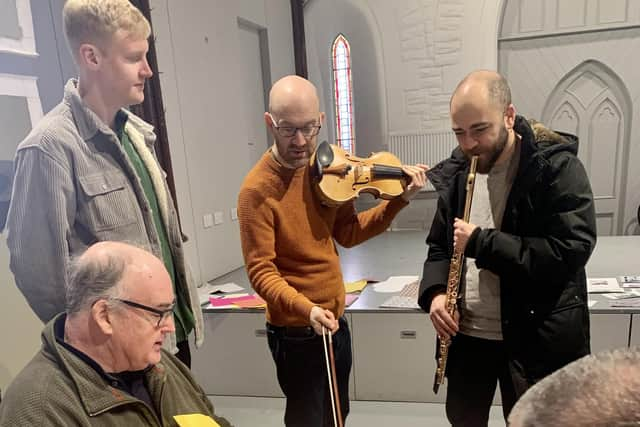
If those sound like big issues, and radical things for an orchestra to be contemplating, well, the SCO’s Craigmillar residency was nothing if not ambitious. More than 23,000 participants got involved, across almost 1,000 individual events. The project began in 2021 and ended – well, kind of – with a concert in Edinburgh’s Queen’s Hall at the end of March. As Baxter explains, however, the now well-established friendship between the Craigmillar community and the SCO is far from over.
During its five official years, the residency unfolded across several interconnected strands. “It fell into two halves,” explains Baxter. “First there were the community projects, which were Seen and Heard, an adult community choir that we set up called Craigmillar Voices, and also our Reconnect project, working with people at early stages of dementia. On the other side, there was the work we did in schools, from nursery through to secondary. Castlebrae Community High School became a really strong partner: we set up a community choir there, and we also saw some kids who were with us in primary schools go on to join that choir. Music has become a thread running right through the community.”
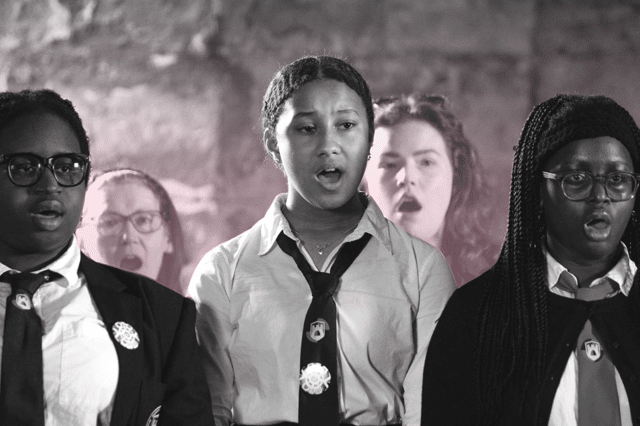
Let’s go back to Seen and Heard, which proved to be a particularly rich strand of work. Bringing together adults from across the Craigmillar community, it combined music and visual art in regular sessions at Craigmillar Now, a former church converted into an arts space right in the middle of Fort Kinnaird shopping village. SCO Associate Composer Jay Capperauld was one of the driving forces behind the project. “The idea was that we’d create artwork and music, and look at how we could bring the painting to life musically, and vice versa,” he explains. “We wanted to create a real conversation between the art and the music. We spent the first couple of years essentially building trust and getting to know each other, then at the midpoint there was a kind of gear shift to heading towards the final performance.”
But we should step back a bit. Isn’t a composer’s role to sit in a darkened room, sketching, drafting and redrafting new music for musicians to play? It’s doubtful that that scenario was ever entirely true, but for Capperauld, a 21st-century composer has a different role entirely. “It’s much more about collaborative endeavour, whether that’s working with SCO musicians or participants in Craigmillar. You need to be much more of a communal beast. I saw my role in Craigmillar as a kind of facilitator, listening to the community and the aspirations for their own creative expressions, and trying to find a way to facilitate that experience for them.”
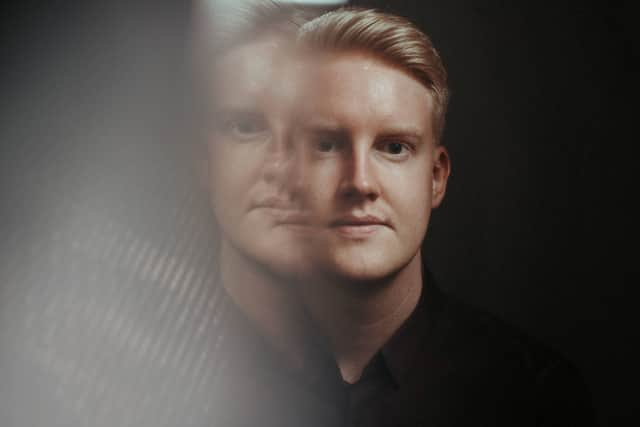
Capperauld also played a crucial role in bringing together the Seen and Heard work and other strands into the residency’s celebratory final concert in the Queen’s Hall – named Tapestry, an appropriate reference to the various threads of work being woven together. The end result – combining music created jointly by Craigmillar participants, Capperauld and choral leader Moira Morrison, plus a specially created film from artist Karolina Glusiec, and drawing performers from both the Craigmillar community and the ranks of the SCO – lacked little in ambition, or achievement. “We saw the hard graft that went into the concert,” Baxter smiles. “The joy on people’s faces – whether they were performers or audience members – is something that will stay with me for a long time.”
There’s no denying the sheer scale and boldness of the SCO’s Craigmillar residency, nor its on-going impacts on the community. But, with the residency officially over, where do things stand now? “We were thinking about the exit strategy from about year three,” admits Baxter, “and building sustainability and legacy into what we were doing, so it would never feel like we were saying: that’s that.” As a result, Craigmillar Voices will continue under its own steam, with its own constitution and committee, and it’s expected that something similar will happen with Castlebrae Community High School’s choir too. “The relationship with the community is effectively continuing, and we’re offering support in all sorts of different ways,” explains Baxter. “The whole residency was like a friendship, and just because you might not be living next door to each other any more, it doesn’t mean you lose touch.”
As for future projects – well, the conclusion of an intensive five-year relationship might not be quite the time to be thinking in detail about those. “First, we want to reflect on what’s been achieved, and that will take some time,” admits Baxter. “But whatever we do next, Craigmillar is going to be part of it – you can’t spend five years somewhere and then just move on.”
It’s undeniable, Baxter feels, that the Craigmillar residency has represented a fundamental shift for the SCO. “It’s been a huge undertaking, and I think it’s fundamentally changed the Orchestra – as it should. We’re a national company, and of course we should be reaching across the whole of Scotland, and we do. But there’s something very powerful about the depth of work we achieved with one community over five years, and how our musicians responded to that. Sometimes orchestras claim that learning and engagement are at the heart of what they do, but it can feel a bit like lip service. I think we can now really hold out heads up and say we know what it means.”
This feature was produced in association with the Scottish Chamber Orchestra, see www.sco.org.uk
The Scotsman’s arts newsletter is now sent twice a week - subscribe today
Want the latest Scottish headlines sent directly to your phone? Sign up to our new WhatsApp channel here
Comments
Want to join the conversation? Please or to comment on this article.