
Edinburgh Jazz & Blues Festival reviews: Maciej Obara | Matt Carmichael Sextet
Stylistic and national boundaries dissolved in these Edinburgh Jazz Festival shows, writes Jim Gilchrist


Maciej Obara: Northern Spaces, St Bride’s Centre, Edinburgh ★★★★
Matt Carmichael Sextet, George Square Spiegeltent, Edinburgh ★★★★
A salient feature of the Edinburgh Jazz & Blues Festival, now running until 26 July, is a collaborative ethos which unites distinguished artists from Europe and beyond and luminaries from Scotland’s bubbling jazz crucible. Thus Friday’s opening night concert at St Bride’s teamed up respected Polish alto saxophonist Maciej Obara with a stalwart home team – Harben Kay on tenor sax, pianist Ben Shankland, bassist Ewan Hastie and drummer Chun-Wei Kang, later joined by cellist Su-a Lee and violinist Seonaid Aitken.
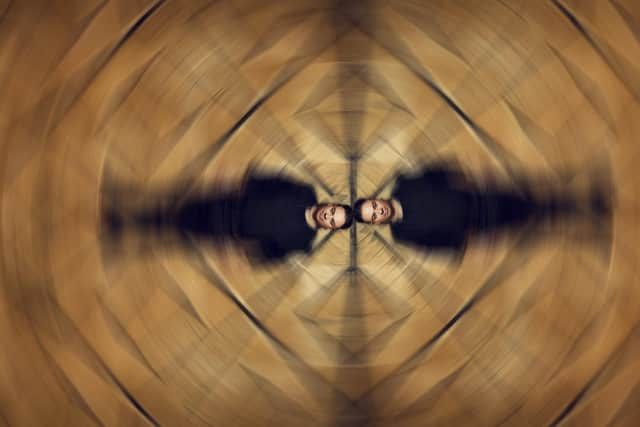
A stocky figure given to endearingly vague fits of arm-waving by way of musical direction, Obara, who played for four years with the late, legendary Tomasz Stanko, explained that his Northern Spaces sequence was inspired by his visit to last year’s festival. It emerged as powerfully creative music-making, combining melodic invention with robust improvisation, utilising fully the combined and individual strengths of his ensemble, not least his potent double reed pairing with Kay, the two saxes deploying tight unison riffing or lively sparring over Shankland’s bright and at times haunting keyboard rangings.
Obara, clearly enjoying himself in present company, is a powerfully inventive player, interspersing intense lyrical excursions with explosive improvisational bursts, and well matched by Kay’s own muscular soloing. The addition of Lee and Aitken for the final sequence brought further colour, saxes and strings easing in over sonorous piano for a piece in which eerie string phrases combined with melancholic, drawn-out sax notes and an eloquent bass solo.
A vivacious piano break gave way to an eruptive free-improv cacophony, there was a tenor sax lament from Kay while the eclectic string players contributed spectral improvisations of their own.
Compared to the capricious energy of the Obara set, the impressive Scots-Scandinavian sextet assembled by young tenor saxophonist Matt Carmichael was one of relatively restrained, if spacious, lyricism, performing his distinctively folk-infused compositions. He was joined by two notable Norwegian musicians, pianist Kjetil Mulelid and drummer Per Oddvar Johansen, plus Norwegian-domiciled Scots fiddle player Sarah-Jane Summers, along with two other new-generation Scots jazz players, Chris Amer on acoustic and electric guitars and double-bassist Ali Watson. They opened in stirring form with A Distant Glow, plucked piano wires, fiddle strains and bowed bass drone establishing a richly atmospheric backdrop over which Carmichael’s sax called like a far-off bagpipe. His warm-toned playing tended to stay mellow, at times in unison with fiddle or piano, rather than going for exuberant break-outs. In numbers such as the perky Road from the Sea, acoustic guitar, bass and drums might work up a catchy groove that occasionally seemed somewhere between folk and prog rock, piano ranging energetically.
Johansen introduced one number with a succession of whirring snares and busy drum flurries before Carmichael struck up a jaunty melody, Mulelid lending it substance while Watson delivered a brisk bass solo and the melodic hook resumed, taken up by fiddle before piano and sax had their improvisational way with it.
A particularly lovely piece was The Prayer, an appropriately hymn-like melody introduced by sax and piano, Mulelid taking it on a glittering excursion before a jubilant ensemble resolution. They closed with another easefully flowing Carmichael composition, Kite, sax sounding over delicate guitar and wheedling fiddle strains before characteristically low-key closure.
The Scotsman’s arts newsletter is now sent twice a week - subscribe today
Want the latest Scottish headlines sent directly to your phone? Sign up to our new WhatsApp channel here
Comments
Want to join the conversation? Please or to comment on this article.