
Album reviews: Robert Plant | Emma Pollock | Kirsten Adamson | Quad90
Robert Plant takes listeners on a musical world tour on his latest album, writes Fiona Shepherd
Robert Plant: Saving Grace (Nonesuch) ★★★★
Emma Pollock: Begging the Night to Take Hold (Chemical Underground) ★★★★
Kirsten Adamson: Dreamviewer (Last Days Records) ★★★
Quad90: Quad90 (Last Night From Glasgow) ★★★★
Robert Plant is a low-key kind of legend these days. The definitive Seventies rock god could clean up in a trice if he agreed to a Led Zeppelin reunion with his old compadre Jimmy Page but he is too busy forging new connections and indulging more esoteric interests in his acclaimed solo career. Does he still have the goods to let rip vocally any more anyway?


His new album won’t answer that question, as once more he plays the mellow group leader of a troupe of fellow travellers on a musical tour around the southeastern States, North Africa and the Middle East with source material ranging from the British and Irish folk annals to 21st century US indie.
Saving Grace is named after his current collaborators, a band comprising vocal foil Suzi Dian, drummer Oli Jefferson, guitarist Tony Kelsey, cellist Barney Morse-Brown and banjo and string player Matt Worley, with the latter in particular called on to supply decoration such as the mandolin part on an understated husky bluegrass-flavoured cover of Chevrolet.
Broadside ballad As I Roved Out and Blind Willie Johnson’s Soul of a Man both manifest as psychedelic Americana explorations with Arabic embellishments on the former and the wheeze of harmonica recalling early Neil Young on the latter.
The modern roots rock of The Low Anthem’s Ticket Taker is reworked as a hushed harmony duet with a Leonard Cohen-like balmy caress but the band also harness their power on a torrid flamenco take on Low’s Everybody’s Song and a squalling bluesy rendition of Martha Scanlan’s gospel tune Higher Rock before they turn inwards again for a tremulous Appalachian folk interpretation of the old spiritual Gospel Plough.
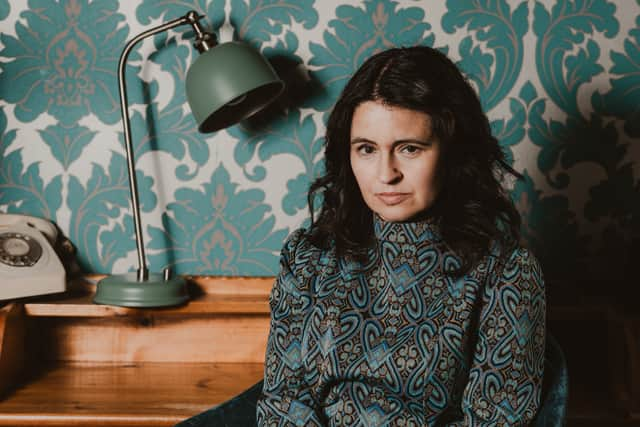
Delgados frontwoman Emma Pollock releases her first solo album in nine years, following a period of personal upheaval, including the death of her father and an autism diagnosis. There is comfort in her rich tones, despite the beseeching title of Begging the Night to Take Hold and there is a youthful insouciance to opening track Prize Fighter, another prime example of Pollock pop which never goes quite where you expect it to.
The album is a chamber piece of sorts, recorded with Graeme Smillie on piano and bass and Pete Harvey on cello, the latter bringing his equally offbeat arranging skills to the table and carrying much of the melody on the beautifully calibrated melodrama of Something of a Summer before a mid-stream change of tone, pitch and rhythm dominated by twanging guitar.
Marchtown is a baroque pop meditation on the Southside hood where Pollock lives and its links to Mary Queen of Scots. She keeps it regal on Jessie My Queen, a Kate Bush-like ode to painter Jessie M King with choppy cello strokes. Pollock moves the dial again on Future Tree, an indie pop tune with the wind in its sails, while Pages of a Magazine draws on jazz balladry and I Used To Be a Silhouette is a torch song about night terrors. All contrasting, all intoxicating.

Kirsten Adamson, daughter of Big Country frontman Stuart, continues to forge her own Caledonian country path on her third solo album. Dreamviewer spans the mainstream cutesy country pop of In The Next Life, the winsome and wise Perfume, girl group devotion of Whenever You’re Around, burnished bluesy River Someday and the urban country ballad Camden in the Rain, which features her best lovelorn vocal of the collection.
Singers Amelia Lironi and Naomi Mackay met as music students in Glasgow and now blend impeccably as Quad90. Their self-titled debut album is a feast of lithe punk-funk, Giorgio Moroder modular judder, disco handclaps and airy funk pop which harks back to Glasgow’s classy Chic-loving early Eighties pop devotion in effortless style.
CLASSICAL
Anna Clyne: Abstractions (Naxos) ★★★★★
What defines the music of Anna Clyne, the American-based English composer known locally for her former artistic residency with the Scottish Chamber Orchestra, now hot compositional property? The four works on this illuminating disc by the Baltimore Symphony Orchestra under conductor laureate Marin Alsop offer distinctive pointers. Foremost is Clyne’s acute sensitivity to colour, notably in premiere recordings of Abstractions (2016) and Color Field (2020), both inspired by visual art. The former, whether in the mysterious luminescence of Marble Moon or magical, impressionistic magnetism of Seascapes, embraces a skilful synthesis of stylistic influences, echoes of Vaughan Williams refreshed by modernism, Glass-like harmonic density countered by a scurrying melancholic ecstasy reminiscent of Tippett. Color Field, inspired by Mark Rothko paintings, is equally evocative, at times tantalisingly hazy, at others explosively cinematic. The performances are detailed and captivating - similarly so in the elegiac Within Her Arms and ultimately euphoric Restless Oceans. Ken Walton
JAZZ
Harben Kay: The World I Live In (Sulis Records) ★★★★
Saxophonist Harben Kay’s third album is an eloquent reflection of their recent life and identity changes and how they affect creativity; as they declare on their Mary Oliver-inspired title track, “I am too expansive to be tied down” (Walt Whitman’s “I contain multitudes” comes to mind). With seasoned collaborators Peter Johnstone on piano, double-bassist Calum Gourlay and drummer Alyn Cosker, and production by the ubiquitous Fergus McCreadie, this is indeed keenly expansive music. The haunting intro to Virago has Kay’s tenor sax sound like a Middle Eastern clarinet, giving way to a tumultuous groove, the initially tentative Laylow takes on joyous swing while the elegantly mellow Swolf features Kay’s recording debut on flute. Blue Beetle sees sax and piano questing forcefully over propulsive bass and drums; in contrast, saxophone intones wistfully over glistering piano in the suspended stillness of Winter Halo. Jim Gilchrist
The Scotsman’s arts newsletter is now sent twice a week - subscribe today
Comments
Want to join the conversation? Please or to comment on this article.