
Album reviews: Graham Coxon | Keith Urban | Haircut 100 | Jo Mango
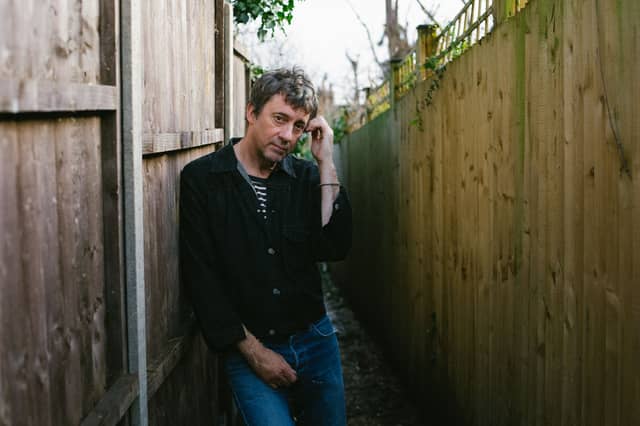

First recorded in 2011 but not released until now, Graham Coxon’s album Castle Park gives us plenty of reasons to get re-acquainted with the Blur guitarist’s solo catalogue, writes Fiona Shepherd
Graham Coxon: Castle Park (Transgressive Records) ★★★★
Keith Urban: Flow State (Hit Red/MCA Nashville) ★★★★
Haircut 100: Boxing the Compass (Map of England Records) ★★★★
Jo Mango: The Lightswitch (Team Love/Nature Bliss/Noth Records) ★★★
Blur guitarist Graham Coxon may not command the same commercial spotlight as his bandmate Damon Albarn but his extra-curricular career has been almost as prolific, with eight solo albums produced up to 2012 followed by a number of television soundtracks and a return to playing his first instrument, saxophone, in the band The Waeve.
A year-long re-issue programme of his solo works kicks off with a “lost” album, first recorded in 2011 during the sessions for his A+E album. Castle Park was never released for reasons Blurry, with Coxon caught up in band activity, but it’s a strong offering, touching on a number of his musical passions, particularly his love of 60s subcultures.
First single Billy Says is more mod revival than 60s original, its joyous new wave landing somewhere between LA strut and London snot. In contrast, he lets his inner Syd Barrett hang out on the pretty whimsical Alright, with a jilted Coxon accepting “I don’t really mind that you and me are done” while dreamily taking down his ex’s new partner (“I don’t see the light that shines from his behind”).
Elsewhere, he moves effortlessly from mod torch song Isn’t It Funny to très chic chamber pop waltz Melodie Pour Christine, cutesy indie duet There’s a Little House to the flamenco flourish, cantering rhythm and dynamic vocals of Dripping Soul. When You Find Out teams lean 60s garage with charming harmonies to celestial effect before he bows out with the resonating introverted melancholy of All The Rage and its tribute to “a life so forgettable that it really doesn’t matter”. Castle Park gives plenty of reasons to get re-acquainted with Coxon’s cult catalogue.

Country rock behemoth Keith Urban sails into welcome yacht rock waters on his latest album, featuring mostly covers of that silky smooth feelgood MOR genre of the 70s. No Toto or Steely Dan (for the brainiacs) here, though he does cover Bill Withers’ Just the Two of Us with mellow respect and the Isley Brothers’ sublime Summer Breeze with an easy listening country spin.
Otherwise, Flow State comprises deep cuts, from the aching pop soul of How Much I Feel by LA rockers Ambrosia to Help Is On Its Way, originally by Australia’s Little River Band, with widescreen pop and high harmonies reminiscent of Gerry Rafferty as revived by Scissor Sisters. Robbie Dupree’s Steal Away is pure Doobie Brothers and DB frontman Michael McDonald crops up as guest vocalist on the only original We Go Back.

There is more summertime ebullience from Haircut 100, releasing Boxing the Compass, their first album with original frontman Nick Heyward in 44 years. The funk pop force is still strong with this Beckenham bunch, who burned brief and bright in the early 80s.
Come Back to Me is full of the joys, including a buoyant horn section, Vanishing Point is not a million miles from the glorious groove of Average White Band and there are shades of Chic in the easy feel of Sunshine. Dynamite would get any 80s (or 70s) dance party going and the positive vibes prevail right through to A Wonderful Life and its cheeky sax coda.

Glasgow singer/songwriter Jo Mango has toured with Vashti Bunyan, co-written with Teenage Fanclub and co-conceived the stage musical A Giant on the Bridge with Admiral Fallow ’s Louis Abbott. She returns to her own music after an absence of over a decade of discouragement with an album which feels its way back to warmth. The song titles on The Lightswitch provide an inventory of her surroundings as she meditates on the nature of music, the food of love, layering gentle drone, plangent guitar, chiming harp and the Elysian Strings over her delicate vocals, whispering hope in your ear.
CLASSICAL
Katia and Marielle Labèque: 55 (Deutsche Grammophon) ★★★★
Piano duo Katia and Marielle Labèque have been household names for 55 years. Since launching their first album in 1970 the French sisters have not only enchanted audiences with their symbiotic flair and nuanced perfection, but have explored the widest possible areas of repertoire, from standard classics to the furthest reaches of contemporary avant-garde and jazz. This celebratory album, a three-disc mix of two-piano and piano four-hand performances, captures the warmth of their personalities. Whether in the flowing Romantic spirit of Mendelssohn, the mistiness of Debussy, the Mediterranean breeziness of Da Falla, the hypnotic allure of Glass, the lushness of Bill Evans, or the modernist subtleties of Berio, composed virtuosity is ever-present. Outstanding are Stravinsky’s ecstatic Rite of Spring, composer/indie-rock guitarist Bryce Dessner’s belligerent Coyote, and the stellar Messiaen’s Amen de la Consummation from his epic Visions de l’Amen, which featured on that very first 1970 album. Ken Walton
FOLK
Karine Polwart & Pippa Murphy featuring Dave Milligan: Windblown (Hudson Records) ★★★★★
Singer-songwriter Karine Polwart’s topics can range from community solidarity to geological deep time. This handsomely presented CD/book captures the rare spirit of her acclaimed stage show, Windblown, developed in conjunction with the Royal Botanic Garden Edinburgh, as a paean to its longest-lived plant, a tall Sabal palm, felled to allow palm house restoration. Polwart, with regular collaborators sound designer Pippa Murphy and pianist Dave Milligan, gives eloquent, moving voice – both sung and spoken – to the palm, its history and its attendant botanists, the elegiac tone exemplified by the stately piano piobaireachd with which Milligan closes the introductory Hear the Rigging. Burns’s Silver Tassie offers a farewell toast and the closing reprise of Hear the Rigging an emotive casting off: as Polwart puts it, “a parting glass to a beloved old living being and a hymn to those who looked after it”. Jim Gilchrist
The Scotsman’s arts newsletter is now sent twice a week - subscribe today
Want the latest Scottish headlines sent directly to your phone? Sign up to our new WhatsApp channel here
Comments
Want to join the conversation? Please or to comment on this article.