
'Micromanaging culture' is not job of government, SNP minister says, after Kate Forbes Summerhall row
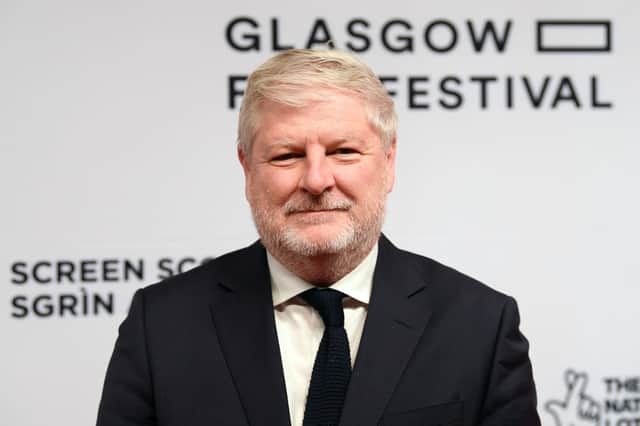
Culture Secretary Angus Robertson was responding to questions in Holyrood.

“Micromanaging culture” is not the job of government, an SNP minister has claimed, as he was challenged on whether there should be freedom of speech criteria linked to funding provision.
Culture Secretary Angus Robertson said decisions over criteria linked to funding grants were the preserve of arms-length organisations such as Creative Scotland, which is responsible for distributing arts funding.
Speaking to MSPs at portfolio questions in Holyrood on Wednesday, Mr Robertson was responding to a question from Scottish Conservative MSP Murdo Fraser on the Government’s position on “making all future funding for arts organisations conditional on the applicant’s commitment to protecting freedom of expression”.
Mr Robertson said: “Mr Fraser is well aware of my defence of the arms-length relationship between ministers and individual funding decisions for culture and the arts. This really matters for anyone who appreciates the importance of artistic freedom.
“I accept this will occasionally test this approach, but I value the principles and proportionality given that everybody operates subject to the law.”

Mr Fraser said it was “a bit of a cop out to kick all this over to Creative Scotland”, citing a Scottish Government request for Scottish Enterprise - another arms-length organisation - to revisit support for defence contractors with links to Israel.
He also referenced a situation during the Edinburgh Festival Fringe where venue Summerhall said a booking of an event featuring Deputy First Minister Kate Forbes was "an oversight" due to her views on trans rights - and it would be reviewing its policies to ensure the "safety and wellbeing" of performers it works with. The venue received £608,302 in an initial tranche of multi-year Creative Scotland funding in January.

Mr Fraser said: “Will the Cabinet secretary therefore make it very clear to Creative Scotland that its grants should be conditional on the recipients of the grants upholding free speech, so we don’t see any more nonsense like the deputy first minister being banned from an arts venue in receipt of taxpayer funds?”
Mr Robertson responded, saying there was a “tension” in being asked to stand up for free speech “at the same time as asking Government ministers to micromanage culture”.
He said: “That is not the job of the Cabinet secretary for culture. But I’m not walking away from a responsibility of using my voice, of saying we do want to support a culture of free speech.”
He said Summerhall’s management had since said publicly that Ms Forbes was welcome to attend the venue. Mr Robertson added: “It is not for government ministers to get involved in micromanaging individual circumstances, but the generality holds true - freedom of speech matters.”
He reiterated the claim when Scottish Labour MSP Pam Gosal raised the issue of a book temporarily removed from a National Library of Scotland exhibition.
The removal of book The Women Who Wouldn’t Wheest, of which Ms Gosal was a contributor, alongside JK Rowling, former MP Joanna Cherry and MSP Ash Regan, was not put on show as part of the venue’s Dear Library exhibition after being deemed by the library's staff LGBT network to have "significant risks to the library's relationships with authors and other stakeholders" following the Supreme Court judgement over gender recognition.
The book, which opposes former first minister Nicola Sturgeon's gender self-ID law, was later reinstated into the exhibition.
Ms Gosal asked “Does the Cabinet secretary agree banning books by feminist authors give the wrong message to women wishing to work in the arts and culture sector?”
Mr Robertson said: “It’s not the place of a Scottish Government cabinet secretary to micromanage the culture sector, which is why we have arms-length relations with our funding organisations and our funding organisations.”
MSPs also heard that a new chair for Historic Environment Scotland is set to be appointed “in due course”, following a recruitment process that started in May. The body is subject to a government investigation following claims of a “toxic” culture.
Comments
Want to join the conversation? Please or to comment on this article.