
Exclusive:Late night transport and 'live dashboard' could solve Edinburgh's festival accommodation crisis
The report issued a series of recommendations to improve the situation

It is a problem that seems to grow each year, with Edinburgh Festival Fringe officials warning of an “accommodation crisis” in the city during festival season.
Now a new report has claimed a coordinated approach to housing visitors to a string of events - combined with an expansion of late night and evening transport services - could solve the problem of finding somewhere to stay in the city and south east Scotland in peak tourist season.
The in-depth study from Smart Data for Smarter Tourism found a lack of travel options late at night mean over half of people hoping to attend events would be unable to find an affordable place to stay within a 90 minute commute.
It said it is “increasingly likely” for future event dates to create a “perfect storm” of regional events all occurring at the same time, such as next month’s Oasis gig, which occurs after the start of the Edinburgh Festival Fringe and other festivals in the city, pushing hotel and self catering prices higher.
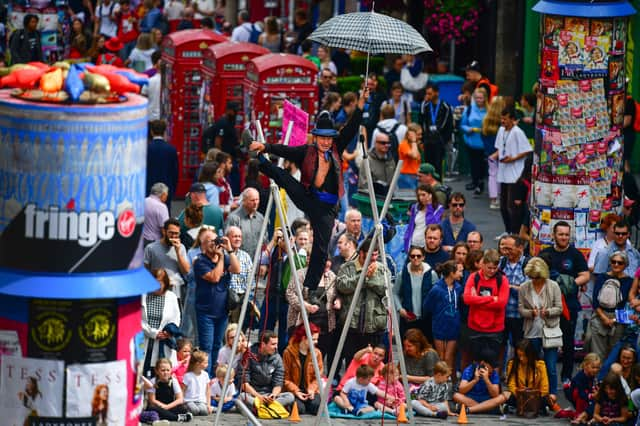

Separately, data from PriceLabs, which covers all properties listed on Airbnb, Booking.com and Vrbo, found the average holiday let in Edinburgh in August now averages £267 per night - 12 per cent higher than at the same time last year. It said the introduction of new rules over short term lets had reduced supply, pushing prices higher and the number of people able to stay in the city lower.
Meanwhile, lettings agent PassTheKeys said it had noted some visitors have chosen to reduce their length of stay to offset the high accommodation costs. The company found the average stay in Edinburgh this August is just 3.21 nights - a fifth lower than before the regulations came into place.
Thibault Masson, head of product marketing at PriceLabs, said there are around 2,000 fewer self catering listings in Edinburgh advertised online than before the regulations came in.
He said: “Finding somewhere to stay at the Fringe has always been a headache, but the 2023 holiday let crackdown has turned it into a full-blown migraine for performers and visitors alike. With costs this high, many visitors may have to say no to Edinburgh this summer.”
The Smart Data report also warned that many visitors hunting for accommodation to visit Edinburgh and south east Scotland during the hectic festivals season are unaware that public transport is available from outlying areas, and called for a joined-up approach from accommodation providers and transport firms to address the issue.
“Our research highlights how existing data sources can be brought together to produce valuable and actionable insights for the travel and tourism sectors in the region,” says Dougie Robb, chief executive of Smart Data Foundry, which compiled the study, which recommends the creation of a live, data-driven dashboard for event planners.
“In the long term, our analysis could be integrated into a live dashboard for event management stakeholders. This platform would provide interactive insights on transport, accommodation, and visitor movement, enabling data-driven decisions.
“This would allow stakeholders to consider different scenarios in order to optimise resources, and improve co-ordination for large-scale events.”
He pointed out that visitors coming from England would have to travel for less time from Glasgow to reach a concert in Edinburgh than most people would across London.
He said: “If you're visiting from down south to see Taylor Swift, you might not think of staying in Glasgow, but if that's an option that's presented to visitors, then it's maybe making life easier for people.
“If [our report] gave ScotRail the justification to put on more trains to help people do that, then that would be good.”
The organisation modelled three different possible scenarios, including events from the festivals in Edinburgh, which see the city’s population swells to more than one million for major events including the Edinburgh International Festival and the Fringe, combined with sporting events and major stadium gigs.
Scenario A was created as a busy non-festival day in the summer, with The Open, Hearts vs Hibs and Harry Styles playing.
Meanwhile, Scenario B was a busy festival day with Edinburgh’s festivals, Fringe by the Sea, Pittenweem Arts Festival, Innerleithen Music Festival, Party at the Palace, Connect Festival and Beyond Borders, while Scenario C was a “stress test” with all the events happening at the same time.
For each of the three scenarios at least half of guests requiring accommodation could not be allocated to an accommodation within a 90-minute commute.
In Scenario A, all of unallocated guests were attending the Open Championship in St Andrews, where there were only 72 providers within 90-minute catchment despite demand for accommodation from 37,000 attendees.
While all 25,220 guests from the Harry Styles concert who needed accommodation found a bed space in Scenario A - 87 per cent of which within 60 minutes or less - more than half of attendees who needed accommodation could not be allocated at all in Scenario C due to multiple competing events in the region.
Meanwhile, worst case scenario C found strong demand driven by multiple big events happening at the same time meant that almost two thirds of all potential guests, totalling 103,520, could not be allocated to an accommodation within 90 minutes arrival and departure travel of their event location.
The report’s authors said: “It is increasingly likely for future event dates to create a ‘perfect storm’ of regional events all occurring at the same time, as evidenced by 2025’s already congested schedule. As the city grows both in population and attractiveness for large events, we anticipate that multiple overlaps will become more likely.”
The report, which was commissioned through UK Shared Prosperity Fund funding from the six local authorities within the Edinburgh and South East Scotland region, comes as ScotRail this week announced a raft of extra late night trains on key routes to and from the city during the festival season.
The train operator will run additional late trains for festivalgoers from August 1 to 25, including between Edinburgh Waverley and Glasgow Queen Street, Glenrothes with Thornton, Dundee, and North Berwick.
The Smart Data report said other transport options also needed to be improved, including the recommendation of event-specific shuttle services between the city and periphery accommodation.
The proposed live dashboard would forecast accommodation availability and transport connectivity in real time, helping organisers avoid scheduling clashes, enabling transport providers to put on additional services, and assisting hotels and guest houses to manage occupancy rates more effectively.
The report’s authors argue that better data sharing could significantly reduce strain on the city during its busiest season, improving the experience for residents, visitors and businesses.
Neil Christison, VisitScotland regional director and lead for the visitor economy and culture project, said: “This project has played a key part in improving our understanding of how our transport infrastructures, accommodation and communities are impacted during the busiest periods in Edinburgh and South East Scotland.
“These learnings will be used to help inform smarter, more coordinated interventions between events, accommodation providers and transport operators, to better manage periods of high demand. This will allow visitors to enjoy world-class events, ensuring we remain welcoming and accessible for everyone.”
The report used information from historic ticket sales, accommodation and transport providers, although did not have access to Airbnb and short-term let figures.
Recommendations included calling for transport organisations to focus on the last mile of transport from key transit hubs which are excluded from being key accommodation areas due to a lack of direct transport routes, the provision of event-specific services for large scale and regional events, such as using student accommodation for golf competitions in St Andrews and introducing shuttle buses linking events in the Edinburgh city centre to accommodations on the periphery of the city.
It also pointed out that some accommodation in Glasgow could provide more convenient and direct access to events in Edinburgh city centre than accommodations in the outskirts of Edinburgh for those travelling by public transport - if people were made aware of them.
The report said: “Edinburgh’s and the region’s reputation as a data and culture capital places it in a prime position to leverage data assets for public benefit. A well-coordinated approach can not only sustain the region’s status as a premier event destination but has the potential to enhance visitor experience and ensure shared access to economic opportunities across the region.
“With this evidence that the cultural calendar is becoming more congested, we hope this elucidates detail in not just how to plan for events, but in how much further the region can go in terms of hosting more events and thus reaping the economic benefits they provide.”
Comments
Want to join the conversation? Please or to comment on this article.