
How world's biggest arts festival Edinburgh Fringe was created by eight 'gatecrashers'

The Edinburgh Festival Fringe began in 1947
It is the world’s biggest arts festival, which was created when eight “gatecrashers” turned up to perform at the first Edinburgh International Festival nearly 80 years ago.
Now, a documentary film celebrating the creation of the Edinburgh Festival Fringe and more than 300 subsequent festivals across the world, is to be premiered at the festival.
At the Edge explains how the Fringe grew from the seed planted in the city in 1947 to become a worldwide cultural phenomenon. There are now around 300 Fringe festivals around the world, all inspired by the Edinburgh Fringe.
The documentary, by filmmaker Michael Lloyd,who previously worked for the BBC, is to be screened during the Fringe this week.
It traces the roots of the Edinburgh festivals, from the money acquired from a horse racing win by Lord Rosebery, who donated his £10,000 of prize money from horse Ocean Swell’s Derby win as seed funding for the Edinburgh International Festival (EIF), to its growth under the leadership of Alistair Moffat and Michael Dale in the 1970s and 1980s.
Scottish arts impresario Richard Demarco, who co-founded the Traverse Theatre and attended the first festival in 1947 as a teenager, is interviewed in the documentary.
“Why did it happen?” he asks. “It happened because it wasn’t about art. It was about the need to heal the human pain and suffering.”
Presenter Xela Batchelder, who ran the Rocket Fringe venue for a decade, administers US Fringes at Rochester and Pittsburgh, and founded the Fringe University, said the Fringe was born out of a desire by the eight “Fringe adjuncts” to offer something to a wider audience.
“They believed they had something to offer that the main festival was not providing,” he said.
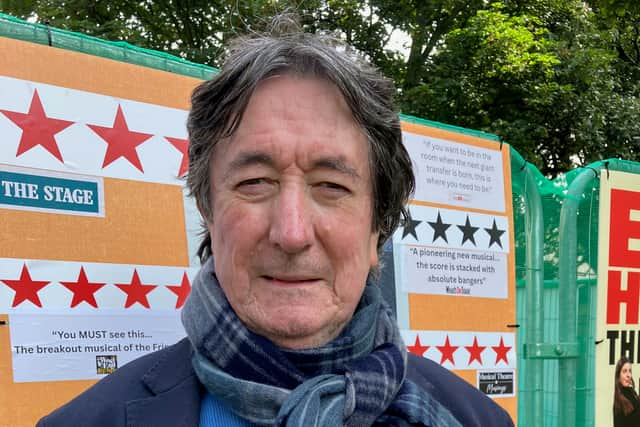

Presenter Ms Batchelder asks in the documentary what is driving the Fringe concept and making it a success.
“I am amazed that they keep coming back,” she said. "It's expensive being on the Fringe, even for comedians using minimal sets. I still help US theatre groups to put on shows, but it costs each performer thousands of dollars to come here."
Mr Lloyd said he had had the idea to film the documentary after learning that there were 300 Fringe festivals around the world which had been inspired by Edinburgh.
“I had an interest in how the Fringe had mushroomed from its small beginnings, into something so extraordinarily large,” he said. “There seemed to be a lot to say.”
He added: “What is surprising is exactly how Alistair Moffat managed to turn what was still a relatively junior partner to the international festival into the main event.”
Mr Lloyd believes that the Fringe’s status as the “world’s leading art market place” means artists are willing to lose money to appear at the festival.
“Researchers have studied how much the city makes from the Festival, but generally ignored how little performers do," he said.
"It excludes anyone without deep pockets. And that means working class participation is much lower than it should be, despite the efforts of Free Fringe promoters like Peter Buckley Hill, who don't charge acts for venues.”
The documentary will be screened at Venue 13 on the Cowgate Friday at 5.45pm.
Comments
Want to join the conversation? Please or to comment on this article.