
How Baby Reindeer sparked a trend for one-person confessional Fringe plays
Baby Reindeer and Fleabag both started life at the Fringe

In the original Edinburgh Festival Fringe stage play of Richard Gadd’s global hit Baby Reindeer, he has a debate with a police officer over the genre of his performances.
“Stand-up?”, the policeman asks. “No, theatre, I suppose,” answers Gadd.
“Is it comedy or theatre?” replies the exasperated officer.
The question is one which could be asked of many Fringe performers - particularly in the post-Baby Reindeer world, when the number of one-person, “confessional” style theatre shows which are, like Gadd’s, based on the performer’s own real life experience - has rocketed.

Data obtained from the Edinburgh Festival Fringe Society reveals that the number of shows registered with the organisation as “theatre”, “autobiographical”, “confessional” and featuring just one performer has rocketed from just 299 in 2019, to 446 this year.
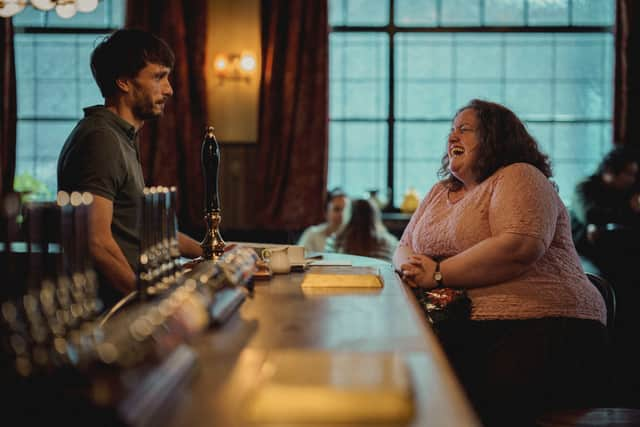
Baby Reindeer, snapped up by Netflix after TV executives spotted it in Edinburgh in 2019, became one of the most successful shows ever made by the streamer. Six years before Baby Reindeer, Fringe show Fleabag, by Phoebe Waller-Bridge, enjoyed similar small screen success.
However, while Gadd’s show was, notoriously, “a true story” - sparking legal action from a Scottish woman who believed she was the basis for the character of Martha in the series - Fleabag was not the one-woman confessional it appeared, but a work of fiction.
Francesca Moody, producer of the stage versions of both Baby Reindeer and Fleabag, believes the veracity of Baby Reindeer sparked the trend for “confessional” shows among performers hoping their story would be the next to be picked up for television.
“There was this moment in time, post-Baby Reindeer, where everyone was like, ‘Oh my gosh, in order for me to be successful, I have to tell my story that is true to me, based on something that really happened to me’,” she says.
“In the same way, I think there was definitely a brief moment where television producers and broadcasters were going, ‘Well, what's our Baby Reindeer?’
“But of course, the truth is, there's no never going to be another Baby Reindeer, in the way there's never going to be another Fleabag. Those things are so specific to those people, that the next one is going to be something completely different.”

She believes both shows - whether based on fact or fiction - fall into the category of “confessional trauma”, regardless of if they are based on fact or fiction. Moody says she had initially not been concerned with whether Gadd’s show was true, but with whether it would resonate with audiences.
“I read the script and I thought, ‘an audience has to see this show,’” she says. “I felt I had to produce this show because this story felt so compelling, so thrilling, theatrically. It was more about that than the true story nature of it.
“What audiences really crave is authenticity and I think sometimes people misconstrue the concept of authenticity as ‘I need to delve into my deepest, deepest, darkest trauma in order to make a piece of theatre that's worth seeing’, especially in a Fringe context. Actually, the most important thing is that there's a sense of authenticity in it and that doesn't necessarily need to mean that it's all true.”
With stand-up comedy a mainstay of the Fringe, Moody believes it is easier for performers to “blur lines” between genres of performance. While traditional theatre generally uses a fictional script performed by actors who have not written the story themselves, comedy utilises embellished first-hand experiences for entertainment.
”I think Fringe is a space where you can be a bit more playful and cross genre and audiences are more open to that,” she says, pointing to Gadd’s previous success as a comedian before moving into theatre. Recent BBC series Half Man, which like Baby Reindeer, was both written and starred in by Gadd, is entirely fiction.
“Fringe audiences are so open to work that sits across these blurred lines between different genres in a way that maybe conventional theatre audiences who you know go to the theatre outside of festival season aren't going to be as open to,” she says. “I always think the beautiful thing about the Fringe is you already have a captive audience, they're not looking to be convinced to go to the theatre or see stand up - they already want to do that.”
James Rowland, whose show Team Viking plays with the concept of true stories, worries there is a risk that reality is being conflated with value.
He says: “I have a frustration that it feels like reality - and something having verifiably happened to someone - is being associated with quality. I don’t think the fact something has actually happened means it will be bad art, but the problem is, it has come to mean that it is good. I heavily dispute that and conflating the two seems short sighted.”

He says theatre makers need to be aware they are creating a show, rather than being bound to the truth - but acknowledges that audiences are drawn to stories they believe are real.
“Even when people are talking about their lives and about real experiences, they will absolutely change huge amounts of details to make a joke work,” says Rowland, who is performing at Pleasance. “A comedian would absolutely be like, ‘This traumatic thing happened and it’s funnier if I say this bit happened five minutes earlier, I’m going to say that’.”
He adds: “Whether it is a conscious decision or unconscious, I think it’s fairly clear to me that the concept of value and veracity have been conflated to an extent where it is just part of our choosing process.”
Lee Minora, who is performing Baby Everything at Summerhall in August, agrees, saying she is “less interested in accuracy than impact”. Billed as theatre and comedy, Minora’s show is based on fact, but she admits it is embellished to create an entertaining piece of work.
She says: “Baby Everything is honest, but it isn't always factual. Yes, there are things pulled from my life in the show, but I'm not interested in documenting them accurately, I'm interested in transforming them theatrically.
“Have I had a worrying breast exam in real life? Yes. Did it look anything like the one in the show? It would have been a lot more fun if it had. I'm formally truthful and factually playful. The spirit of the work is real. I think you can tell an honest story a million different ways and even facts become stories the moment we decide how to tell them.
“The theatrical gold is in the alchemy, transforming facts into something bigger, stranger and funnier but just as emotionally true.”
Anthony Alderson, director of the Pleasance, believes the move to one-person shows is not “simply an artistic trend”, but an “economic necessity” as artists are forced to scale back productions due to soaring costs.
He says: “Instead of investing in larger casts, ambitious production values or technical innovation, more of their budgets are being spent on accommodation and the basic cost of being in the city.
“The Fringe has always thrived on creativity born of constraint, but there is a point where financial pressures begin to shape the art itself. If we don’t reduce costs and find support for new work, we’ll see less theatrical ambition and a gradual narrowing of the extraordinary diversity that has always defined the festival.”
Comments
Want to join the conversation? Please or to comment on this article.