
Exclusive:Fringe Society: Council needs to 'relieve bottleneck' on student flats to create festival accommodation supply
Tony Lankester said he would be “sad” if major gigs like Oasis were scheduled during the Fringe again

The head of the Edinburgh Festival Fringe Society has said authorities need to "relieve the bottleneck" on student flats lying empty for the summer due to short term let regulations in a bid to create more affordable accommodation for visitors.
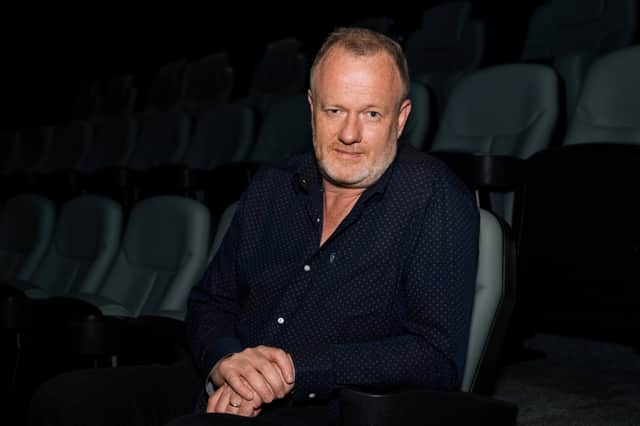
Chief executive Tony Lankester said the Scottish Government and the City of Edinburgh Council need to take action to "drive up the supply side" of accommodation in Edinburgh as performers and audience members warned they were being priced out of attending the Fringe.
He also called for an exemption from the short term let scheme for properties which already have HMO licences in place.
New short term let regulations were introduced in Edinburgh in 2022. A temporary exemption policy allows landlords to let out properties for up to six weeks.
Mr Lankester said: “We need to make sure that we've driven up the supply side of the equation: we need more beds in the system. Anecdotally, we know that there are a large number of houses that are waiting for students to start the term that are suddenly empty because the landlords thought the process of getting a short term leasing exemption was too cumbersome or too slow or too expensive or unpredictable.
“We need to relieve that bottleneck a little bit and make it easier for people who own accommodation to step into putting their inventory into market.”
He added: “I think the process [of short term let licensing] isn't clear and transparent and simple enough. There's a school of thought that says if you already have an HMO licence, which basically says your property is safe for people to come and occupy it, that's a similar bar to short term lets. So, if you have an HMO licence, you could automatically get a short term exemption, which would free it up. It’s a case of us sitting with the council and understanding what their pressures are and seeing what adjustments and amendments we can make to the process.”
The City of Edinburgh Council said any changes to HMO and short term let policies would be the jurisdiction of the Scottish Government.
Mr Lankester said he was working on a new model of commercial sponsor, where venues would become involved in the offering to corporate sponsors by hosting events and would generate a share of the income. He said the Fringe Society was in talks with a number of new potential backers, who he had hosted during this year’s Fringe.
He said: “The narrative from the venues is that the Fringe Society just raised sponsorship and kept all the money itself. So what we now are doing is saying, ‘Actually, the best sponsorships and partnerships are ones that are Fringe-wide. We will build the sponsorship model and money will go back to the venues’.
“If the sponsors want to reach hundreds of thousands of people, we need the venues to participate in that, and the venues will expect to be reimbursed for that.”
Mr Lankester acknowledged "tensions" between the Fringe Society and the major venue operators at the festival, but said it was "impractical" to have "eight or ten" venue owners around the table at every high level meeting.

Earlier this week, William Burdett-Coutts, director of Assembly, said the Fringe Society represents itself as “the Fringe” at talks with the Scottish Government and other authorities, but claimed it does not make the case for stakeholders in the festival. Meanwhile, Karen Koren, founder of Gilded Balloon, called for the council and Scottish Government to be “at the table together” with venue operators.
Mr Lankester warned that conflict between the Fringe Society and venues could risk potential corporate partnerships.
“The Fringe is a confusing entity to step into from the outside, and sponsors don't want complexity,” he said. “They want a simple solution to a business problem.”
He added that there was a “general acceptance” of the idea among venues.
The venues have called for involvement in talks relating to festival issues, such as in working groups including Festivals Edinburgh and the Scottish Government’s Strategic Partnership for Scotland's Festivals. Currently, they are represented by the Fringe Society.
Mr Lankester said: “I think that just about every single meeting I've had during the course of the Fringe, we've discussed accommodation. Now, that conversation is no different, whether the venues are in the room or not. That is our job.
“We can't go in as the Fringe with eight or 10 people from our constituencies to every single meeting. That's just impractical, and they [stakeholders] wouldn't have the time.”
Figures released this week revealed flat sales for this year’s Fringe of around 2.6 million tickets. Mr Lankester said revenue was likely to be up to to rising ticket prices - however admitted there had been a “dip” in sales on the days of the Oasis gigs at Murrayfield - despite having personally spotted a number of people in “bucket hats and Oasis t-shirts” attending Fringe shows.
He said: “There’s a strong element of displacement - if you live in Edinburgh, the nights concerts are happening, you're probably going to decide not to leave your house that night and think ‘I'll come out tomorrow night instead’.”
He branded the decision by hotels to “artificially hike” prices during the concert dates a “much bigger problem” than the gigs themselves, but said he hoped similar scheduling clashes could be avoided in the future.
He said: “We're not calling for a ban, and it would be counter intuitive for the Fringe Society to call for the ban of any live performance. I'd be sad if it happened again, but we'll work around it like we did this year.”
Neil Ross, regulatory convener at the City of Edinburgh Council, said the council had simplified the process for both home letting and home sharing temporary exemptions to encourage increased availability of accommodation during periods of high demand such as festivals.
He said: “The council is doing everything it can to make it as easy as possible for HMO licence holders who wish to additionally obtain an STL licence. Temporary exemptions for up to six weeks are already available to HMO operators.”
He added: “It would require a change in legislation by the Scottish Government to implement a complete exemption of any form of regulation for HMO operators.”
A Scottish Government spokesperson said: “The short-term let sector is an important part of tourism and enhances Scotland’s reputation as a quality tourist destination.
“A holder of an HMO licence will still need to apply for a short-term let licence if they wish to use their property for that purpose. Licensing authorities are responsible for applications decisions and may take account of whether the applicant has other valid licences, such as HMO, in making a decision.”
Comments
Want to join the conversation? Please or to comment on this article.