
Film Reviews: Send Help | Twinless | The Chronology of Water | Hamlet | The Shepherd and the Bear
Not for the squeamish, Send Help is a gleefully grisly return to form for Sam Raimi, writes Alistair Harkness
Send Help (15) ★★★★
Twinless (15) ★★★★
The Chronology of Water (18) ★★★★
Hamlet (15) ★★★
The Shepherd and the Bear (15) ★★★★
My Father’s Shadow (12A) ★★★★
Sam Raimi makes a gleefully grisly return to the horror-comedy genre with Send Help, a wilderness survival movie shot through with over-the-top splatter effects, full-tilt camera work and the same devious sense of humour found in the likes of the Evil Dead trilogy and 2009’s gonzo gore-fest Drag Me to Hell.
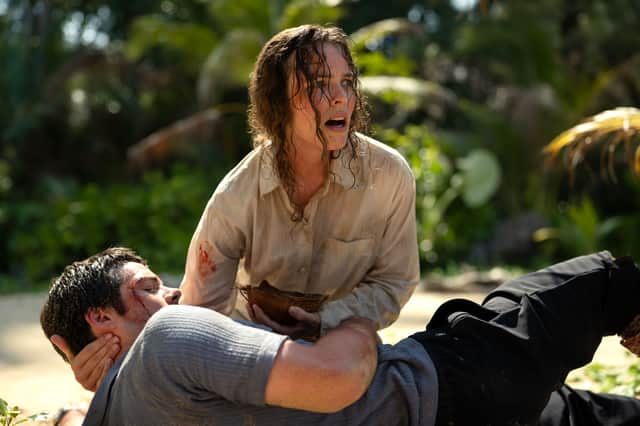

This time out the ever-brilliant Rachel McAdams takes the lead as Linda, a nerdy, socially awkward corporate drone passed over for a promised promotion by Dylan O’Brien’s odious Bradley, the misogynistic son of her recently deceased boss. Bradley views Linda – whom we soon learn was once an aspiring contestant on the reality show Survivor – as the kind of passive, nose-to-the-grindstone worker he can control and exploit, but the tables are swiftly turned when a business trip to Bangkok ends with the company’s corporate jet crashing, leaving Linda and Bradley as the only survivors on a deserted island somewhere off the coast of Thailand.
Raimi delights in setting all this up, but it’s McAdams’ entertainingly unhinged transformation from corporate doormat to vengeful Bear Grylls that drives the action, with Linda enjoying her newfound dominance perhaps a little too much. Though fans of Triangle of Sadness may anticipate one of the twists, Raimi layers in more subtle character details that keep things entertainingly off-balance while simultaneously upping the gross-out ante with squished eyeballs, vomit-fuelled CPR and some nasty business involving neurotoxins, a rat and some testicles. Not for the squeamish.
READ MORE: Film reviews: Shelter | Primate
Dylan O’Brien pops up again in a very different mode in Twinless, a wonderfully twisty indie comedy drama about young guy called Roman (O’Brien) who looses his twin brother in a car accident and bonds with a similarly bereft twin (played by the film’s writer/director James Sweeney) at a support group for grieving siblings. That’s about as much plot that can safely be divulged without ruining the efforts of Sweeney – who won last year’s Sundance Grand Jury prize for the film – to pull the rug out from under us with a novel structure that grants us a better understanding of his psychologically complex protagonists. Darkly funny but heartbreaking too, it’s a very assured piece of filmmaking, with O’Brian especially good playing a kind of soulful meathead not always able to find the right words to articulate what he's going through.
Kristen Stewart also takes some bold storytelling risks with her debut feature as a writer/director. Based on a hard-hitting memoir by cult writer Lidia Yuknavitch (a contemporary of Fight Club author Chuck Palahnuik), The Chronology of Water offers a fractured portrait of the author – fearlessly played by Imogen Poots – as she processes her abusive childhood through destructive behaviour, sexual experimentation, alcohol addiction and avant-garde writing. Like a grungier Terrence Malick, Stewart makes artful use of voice-over and non-linear editing to externalise her protagonist’s inner turmoil. The result is a film that captures something truthful about the way creativity works and how trauma never quite leaves you. And Poots really is mesmerising.
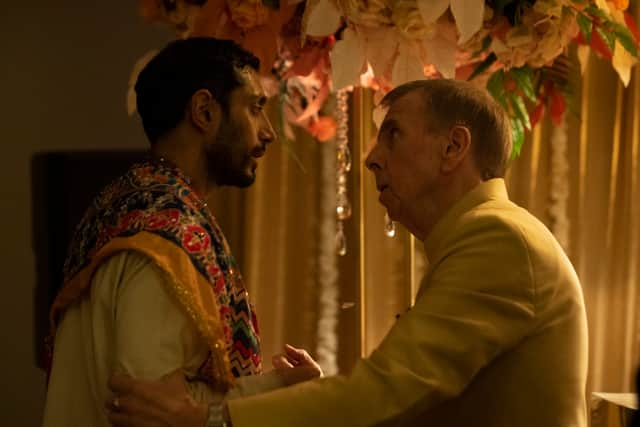
Another week, another cinematic riff on Hamlet, this time a contemporary London-set adaptation of the play itself. Starring Riz Ahmed as the eponymous prince and forcefully directed by Aniel Karia (who shared an Oscar with Ahmed for their 2020 short film The Long Goodbye), it’s a gritty, bloody, pretty streamlined take on Shakespeare’s thematically evergreen, if very familiar, tale of familial treachery, revenge and madness. Still, Ahmed’s portrayal of Hamlet – now the heir to a not-entirely legit property empire – keeps things somewhat fresh, especially as Hamlet starts to unravel, a moment signified by him delivering the “To be or not to be?” speech while speeding down a motorway in a sports car playing chicken with the oncoming traffic.
An ongoing mission by the French and Spanish governments to reintroduce brown bears to the Pyrenees is at the heart of The Shepherd and the Bear, a beautifully shot documentary that zeroes in on a brewing conflict between the farmers who graze their sheep on the mountains and the conservationists and authorities whose inability to deal with problem bears is putting more strain on a dying way of life. Director Max Keegan doesn’t amp up this conflict though; embedding himself in the community his approach is more reminiscent of Frederick Wiseman’s as he quietly observes his subjects, revealing a more nuanced picture of the complexities of rural life.
Set against the backdrop of Nigeria’s annulled 1993 presidential elections, British-Nigerian filmmaker Akinola Davies’ semi-autobiographical debut My Father’s Shadow examines authoritarianism from the perspective of two brothers who’ve been briefly reunited with their activist father (the excellent Sopé Dìrísù) as he travels to Lagos to reclaim some unpaid wages. Though didactic in places, the film’s lyrical, child’s-eye perspective gradually captures the vibrancy (and therefore hope) of the people, even as they face the ongoing spirit-crushing oppression of a rigged political system.
Send Help is in cinemas from 5 February; all other films are in cinemas from 6 February
The Scotsman’s arts newsletter is now sent twice a week - subscribe today
Want the latest Scottish headlines sent directly to your phone? Sign up to our new WhatsApp channel here
Comments
Want to join the conversation? Please or to comment on this article.