
Film reviews: Sasquatch Sunset | Federer: Twelve Final Days | Freud’s Last Session | Ultraman: Rising
Shot like a nature documentary, Sasquatch Sunset stars Riley Keough and Jesse Eisenberg as hairy, grunting, bipedal creatures who feed, fight, fornicate and defecate their way through an event-filled year, writes Alistair Harkness
Sasquatch Sunset (15) ****
Federer: Twelve Final Days (N/A) ***
Freud’s Last Session (12A) **

Ultraman: Rising (PG) **
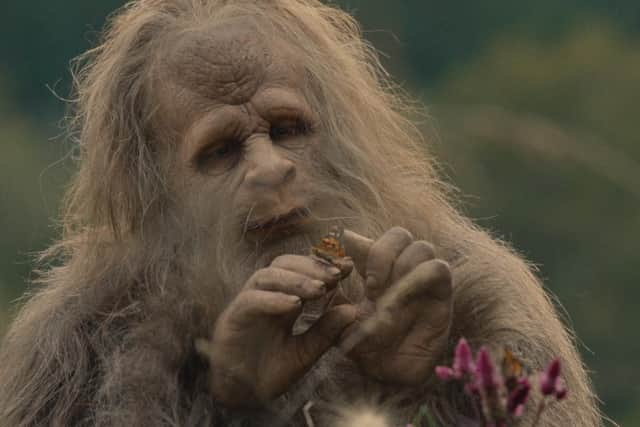
The legend of Bigfoot gets a creatively audacious re-imagining in Sasquatch Sunset, a wry, poignant, dialogue-free black comedy from cult directors David and Nathan Zellner, about a Sasquatch family living in splendid isolation in the North American wilderness. Starring Riley Keough and Jesse Eisenberg (both unrecognisable in full prosthetics), and shot like a nature doc, the film follows four hairy, grunting, bipedal creatures as they navigate the seasons of an event-filled year in which their own existence becomes a more precarious proposition.
Keough plays the only female of the group, a thoughtful, yet subservient (at first) figure who still nurses and cares for the group’s youngest member (Christophe Zajac-Denek), but is also the reluctant mate of an alpha male (played by co-director Nathan Zellner) who asserts his dominance with sexualised shows of strength. Eisenberg, meanwhile, is a more gentle and curious figure whose exact relationship to Keough’s character is never defined. As we move though spring, though, we grasp the group dynamics as they feed, fight and fornicate, defecate and urinate with comedic abandon, consume naturally occurring hallucinogens and other intoxicants, and interact with other creatures in the forest. We also sense a dawning of something like consciousness, brought on in Keough’s character by her realisation that she’s pregnant, and in Eisenberg’s by a sense of something bigger at play in the world as he gazes at the stars and tries to figure out concepts like counting.
Like a more radical riff on Planet of the Apes – or perhaps 2001: A Space Odyssey’s “Dawn of Man” sequence stretched out to feature length – the film takes a more ominous turn as it builds towards an encounter with the human world, something that facilitates a funny yet disturbing use of Erasure’s early 1990s synth-pop banger Love to Hate You, but also holds up a mirror to our more destructive impulses. Harry and the Hendersons this ain’t, a point reinforced by the film’s wonderfully ambiguous final shot.
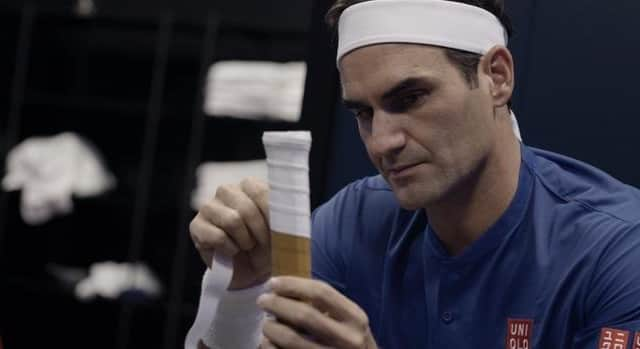
Watching Roger Federer play tennis – especially if you’re lucky enough to have seen him play at Wimbledon in his prime – is like watching Keanu Reeves at the end of The Matrix when everything clicks into place and he realises he’s “The One”: it’s so effortless it looks like he’s on another plane of existence. That he’s the best player of all time is in little dispute and now that he’s officially retired there will doubtless be a great film made about him. Sadly, Federer: Twelve Final Days isn’t it. Despite boasting Senna’s Asif Kapadia as a co-director (Joe Sabia is the other credited director), it’s little more than a high-end, officially sanctioned corporate promo taking us behind the scenes of Federer’s retirement announcement and following him – as the title indicates – for the next 12 days as he prepares to play his final match at the 2022 Laver Cup.
There are a lot of emotions to process along the way and Federer comes off the way he’s always come off: as a thoroughly decent guy with a loving and committed family who’s managed to navigate the highs and occasional lows of a 20-plus year career at the top with zen-like calm. That in itself makes this a very pleasant watch in the run up to Wimbledon (which he won eight times). What it lacks, though, is the analytical prowess of, say, David Foster Wallace’s astonishing 2006 essay Federer Both Flesh and Not to help us understand what made him great.
Adapted from the stage play of the same name, Freud’s Last Session is a speculative drama about a possible (but never confirmed) contretemps between the father of psychoanalysis Sigmund Freud and Christian apologist, Oxford don and future Chronicles of Narnia author CS Lewis. Having played an older version of Lewis in Richard Attenborough’s Shadowlands back in 1993, Anthony Hopkins here gets to take an opposing view of faith by playing the fiercely atheistic Freud, who summons Lewis (Matthew Goode) to his London home – on the day Britain declares war against Germany – to challenge his intellectual defence of God’s existence. Alas, what could have been an intellectually stimulating verbal sparring match is rendered dull by co-writer/director Matt Brown’s contrived efforts to transcend the story’s stage-bound origins with honking flashbacks and multiple subplots. Hopkins is always fascinating to watch of course (especially so of late), but the script is so intent on rendering their battle of ideas a draw that even his Herculean presence can’t give it much lift.
Based on a popular Netflix animated TV show that is itself based on popular Japanese TV character dating back to the 1960s, Ultraman: Rising is a fairly generic superhero film about a Japanese-American baseball star who returns to his native Tokyo to fulfil his titular destiny as a shapeshifting humanoid alien whose ability to expand in size enables him to protect his home city from giant monster attacks. As a brief prologue informs us, this duty was formerly performed by his ageing and estranged father and, while the film doesn’t feel the need to explain why either man has this ability (they just do), the concept provides the father-son story at its core with a neat metaphor for the way parents loom large in a child's life until they get older and start to understand them as actual people. It’s a shame, then, that the characterisation is so one-note. Like most animated films of this ilk, it’s also overly plotted and riven with catastrophe-laden set-pieces.
Sasquatch Sunset and Freud’s Last Session are on general release from 14 June; Federer: Twelve Final Days is on limited release from Friday and streams on Prime Video from 20 June; Ultraman: Rising streams on Netflix from 14 June.