
Edinburgh International Festival joins forces with two European festivals to mark ambitions for 80th year
The three festivals were all formed in 1947

It was formed after the Second World War as part of a movement aimed at uniting Europe in art.
Now the Edinburgh International Festival (EIF) is to join forces with two other festivals also founded in 1947, uniting to reaffirm a shared belief that art can change the world.
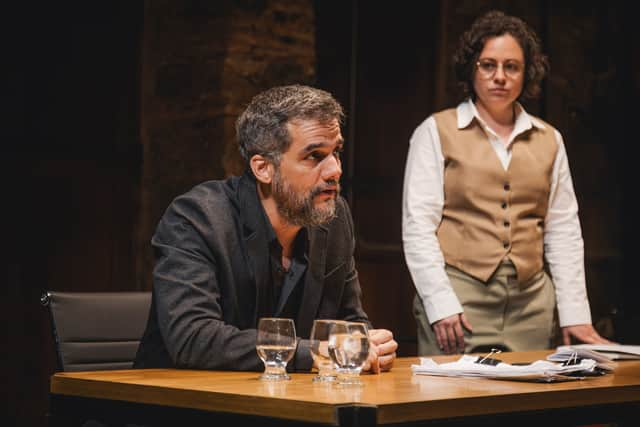
The EIF will collaborate with Holland Festival and Festival d’Avignon for the first time since their founding 79 years ago on new theatre commission The Trial – after an Enemy of the People by Brazilian director Christiane Jatahy.
Artistic director Roy Luxford said the co-production would mark the start of an historic three-year producing and commissioning initiative between the three European festivals - as well as being “emblematic” of the scale of the EIF’s ambitions as it enters its 80th year.
The EIF was last year forced to scale back its programme due to uncertainty over funding. However, a three-year deal with Creative Scotland was agreed at the start of this year, which Mr Luxford said had allowed the organisation the stability to plan ahead. However, Mr Luxford warned the funding “cycle” would soon begin again.
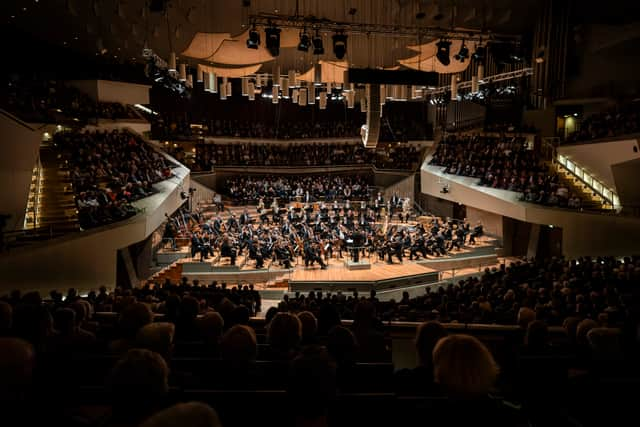
As well as The Trial, which will travel from Holland in June to France in July, and then to Edinburgh in August, the first pre-sale announcement also includes the return after almost two decades of the Berliner Philharmoniker, with chief conductor Kirill Petrenko leading two concerts to the festival’s closing weekend.
Also returning to the festival for the first time in over 20 years, San Francisco Ballet brings the European premiere of Mere Mortals to the festival. The new full company work is by Canadian choreographer Aszure Barton, with composer and electronic musician Floating Points, aka Sam Shepherd, performing his original score live with the Royal Scottish National Orchestra.
Meanwhile, the EIF will also feature the UK production premiere of Verdi’s A Masked Ball, a lavish, large-scale production in the Festival Theatre with the Orchestra of the Zurich Opera House.
Mr Luxford described the Berlin Philharmoniker as “about the best orchestra going”.
He said: “The reason for doing an early announcement on sale of these four pieces is that they'll definitely be highlights of the programme, but also that they are emblematic of scale and reach and intention. The festival in 2026 will very much be the offering that you would expect.
“It's about the festival really being on the front foot and taking the initiative with some of these sought-after international artists.”
Mr Luxford said the three festivals had been speaking about a possible collaboration for some time.
He said: “It came together just by reaching out to both festivals, as they were also having new artistic directorship, and this idea of a relationship between three festivals, all founded in 1947, came about.
“We have a shared provenance. Whilst we do slightly different things artistically, there is clearly much common ground and that's what we really wanted to celebrate in this relationship.”

He added: “I was very conscious through everything that happened with Brexit and with Covid, whether our links with our European mainland peers was strong enough.
“Since Brexit, UK artists trying to go to Europe has become very challenging. So again, one of the drivers of this collaboration is about trying to make things a little more straightforward, because international touring is really stretched.”
The project is initially planned for the next three years. The form of the joint work is likely to usually be drama, which Mr Luxford describes as the “sweet spot” between the three festivals.
He said next year’s 80th anniversary would “have a programme that reflects that”, pointing to a desire to “look around festivals and the role of arts and culture in society”.
He said: “One of the drivers for the collaboration is about what we believe in arts and culture, about uniting peoples, being able to disagree reasonably, not always about polarisation. Artists just have that innate way of presenting arguments and discussions in a way that is revealing and enlightening to audiences.”
Edinburgh International Festival director Nicola Benedetti said: “These four landmark works offer a glimpse of what’s to come for the International Festival in 2026, as we continue to welcome some of the world’s most extraordinary artists to Edinburgh.
“2026 is a pivotal year for us, as we grow and push artistic excellence even further. The International Festival holds a unique position to bring world-class companies like San Francisco Ballet and the Berlin Philharmonic to Edinburgh, while also being a place where new ideas and collaborations can take place.”
The three festivals founded in 1947
In Edinburgh, founder Rudolf Bing, a cultural pioneer and Jewish refugee, joined civic and artistic leaders to imagine a festival that would transcend political boundaries through a global celebration of the performing arts. Since then, the International Festival has flourished, deepening its commitment to artistic excellence and continuing to bring people of different cultures and viewpoints together every August.
This vision was shared by Holland Festival founder Henk Reinink, who expressed his hope that “combined forces would be able to accomplish something great”.
With international co-operation woven into the fabric of its history, Holland Festival wished to bring together art and artists to heal a Europe that had been torn apart. For 78 years, the Holland Festival has been presenting ground-breaking performing arts that have the power to move, connect and inspire a large and diverse audience to reflect on the world we live in. The festival takes place every year in June.
In France, Jean Vilar, French actor and theatre director, shared this belief and championed popular theatre, advocating that art should be accessible to all, in a time of international polarisation. Committed to placing the audience at the heart of creative expression, his view was that theatre should be a public service.
Every July, the Festival d’Avignon presents nearly 40 productions and curates readings, exhibitions, films and debates, all dedicated to collaboration and placing the audience at the centre of every artistic decision.
Comments
Want to join the conversation? Please or to comment on this article.