
Why the Edinburgh Fringe is bulging with shows about grief and loss


Death is a perennial theme at the Fringe, but can theatre help people talk about it? Susan Mansfield speaks to the theatre-makers taking on the trauma of bereavement
It might be one of the great certainties in life that death will be a theme on the Fringe. However, this year, the programme seems to be bulging with shows about grief and loss.
Veteran storyteller James Rowland contemplates his own demise in James Rowland Dies at the End of the Show. Brazilian dancer and theatre-maker Gabriela Flarys presents Deluge, about the five stages of mourning, inspired by interviews with people who responded to an open call on social media. There’s even Living, Dying, Dead, “an exploration of death, dying and bereavement through improv”.
Charlotte Bennett, joint artistic director at Paines Plough, who is directing My Mother’s Funeral - The Show, by Kelly Jones, at the Roundabout, believes the pandemic helped inspire conversations about mortality: “It was in the public consciousness, we had a daily death toll on the 6 o’clock news. I think people just became more aware of it, what it means to die, what our health means to us.”
However, often the reason for bringing a grief show to the Fringe lies simply in one’s own experience. Multiple Fringe First winners Sh!t Theatre, Rebecca Biscuit and Louise Mothersole were in the middle of an international tour last spring when Adam Brace – Biscuit’s partner and the director of eight Sh!t Theatre shows – died suddenly after complications following a stroke.
“We didn’t know if we wanted to go back to work together,” Biscuit says. “But we had always joked about making a folk album, and as a way of getting back into the room with each other we started playing old folk songs. So many of them are about death and grief so – although grief is really horribly specific and individual – you start to feel you’re experiencing something people have felt through the whole of human existence.”

That led them to begin to explore the world of folk singarounds, informal gatherings at folk clubs where people take turns to lead a song. “It felt like we were conjuring joy together by singing old songs about death,” says Mothersole. Their new show, Or What’s Left of Us, is part singaround (which will continue in the bar afterwards), part exploration of grief, and part whodunnit.
Mothersole, who talks about losing her father in the show, says: “What we didn’t want to do is shy away from the horror of grief. We try to inhabit that place of the wake where it’s an ode to the person you’ve lost, but it’s also a celebration of still being alive. Also, the only way we’ve ever known how to process anything that happens to us is doing it through our shows.”
When Glasgow-based theatre-maker Amy Conway trained as a civil celebrant during the pandemic, she quickly realised the job could inspire a show. In her one-woman play Catafalque, she plays a celebrant faced with the challenge of preparing a funeral for a person with a chequered past, while coming to terms with her own losses.
“I trained in all aspects of the job, but what I mainly ended up doing was funerals. For me, it was providing a service for families, it made me feel useful, and it provided me with a unique perspective on grief and death. It was a privilege to tell someone’s story, but sometimes a relative would indicate an aspect of the person’s life that wasn’t so favourable, that didn’t fit with the narrative. How do you tell the story of someone who has been less than good?”
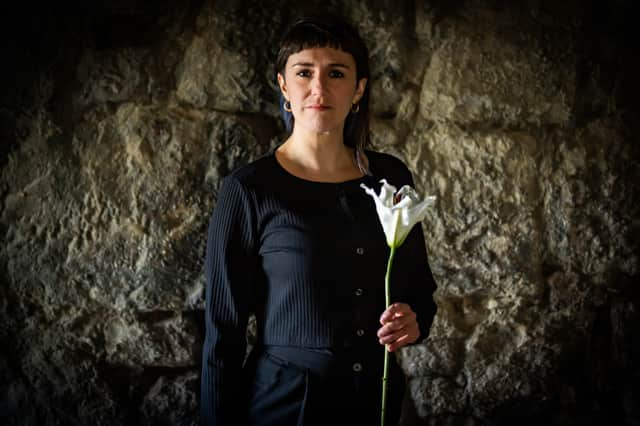
She says the show has a liberal measure of black humour, picked up while working in the funeral industry. In common with many of those making death-related shows for the Fringe this year, she promises the work is very funny.
The sheer cost of a funeral was the starting point for playwright Kelly Jones, author of the aforementioned My Mother’s Funeral - The Play. When her family found themselves facing a £4,000 bill for a funeral for a distant relative, she realised that there are inequalities even in death. This inspired the story of Abigail, a young theatre-maker trying to pay for her mother’s funeral by making a show, while keeping secret the fact that she’s actually been bereaved.
The idea struck a chord with Paines Plough’s joint director Charlotte Bennett who was “in a whole world of grief, loss and death” after losing her mother, mother-in-law and her baby daughter Margot in the same 12-month period. She says she hopes the play will start conversations about difficult subjects such as class, money and death.
“We need to get better, as a society, at talking about these things. I found it so hard that people were not willing to talk about [my daughter’s death]. You could see people thinking ‘This is the person whose child and mum died in the same year, I’ll just look awkward and not talk about it’. For me and a lot of bereaved parents, it’s a common theme, ‘please talk to me about my child’. When people don’t acknowledge the fact that she died, it feels like she hasn’t lived.”
Theatre can play an important role in breaking the ice on these difficult conversations, according to Rebecca Patterson, director of Good Life, Good Death, Good Grief, an organisation set up by the Scottish Partnership for Palliative Care to demystify conversations around death and dying. The group manages a website, www.deathonthefringe.org, to help promote shows which explore these themes.
She says: “In the work that we do, we know it’s really important that people have the opportunity to think about, plan ahead for and support each other with death and dying issues. We think we need to have more opportunities to grow comfortable around these difficult issues, and the arts do a really good job of helping to open up these conversations in a nuanced way.”
Breaking down silence about grief and trauma is one of the main concerns of Ruairi Conaghan, known for his acting work on stage and screen, who was inspired to write his first play when a buried trauma resurfaced in his own life. He was eight when his uncle and namesake, Rory Conaghan, who was a Judge in Northern Ireland, was shot dead on his doorstep by the IRA. Ruairi’s father, a local politician, also received death threats and the family had to check under the car for car bombs each time they left the house.
Ruairi thought the effects of this were long buried until he was cast in a play as IRA man Pat Magee (the man behind the 1984 Brighton hotel bombing). Then, his next acting job was as the Player King in Benedict Cumberbatch’s Hamlet, a role which includes a graphic description of murder in a play in which “everybody knows the truth, and no one’s talking about it”. This prompted a breakdown in 2015 in which his mental and physical health collapsed.
His response was to write Lies Where It Falls, about his uncle’s death and his own experiences. He says: “There is an Ulster stoicism, people who went through these things won’t talk about it, the same way as people never talk about what happened in the war. There’s a whole generation of people my age who are dealing with a kind of PTSD. What we’re realising and learning now is that we have to talk about it.”
When the play premiered at the Lyric Theatre in Belfast, he was surprised at how many people approached him or contacted him on social media to tell him their own stories. Now he hopes it will connect equally well with an international audience on the Fringe. “What I’m trying to show is that other people have their own trauma. But see this idiot on stage, telling his story, telling jokes, singing songs? Well, maybe it’s okay for me to tell my story as well.”
Shi!t Theatre: Or What’s Left of Us, Summerhall, 4.45pm, until 25 August; Catafalque, Summerhall, 12.25pm, until 11 August; My Mother’s Funeral - The Show, Roundabout @ Summerhall, 2.40pm, until 26 August; Lies Where It Falls, C alto, 2.30pm, until 25 August.
Comments
Want to join the conversation? Please or to comment on this article.