
Iranian tales: five Fringe shows that go beyond the headlines


If you want to know Iran, ask an Iranian. Five of this year’s Edinburgh Fringe performers share what they would like audiences to know about a much misunderstood country.
Iran has been a daily presence in international headlines this year, with the conflict between its government, the USA and Israel showing no signs of resolution five months after the US attacked Tehran in February. But the complexities of the country, its culture, politics, and people are little understood by most Westerners, who often see only a war zone.
This year’s Edinburgh Fringe has numerous shows about the actual experience of being Iranian, so we approached five performers to ask: what would you like Edinburgh audiences to understand about Iran?
Aarian Mehrabani

I would like people to know that the Iranian establishment and government do not represent the values and beliefs of Iranian people. In my show I talk about how, as a person with Iranian parents, who was born and grew up in the North West, I had a complicated relationship with my Persian identity, in particular as it relates to my bisexuality. Whilst my parents and family have never given me any reason to think that they would have even a shred of a problem with my sexuality, the narrative that society feeds us, that people from the Middle East are all inherently homophobic, seeped into my subconscious. And I had a real level of shame, which meant I only came out to them last Christmas. Because I was going to talk about it in my show.
And of course, they have zero issues with it.
But I completely understand why people have a particular view on Iran. Because even though I have experienced nothing but love, joy, and acceptance from my family, and I have only ever known Iranian culture to be full of fun, freedom, and expression, I’m not proud to say a lot of those preconceptions still, sometimes, exist within me.
Aarian Mehrabani: How’s Your Head?, Bluebell at Underbelly, various times, until 31 August.
Layla Warren

Most Iranian parents want their children to become doctors, lawyers, or engineers, that stereotype is often true. Coming from a family of all three, I’m the black sheep.
But that’s where the stereotypes end. Iran is ethnically and culturally diverse, and Iranians are not defined by a single narrative. One of the more frustrating things about the news cycle surrounding this war has been seeing the media portray Iranians as though one spokesperson can represent us all. Whether on the right or the left, no one voice speaks for every Iranian. Just as people in the UK or the US aren’t defined by their commentators, neither are we.
Like many countries right now, Iranians, both inside Iran and abroad, are deeply divided. Some oppose war and foreign intervention, while others believe any means are justified if it leads to the fall of those in power. My view is layered. Having grown up during the Iran–Iraq War, I know that bombs and war only bring suffering, especially for civilians and children.
At the same time, I believe people should be able to criticise any government, without fear of punishment.
What do I want festival audiences to understand about Iranians? We may not always agree with one another, with our families or friends, because we hold a wide range of political and social views. But at our core, we are passionate and warm. We’ll welcome you into our home as if we’ve known you for years, make you feel like family, and feed you until you can’t eat another bite... then insist you have seconds.
Long Way Home by Layla Warren, Gilded Balloon Patter House, 11.40am, until 31 August.
Sohrab Haghverdi

When audiences think of Iranians right now, they might feel an urge to sympathise. They may imagine the hardship of life in Iran and respond with pity. That impulse is generous, but it is also a trap. Sympathy could allow a Western imagination to flatten Iran's vast culture into a story. And that lets the sympathiser stand apart, looking outside with superiority.
The Persian poets, Rumi, Hafez, and Khayyam, offer another way. They point toward something that goes beyond sympathy, even beyond what we usually mean by empathy. Instead of understanding another person from the outside, they ask you to lose the self that believes it is outside at all. For these poets, compassion is not simply sharing another's suffering; it is the recognition that there is no meaningful separation between us. To realise that unity is to begin to know God.
So what do I want Edinburgh audiences to understand about Iranian people? Nothing. When I’ve tried to understand Iranians — and I am one — I’ve gotten it completely wrong. Iranians are worth more than understanding. If anything, I'm more interested in trying to not get it.
You can practice not understanding and try doing something from that place. Donate to asylum seekers. Wash a stranger's feet. Rumi says the door is round and open. Walk through it. And tithe 10%.
Foriegner by Sohrab Haghverdi, Summerhall, 9pm, until 31 August.
Shaparak Khorsandi
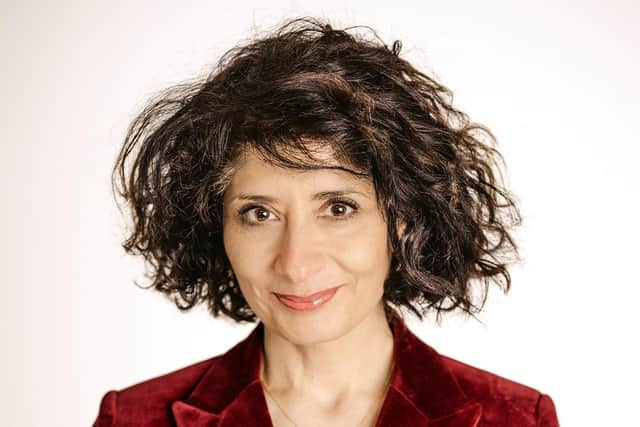
What do I want festival audiences to understand about Iranians? The honest answer is nothing. I may be a proud ancestor of Cyrus The Great but I too have a great deal to understand about a country with such ancient history, so culturally rich and diverse. There are countless political beliefs, religious views, ethnicities, cultures, contradictions and personal quirks, just as there are in any other country.
Of course, Iran has become more present in people’s minds in recent years. For some, it’s prompted the discovery that not all Iranians are Muslim, that Iran isn’t ethnically or culturally homogeneous, or that ordinary Iranians live lives that are recognisable in all sorts of ways. But if those revelations come as a surprise, that’s an opportunity to examine one’s assumptions and prejudices. I’d much rather audiences arrive curious about themselves.
What experiences, headlines have shaped your perspective? In my play I invite the audience to hear something harder to articulate. Many Iranians, both inside and outside of the country, carry a profound sense of grief and trauma from watching the brutal slaughter of protesters in Iran. For me, that trauma was compounded by the silence that surrounded it in spaces where I’d always experienced solidarity. Watching people and movements I’d felt politically at home with saying so little was a deeply isolating experience. It made me question whether I had done the same at times.
Rather than a desire that audiences understand Iran, I’d ask they bring openness, curiosity and a willingness to question themselves. A useful thing for all of us to understand is how our own assumptions shape what we think we already know.
Kismet (Ghesmat) by Shaparak Khorsandi, Summerhall, 7.20pm, until 16 August.
Patrick Monahan

What is an Iranian? It’s as complicated as trying to say, what is an English person? When to be English could mean doing yoga on a beach in Devon, or painting a roundabout red and white in Doncaster!
Iranians are not even just Iranian! Iran is made up of 61% Persians, with the rest of the country made up of Azeris, Turkmen, Kurds, Lors & Arabs. This is why Iranians are always very welcoming to other cultures.
My family are Arab-Iranians, from the South East part of Iran, in the Khuzestan region, part of the ethnic minority that is less than 2% of Iran. Like most of Iran before the revolution, it was a melting pot of multiple faiths and beliefs, and always welcoming to new and old cultures like my family who originate from northern Iraq several thousand years ago.
I was born and raised in Iran by my Nana, Mum and Aunties, who only spoke Farsi, Arabic & Chaldean. And then later on English, thanks to my Dad. My family flipped between their three mother tongues depending on the time of day and their mood! And there’s no such thing as small talk, they will talk and talk, as the languages are so old, and they have so much to say.
I can’t speak for all the people of Iran, I can only speak for my family, who say “live, love and fulfil happiness” (in three different languages).
Patrick Monahan: I’m Not a Terrorist - I’m Freddie Mercury!, Gilded Balloon Patter House, 9pm, until 30 August.
The Scotsman’s arts newsletter is now sent twice a week - subscribe today
Enjoying the Arts & Culture journalism on scotsman.com? Make it easier to find by selecting us as a preferred Google source
Want the latest Scottish headlines sent directly to your phone? Sign up to our new WhatsApp channel here
Comments
Want to join the conversation? Please or to comment on this article.