
Five Edinburgh Fringe performers on the true life stories behind their shows
Each year the Fringe is full of powerful and deeply personal true life tales. We asked five performers to share theirs.


Karen Houge: ‘I followed refugees across Europe’
Back in October 2015, I was making a documentary about the refugee crisis in Europe. I was on Lesvos, a Greek island where 3,000 boat refugees arrive every day. I met seven Syrian men on the beach and followed them for a day. That evening, they asked if I wanted to join them on the refugee trail across Europe to Germany.
I check my calendar. Ten days until I start Clown School in France. I call my parents:
Me: “What do you think I should do?”
Them: “Follow seven Syrian men along the refugee trail? Are you crazy? Of course you should! What an opportunity!”
With my parents' blessing, I go.
At first, I travel as myself: Norwegian, blonde, 25. Everyone’s kind – the police, the mafia, European volunteers, other refugees.
“You’re so brave!” they say, adding me on Facebook.
But no one compliments my Syrian friends, who are wiser, warmer, funnier and braver than me. A few countries in, I have to go undercover. I pretend to be a Syrian, Muslim woman. Everything shifts. No smiles. No Facebook requests. The police and mafia look at me with suspicion. They are scared. And when people in power are scared, they can attack.
I got the opportunity to physically feel how your looks, your passport and your religion shape how the world treats you.
Originally I made a one hour clown-burlesque show for Edinburgh this year, but in a time of war and polarization I felt the urge to throw the whole show and start again. I went to London and sought help from my good friend and previous classmate, comedian Elf Lyons. Could I use some of my experience as an undercover refugee in Europe to say something about trust and the importance of global narratives? And can it be funny?
Spoiler alert: I reached Clown School.
Karen Houge: Dreamgirl, Underbelly Cowgate, 8.10pm, until 24 August

KC Shornima: ‘I grew up in a civil war.’
The Nepali Civil War started soon after I was born. When I was 18 I went to Egypt, and within three weeks of me being there there was a revolution that resulted in a regime change. And now I’m in America, some would say, as the country is collapsing. I'm like the horsemen of the political apocalypse. I’m honestly worried about what will happen to the UK in the month I’m there.
I wanna be upfront here: our war wasn’t like war-war. It’s not like there were constant bombings and stuff, but there was a general sense of fear that ran through my childhood. Maybe because when I was a kid, my babysitter used to say that if I didn’t finish my meal or go to bed on time, she would let the Maoist guerillas take me. It’s a brilliant tactic. Try it with your kids. Tell them ISIS will come get them if they don’t go to bed. And see if they grow up to be adjusted adults.
Our war was low-key passive aggressive. The Maoists would make demands from the government and shut down the country until their demands were met. It’s kind of like when your partner gives you the silent treatment. They’d threaten to shoot anyone out in the streets on sight. So, okay, it wasn’t exactly like the silent treatment, but still it wasn’t air raids and missiles.
I don’t want to minimise it. There were atrocities and death and devastation. But generally on a day-to-day, we put our heads down and continued on with life. The show is not really about the war at all, just FYI. The war played a role in making me good at compartmentalising emotions, detaching myself emotionally to deal with a world that was out of my control. And the show explores how those learned behaviours are affecting my current – very safe and comfortable– life. But it’s funny.
KC Shornima: Detachment Style, Pleasance Courtyard, 6.10pm, until 24 August
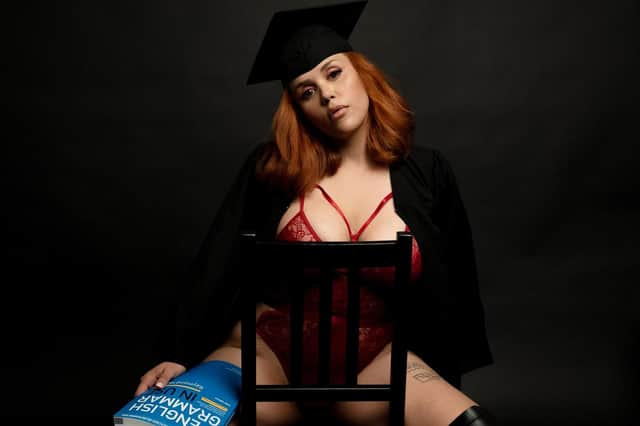
Elis Pear: ‘I had to do sex work to fund my PHD’
In 2020 I moved to London on a sandwich scholarship, part of my PhD, that allowed me to study for a year at one of the UK’s top universities and work at a major museum. It was a dream opportunity. I arrived just weeks before the first lockdown. The museum closed, the university shut down, and my scholarship was postponed. My bursary—meant to be collected in person—was frozen. But I had already paid for my flights and accommodation.
I spent the next year burning through my savings. By the time restrictions lifted in 2021, I was completely broke. My husband helped me a lot and could have supported me more if I had asked, but I’ve always been too proud to ask for help. That stubbornness is a theme that runs through the show.
Coming back from our honeymoon, I was wrongfully deported. Before flying, I’d contacted the Home Office to check whether I could re-enter on a tourist visa and apply for my spouse visa from the UK, something they were temporarily allowing due to global visa centre closures. I received an email confirming I could. But when I landed, I was told that advice had been sent in error by a contractor the Home Office had hired to manage their communications.
I was sent back alone, with no clothes, little money, and nowhere to go, to a country I’d only transited through. It took months to reunite with my husband. In the meantime, I lived in temporary accommodation, on the edge of homelessness. That’s where I first met women in the adult industry - survivors in every sense.
When I finally got my visa and returned to the UK, I was still in debt. I signed with modelling agencies, worked in adult clubs as a hostess — an entry point into sex work — and did admin for online adult content platforms. I never had a performing role in the industry but I saw how thin the line is between survival and stigma.
I got out within a year, but the anxiety has stayed. It’s a toxic environment, even when you’re not touching anyone. Recently, I received an anonymous blackmail threat to expose my involvement in the adult industry. So I wrote a show instead.
Bitter Baby, my debut at the Edinburgh Fringe, was born from that chaos. It’s a one-woman play about immigration, neurodivergence, language, and survival in systems designed to break you. Dark, funny, and brutally honest—because sometimes, truth is the only way to reclaim your voice.
Bitter Baby by Elis Pear, Le Monde, 2pm, until 25 August
Molly McFadden: ‘My mother died from Alzheimer’s. Now I have it too’
Almost 30 years after my mother passed away from complications of Alzheimer’s disease in the mid-1990s, I discovered in 2023 that the Alzheimer’s gene was blooming in me. I consulted with my doctors at the Cleveland Clinic who informed me that I was in the early stages of MCI (Mild Cognitive Impairment). This could be devastating for anyone, especially a performer and writer. However, I found that my talent and tools created a way to cope with the diagnosis. After having nursed my mother through 12 years of this dreadful disease, I knew all too well what I and my family might be in store for in the future. I was fortunate to have caught this disease early enough to radically slow its effects through diet, exercise, cognitive weight training (theatre), and infusions of a drug called Lequimbi. The knowledge I gained while caring for my mother has afforded me perspective and courage to fight for myself and advocate for others to do the same.
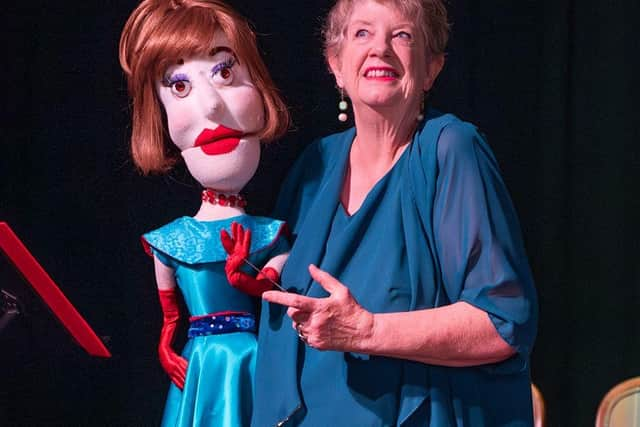
Living on the Moon, my one-woman show, dramatises the relationship between a mother and daughter whose lives are upturned by Alzheimer's… but with music, jokes, stories, and a puppet. It was important to me that this story refrain from getting morbid or bleak and instead focus on love, humour, and hope. The show is a love letter to those who have stories and experiences of working through Alzheimer’s and I hope offers light and connection to what can feel like a dark and isolating experience.
Living on the Moon, Gilded Balloon Patter House, 2.45pm, until 25 August

Eli Matthewson: ‘My boyfriend accidentally tried to strangle me in my sleep.’
It all started well! After years of long distance my boyfriend Sam moved up to Auckland and we were able to buy a house. But just a few months later he tried to murder me in our bed. It was strangulation. We are still together, which is a testament to me being able to forgive him for what he did, and also him being able to forgive me for telling the story to paying strangers.
There is a bit of context that might help explain what happened. We bought the house and bought some nice furniture for the time. Lovely stuff, like a record player, which we use exclusively to listen to Spotify. Almost immediately after we settled into being homeowners we started getting robbed. Small stuff first, and then a couple of major break-ins. We bought some security cameras to help prevent these sorts of things, but all they did was notify us of just how often people were having a creepy look around our garden while we were out. It was enough to make me, a greenie-liberal snowflake, start to nod when people talked about rising crime and law and order.
After spending a week waking up to footage of the same guy stalking through our garden, the night terror happened. A friend was staying with us, and he had been out at a party. He came home at 2am and opened the front door. Sam half-woke up, assumed that was the intruder, then went to get out of bed and bumped into me. He thought I was another intruder, and he screamed and attacked with an intensity I didn’t know he had in him. It was terrifying, but it didn’t take me too long to think: this could be a show.
Eli Matthewson: Night Terror, Underbelly George Square, 8.50pm, until 24 August
Make sure you keep up to date with Arts and Culture news from across Scotland by signing up to our free newsletter here.
Comments
Want to join the conversation? Please or to comment on this article.